
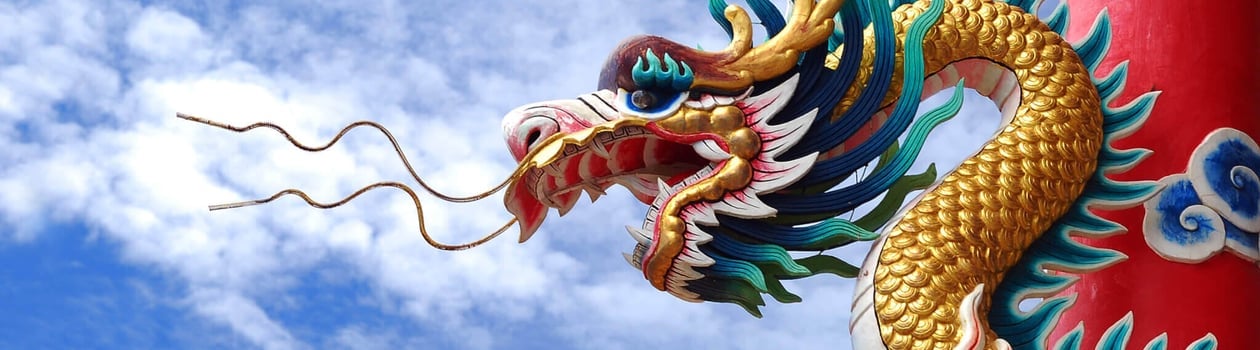
Dragons, the magical scaly creature born from fire, have existed throughout mythology since the times of the Romans and Egyptians. Dragons, with their celestial ways and otherworldly presence, make our lives a lot more interesting, and never cease to amaze people.
Appreciate a Dragon Day is a day dedicated to learning about dragons and sharing your love for these creatures!
National Appreciate A Dragon Day Timeline
Earliest Dragon-Like Depictions
Archaeological evidence from Neolithic China shows serpent-like and dragon-shaped figures carved into jade and pottery. These early representations are often linked to beliefs about power, fertility, and natural forces, suggesting the very early origins of dragon symbolism.
The Legend of St. George and the Dragon Emerges
The story of St. George slaying a dragon developed during Late Antiquity, becoming one of Christianity’s most enduring legends. The dragon came to symbolize evil or paganism, while George represented moral and spiritual victory.
Dragons Formalized as Imperial Symbols in China
During the Tang Dynasty, dragons became firmly established as symbols of imperial authority and harmony with nature. Their association with rain and water reinforced their role as benevolent forces essential to agriculture and prosperity.
The Word “Dragon” Enters Middle English
The English word dragon evolved from Old French dragon and Latin draconem, both referring to large serpent-like creatures. This linguistic shift reflects the spread and adaptation of dragon imagery within medieval European culture.
The Dragon of Beowulf Is Preserved in Writing
The epic poem Beowulf, featuring a climactic battle between the hero and a dragon, was recorded in the Nowell Codex around 1377 A.D. Although composed centuries earlier, its preservation solidified the dragon’s role in medieval Western literature.
History of Appreciate a Dragon Day
Appreciate a Dragon Day began when author Donita K. Paul wanted to celebrate the publishing of her first fantasy novel “Dragonspell”, part of the five-volume series, The DragonKeeper Chronicles.
Dragons have always been popular, existing in the mythology of cultures from all over the world. Dragons inspire us and fill us with fear at the same time. Western dragons have always been depicted as fearsome creatures to either overcome or have a kinship with, while eastern dragons were typically equated with the royalty and heavenly forces, depending on the culture.
Nevertheless, dragons also tend to represent the conquering of the spiritual soul, as they are related to many of the human emotions that block the way to enlightenment. Dragons in modern culture have always been a place of fascination for them, as many authors and filmmakers have helped transform the image of a dragon to something people can admire.
Some of the most famous stories to depict dragons are seen in Tolkien, Ursula, and J.K. Rowling’s novels. In films, movies and TV shows such as How to Raise a Dragon, Game of Thrones, and Eragon have helped shape the way people see dragons and ultimately fall in love with them.
Stories about dragons have existed since the earliest parts of history and have appeared in many different forms with many different alignments of good and evil.
The depictions of dragons tend to differ by culture. In ancient times, most societies had an ambivalent view of dragons. Like any other creature, these giant flying serpents had both a good side and a bad one.
In the West, attitudes towards dragons changed with the advent of Christianity in the late Roman era. Suddenly, dragons became associated with evil because of their serpentine nature and needed vanquishing.
Some people believed that dragons were a real phenomenon and created stories about how great warriors had to go out into the wilderness to defeat them. The tale of St. George and the dragon is likely a direct descendant of this thinking.
When you think about it in more detail, you can understand why people thought dragons were real! Remember, in ancient times, there was no explanation for giant bones. Nobody had a clue what dinosaurs were, or that fossilized bones were millions of years old. For all they knew, these creatures perished recently and could live beyond the horizon. Believing in “dragons” was logical and perhaps necessary to protect yourself.
The old ideas weren’t far off eighteenth- and nineteenth-century discoveries in paleontology. Once the dinosaur age took off, it became clear that there really were giant serpent-like creatures who roamed the Earth millions of years ago, firing the public imagination.
The diversity of dragons is considerable, and one of the main motivations for National Appreciate A Dragon Day. The fire-breathing variety is the most famous, but there are others too. Some are like gargoyles found in medieval churches. Others are many-headed hydras that pop out of the ocean. Some even depict them as wyverns, basilisks, and other mythical creatures with loose connections to the real world.
Folklore experts like Carol Rose point out that dragons are essentially “composite creatures.” We tend to think of them as highly-stylized, as depicted in films like The Hobbit. But Rose notes that they can have really unusual features, including elephant trunks.
Ultimately, the idea of dragons interacting with humans fills our mind with awe and inspires us to delight our minds with fancy. Appreciate a Dragon Day asks people to share what their favorite dragon is in popular culture and tell people why they love dragons.
How to Celebrate Appreciate a Dragon Day
When it comes to celebrating Appreciate a Dragon Day, there are many options!
Enjoy Some Dragon Stories
Watch your favorite dragon-themed movie with friends. Read fantasy novels about dragons, including The DragonKeeper Series.
Create Some Dragon Art
Draw, sketch, or color in pictures of dragons. If you love art, you can print out a dragon coloring page. Or you can attempt to paint a picture of one of these mythical beasts from scratch if you’re feeling brave.
Cook a Dragon Meal
Another popular idea is to use the day to cook a meal fit for a dragon. What, precisely, this entails is anyone’s guess. But heavy charring is clearly an option here. You want something that involves a little fire and passion!
Learn to Write in Dragonese
Another thing you can do is learn to write in Dragonese. For those who don’t know, this is the language that dragons speak in the film How to Train Your Dragon. The scriptwriters created an entire universe of words, waiting for you to explore them.
Engage in Dragon Themed Activities
You can also indulge yourself in other ways. How about collecting books and movies related to dragons and starting a dragon collection? Or what about creating a dragon mosaic, hosting a puppet show, or doing all kinds of things you can think of related to dragons?
Once you start talking about dragons, you’ll be amazed by how many people love them. Don’t keep Appreciate a Dragon Day to yourself! Share this holiday with your friends and spread your love for dragons!
Facts about Dragons
Dragon Symbolism in Chinese Culture
In Chinese culture, dragons are traditionally regarded as benevolent beings associated with power, authority, and good fortune. They are closely linked to rain and water, which were essential for agriculture, and became enduring symbols of imperial authority, appearing on the robes and insignia of Chinese emperors.
Western Dragon Symbolism and Christianity
In Western traditions, dragons are commonly depicted as dangerous or malevolent creatures symbolizing chaos and destruction. With the spread of Christianity, dragons were increasingly associated with evil and were often portrayed as adversaries defeated by saints or heroes, most notably in the legend of Saint George.
Dragons Influencing the Medieval Imagination
During the Middle Ages, dragons featured prominently in European literature, art, and religious symbolism. They were frequently used as allegorical representations of sin or moral danger, serving as obstacles to be overcome by virtuous figures in stories and religious teachings.
Modern Dragons in Popular Literature
In modern fantasy literature, dragons have continued to evolve in their portrayal. Some works depict them not only as fearsome creatures but also as intelligent or morally complex beings. This shift is evident in twentieth-century fantasy writing, where dragons are no longer portrayed solely as symbols of evil.
Dragons and Dinosaurs
Some scholars suggest that myths about dragons may have been influenced by the discovery of large fossilized bones in ancient times. Without scientific explanations, such remains were sometimes interpreted as belonging to dragons or other legendary creatures, contributing to the development of dragon legends.
FAQs about Dragons
National Appreciate A Dragon Day FAQs



You may also like

Slay a Dragon Day
Slay a Dragon Day is a spirited and fun celebration encouraging people to tackle their challenges. This day is not just about mythical dragons but about facing fears and overcoming obstacles in life. It's a unique opportunity to take on something daunting and emerge victorious, feeling empowered and accomplished. How to...
- United Kingdom

St. George’s Day
Legend has it that St. George slayed a dragon. Today, his bravery is celebrated worldwide, inspiring us to be courageous.
- Portugal
- Russia
- Spain
- and 1 more

National Sportsmanship Day
Being gracious, respectful, and encouraging towards your opponents makes the game more enjoyable for everyone involved.
- United States

Gary Gygax Day
Gather together your friends and play a game of Dungeons & Dragons to honor the life and legacy of Gary Gygax, creator of this beloved game.
- United States
National days and holidays on January 16 2027

Pongal
Pongal is a vibrant harvest festival celebrated with great enthusiasm in South India. It honors the sun, nature, and the farmers who bring food to the table. Families gather to offer thanks for the year’s abundance, making it a time filled with joy and gratitude. The name "Pongal" also refers...
- India
- Malaysia
- Singapore
- and 3 more

International Hot and Spicy Food Day
Experience a flavor explosion that will make those buds dance with joy! Get ready for a culinary adventure that can spice up anyone's life!
- Australia
- Canada
- India
- and 5 more

National Tulip Day
National Tulip Day marks a vibrant celebration of color and beauty. It's when the stunning tulip, a symbol of the Netherlands, takes center stage. City squares burst with thousands of these vibrant flowers, creating a visual feast that draws crowds. This event turns even the coldest winter day into a...
- Netherlands

Soup Swap Day
There's nothing better than a warm bowl of homemade soup on a chilly day! Swap your soup with friends for a fun way to mix up your meals.
- Australia
- Canada
- United Kingdom
- and 1 more
Seize Every Day
Join free for personalised recommendations, email reminders and exclusive guides. Never miss a day.