National Barbershop Quartet Day
Every year, on this day, people celebrate Barbershop Quartet Day, which focuses on this unique style of cappella music known for its harmonious melodies. It’s a special time for music lovers and singers alike to appreciate this traditional form of musical expression. The celebration is rooted in the founding of the organized barbershop movement back in 1938.
The name “Barbershop Quartet” stuck because these informal musical gatherings were synonymous with the barbershops where they frequently took place.
This style of music emphasizes consonant chords and is known for its rich, emotional, and nostalgic tone. While the tradition started in barbershops, it quickly moved to stages and competitions, leading to the formation of groups dedicated to perfecting and performing this style of harmony singing.
People celebrate for many reasons. They aim to keep the barbershop quartet tradition alive and vibrant. It’s also a chance to enjoy and share the beauty of four-part harmony singing.
This day reminds us of the power of music to bring people together, celebrate art, and create lasting memories. Through these celebrations, the spirit of barbershop music continues to thrive and inspire new generations.
How to Celebrate Barbershop Quartet Day
Tune In to the Classics
First, why not dive into the ocean of classic barbershop quartet recordings? Whether you prefer vinyl or streaming tunes, there’s no shortage of harmonious gems waiting to be discovered.
Picture yourself transported back in time, swaying to the smooth melodies of yesteryear. It’s not just a listen; it’s a journey.
Host a Harmonious Hangout
Next, think about throwing a themed party where everyone gets in on the act. Invite friends over for a harmonious hangout, where singing along isn’t just encouraged; it’s a must!
Decorate your space with music notes and barbershop memorabilia. Make it a day when everyone is part of the band.
Sing in the Spotlight
Feeling brave? Step into the spotlight with your rendition of a barbershop classic. Whether it’s in your living room or at a local open mic, let your voice soar.
You don’t have to be pitch-perfect; it’s all about sharing the joy of music. You might inspire a new generation of quartet crooners!
Share the Harmony Online
Lastly, spread the love far and wide. Use social media to share your favorite barbershop performances or even post a video of your quartet, real or makeshift. Hashtags can connect you with fellow enthusiasts worldwide. It’s a digital chorus, uniting voices from every corner of the globe.
Celebrating Barbershop Quartet Day is all about joy, community, and, of course, sweet harmony. Whether you’re a seasoned singer or just a fan of feel-good tunes, there’s a way for everyone to get in on the fun!
National Barbershop Quartet Day FAQs
Why are barbershop quartets associated with the “old-timey” aesthetic?
Barbershop music reached its peak popularity in the late 19th and early 20th centuries.
Its connection to barbershops, which were gathering places during that era, cements its vintage appeal.
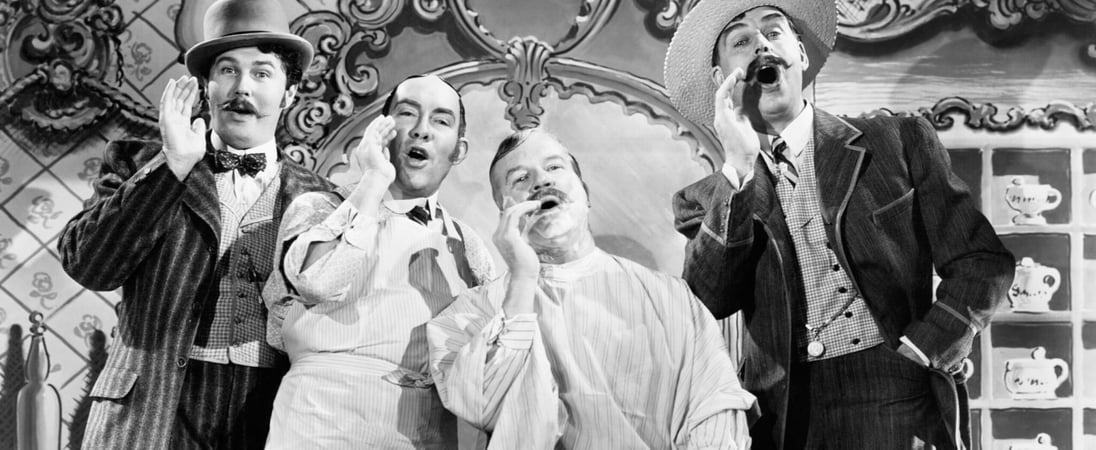
Outfits like straw hats and bow ties became part of the aesthetic because they were fashionable during the genre’s golden age.
What makes the “barbershop chord” unique?
The “barbershop chord” (a dominant seventh chord) creates a “ringing” effect when sung correctly.
This happens due to overtones that naturally amplify, giving the music its distinctive, full-bodied sound.
Did barbershop quartets originate in actual barbershops?
Yes, but not exclusively. While barbershops were social hubs where men harmonized for fun, similar traditions existed in places like parlors and clubs, particularly in African American communities.
What are some fun myths about barbershop singing?
One amusing myth is that singers must always perform with striped barber poles nearby. In reality, barbershop quartets rarely rely on props, focusing instead on their vocal harmonies.
How has the genre evolved to include women?
Women’s barbershop singing gained traction with groups like Sweet Adelines International, founded in 1945. These ensembles perform the same harmonies, proving the style’s versatility across genders.
Why is April 11th the date for Barbershop Quartet Day?
April 11 marks the anniversary of the Barbershop Harmony Society’s founding in 1938. This organization played a major role in reviving and preserving the genre.
Are there any famous songs exclusive to barbershop quartets?
Classics like “Sweet Adeline” and “Goodnight, Ladies” are iconic barbershop standards. Many are adapted folk songs or popular tunes from the early 20th century.
What international events celebrate barbershop music?
Events like the British Association of Barbershop Singers’ annual convention and Harmony College in Sweden gather enthusiasts worldwide, celebrating the global reach of barbershop harmony.
How does barbershop singing differ from other forms of a cappella?
Unlike other a cappella groups, barbershop quartets emphasize “cone-shaped” sound, with the melody in the lead and other parts arranged around it. This creates a balanced, resonant tone.
What’s the most unusual setting for a barbershop quartet performance?
Barbershop quartets have sung everywhere from theme parks to space! NASA once recorded a barbershop rendition of “Happy Birthday” on Mars via the Curiosity rover.
National Barbershop Quartet Day Timeline
1890s
African American quartets shape the barbershop sound
In Southern and Midwestern cities, African American men harmonize informally in barbershops and on street corners, creating the four-part style that later becomes known as “barbershop” harmony.
1903
“Sweet Adeline” becomes a barbershop favorite
Composer Harry Armstrong and lyricist Richard H. Gerard publish “You’re the Flower of My Heart, Sweet Adeline,” a sentimental waltz that soon becomes one of the best‑known standards sung by barbershop quartets.
1910s–1920s
Close‑harmony quartets reach mass audiences
With the rapid growth of the phonograph industry, male vocal groups such as the American Quartet and the Peerless Quartet record popular songs in tight four‑part harmony, familiarizing listeners with the barbershop sound nationwide.
1941
“Keep America Singing” reflects wartime spirit
Members of the barbershop quartet organization promote the song “Keep America Singing” during World War II, using group singing and harmony as a way to boost morale on the home front and among servicemen.
1945
Sweet Adelines International established
Sweet Adelines International was founded in Tulsa, Oklahoma, as a women’s barbershop organization, encouraging female quartets and choruses and helping the barbershop style expand beyond its earlier all‑male focus.
History of Barbershop Quartet Day
The background of Barbershop Quartet Day looks back to April 11, 1938 when two music enthusiasts, Rupert Hall and O.C. Cash, had a great idea. They invited 26 men to join them for a unique musical gathering. This wasn’t just any meeting. It was the beginning of the Barbershop Harmony Society. Their goal was simple: to keep the joy of barbershop singing alive.
The term “Barbershop Quartet” comes from the place and manner in which this style of music was often performed in the late 19th and early 20th centuries. Back then, barbershops served as social hubs where men would gather for a haircut, shave, and socialize.
Among their activities was singing in harmony, which became a popular pastime. Their style of music is characterized by four-part harmony, with each singer covering a different vocal range: tenor, lead, baritone, and bass.
The foundation of Barbershop Quartet Day celebrates this rich history with a nod to the day when the barbershop movement was officially organized.
Since then, the celebration has spread worldwide, keeping the tradition of barbershop music thriving as singers and fans come together to honor a unique American art form and its ability to connect people through song.
Surprising Facts About Barbershop Quartet Music
Barbershop quartet singing may sound simple at first listen, but the tradition behind it is rich with history, musical technique, and cultural influence.
From its roots in African American musical traditions to its distinctive harmony style and carefully balanced vocal parts, barbershop music has developed into a unique form of a cappella performance.
These facts highlight what makes the style so recognizable and enduring.
-
Barbershop’s Roots in African American Musical Traditions
Many music historians trace barbershop harmony to late‑19th‑century African American communities, where improvised four‑part harmonizing on popular songs and spirituals was a common social pastime in barbershops, parlors, and street corners.
Early documented quartets such as the American Four and the Haydn Quartet drew heavily on these Black vocal traditions, even as later commercial barbershop culture became associated largely with white performers.
-
The Signature “Barbershop Seventh” and Ringing Overtones
Barbershop harmony is defined by the frequent use of the dominant seventh chord, often called the “barbershop seventh,” which appears far more often than in most classical or pop music.
When sung with precise intonation and balanced voices, the chord’s overtones reinforce each other so strongly that singers and listeners often perceive extra “phantom” pitches, creating the characteristic ringing effect that enthusiasts describe as the sound “locking and ringing.”
-
The Four Distinct Voice Parts and the “Cone” of Sound
Traditional barbershop quartets use four specific voice parts: lead (melody), tenor (high harmony above the melody), baritone (filling in missing notes of the chord), and bass (lowest part).
Rather than blending like a choir, barbershop aims for a cone‑shaped sound with the bass providing a strong foundation, the lead slightly dominant, and the tenor and baritone carefully balanced so that the chord, not any single voice, is what the audience hears most clearly.
-
From Street-Corner Entertainment to Organized Competition
In the early 1900s, informal barbershop quartets were a staple of vaudeville shows, medicine shows, and street‑corner entertainment, where singers would improvise harmonies on popular tunes of the day.
As the style declined in commercial popularity in the 1920s and 1930s, preservation‑minded singers formed organizations, codified contest rules, and developed standardized arrangements, which transformed barbershop from a casual pastime into a highly organized competitive art form with detailed judging categories for sound, musicality, and performance.
-
Women’s Barbershop and the Growth of Female Quartets
Although early organized barbershop activity centered on male singers, women formed their own quartets and choruses by the mid‑20th century, developing a parallel tradition with similar musical rules.
Organizations such as Sweet Adelines International and Harmony, Inc. nurtured women’s barbershop worldwide, and female ensembles now compete at high technical levels, proving that the idiom’s trademark close‑harmony sound is not inherently tied to male voices.
-
Barbershop Harmony as an International Art Form
What began as a distinctly American close‑harmony style has grown into a global musical culture, with national barbershop organizations active in countries including the United Kingdom, Sweden, New Zealand, Germany, and Japan.
International contests regularly feature medal‑winning quartets and choruses from outside North America, and some of the world’s most innovative barbershop arranging and pedagogy now comes from European and Scandinavian ensembles that have embraced and adapted the style.
Why Barbershop Feels “Old-Timey” to Modern Listeners
Barbershop’s nostalgic reputation comes partly from its core repertoire and harmonic language, which lean heavily on late‑19th‑ and early‑20th‑century Tin Pan Alley songs with simple, diatonic melodies and sentimental lyrics.
Combined with period fashion like straw boaters and arm garters popularized on vaudeville and early recordings, these musical and visual cues signal a bygone era to contemporary audiences, even when new songs are arranged in barbershop style.
Also on ...
View all holidays
World Parkinson’s Day
On the birthday of Dr. J. Parkinson, the first to describe and diagnose the disease, learn about Parkinson’s, donate or volunteer, and raise awareness.

National Pet Day
Give a little extra love and pampering to your pet, or if you can, take the plunge to enrich your life and the life of a smaller friend by adopting a pet.