Batteries quietly power modern life, from the smallest household devices to global communication systems. National Battery Day highlights how this simple technology evolved from early scientific experiments into an essential foundation of everyday living. These facts explore key moments, breakthroughs, and impacts that show why batteries matter far beyond the devices they sit inside.
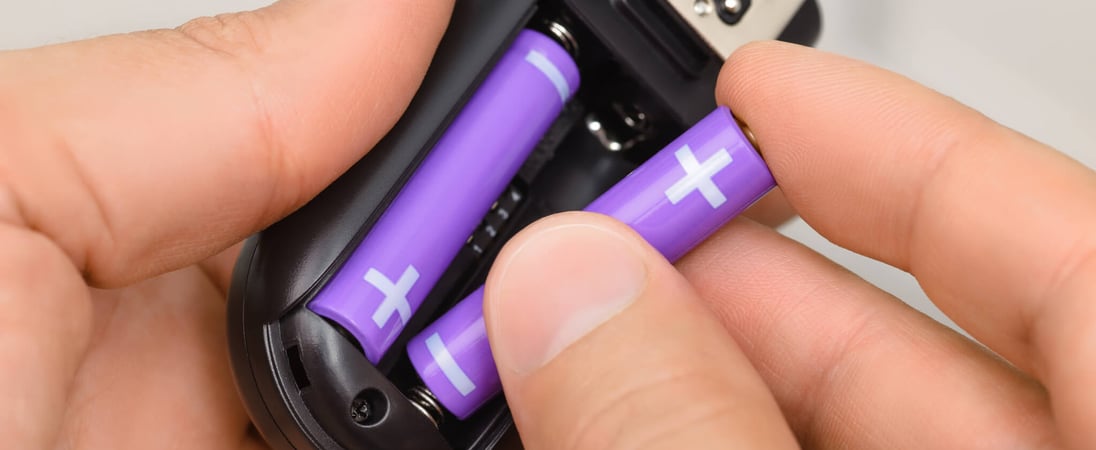
National Battery Day
In the hustle and bustle of our daily lives, it’s easy to overlook the small things that keep our world running smoothly. One such unsung hero is the humble battery.
From powering our smartphones and laptops to enabling the rise of electric vehicles and renewable energy storage, batteries play a crucial role in modern life.
So important is this role that there’s a day dedicated to celebrating it — so get ready for National Battery Day!
How to Celebrate National Battery Day
Celebrating National Battery Day can be both fun and educational. Here are some tips, tricks, and suggestions on how to mark this day:
Learn about Batteries
Use this day as an opportunity to learn more about the different types of batteries, their uses, and the science behind how they work.
There are numerous online resources and tutorials available that explain the chemistry of batteries and how they store and release energy.
Recycle Old Batteries
Batteries should not be thrown away with regular trash as they contain materials that can be harmful to the environment.
Use National Battery Day as a reminder to properly recycle your old batteries. Many local waste management facilities and electronics stores offer battery recycling services.
Spread the Word
Share information about National Battery Day on your social media platforms. Use hashtags to join the wider conversation about the importance of batteries and the need for proper battery recycling.
Support Battery Research
Consider donating to organizations that are conducting research into more efficient and environmentally friendly battery technologies. Your support could help drive the next big breakthrough in battery technology.
Appreciate the Role of Batteries in Your Life
Take a moment to acknowledge the many ways batteries impact your daily life. From the alarm clock that wakes you up, the smartphone that keeps you connected, to the electric car that gets you to work – batteries make modern life possible.
Visit a Battery Manufacturing Facility or Museum
If there’s a battery manufacturing facility or a science museum near you, consider taking a tour to learn more about the production process and the history of batteries.
Educate Others
If you’re a teacher or parent, use this day as an opportunity to teach children about the importance of batteries and the need for recycling. There are many fun and educational activities related to batteries that you can do with kids.
National Battery Day Timeline
Circa 250 BCE–225 CE
Baghdad “Battery” Artifacts
Clay jars with copper cylinders and iron rods found near Baghdad may have formed simple galvanic cells, though most scholars now think they were containers rather than true batteries.[1]
1749
Franklin Coined the Term “Battery”
Benjamin Franklin uses the word “battery” for an array of Leyden jars connected to store static electricity, likening the grouped jars to a battery of cannons.[2]
1800
Volta Invents the Voltaic Pile
Alessandro Volta announces the voltaic pile, the first continuous electric battery, by stacking zinc and copper disks separated by brine-soaked cloth to deliver a steady current.[3]
1836
Daniell Cell Improves Reliability
John Frederic Daniell introduces the Daniell cell, a two-liquid copper–zinc battery that greatly reduces corrosion and becomes a standard source for telegraph and laboratory power.[4]
1859
First Rechargeable Lead–Acid Battery
French physicist Gaston Planté developed the lead–acid accumulator, the first practical rechargeable battery, later becoming the workhorse of automotive starting and backup power.[5]
1896
Columbia, First Mass-Market Dry Cell
The National Carbon Company launches the Columbia dry cell, the first commercially successful sealed zinc–carbon battery, enabling portable devices like early flashlights and radios.[6]
1991
Commercial Lithium‑Ion Battery Debuts
Sony introduces the first commercial lithium‑ion rechargeable battery, delivering high energy density for portable electronics and paving the way for modern laptops, phones, and EVs.[7]
History of National Battery Day
National Battery Day is celebrated on this day that was chosen for its significance in the history of battery development.
This day marks the birthday of Alessandro Volta, an Italian physicist and chemist born in 1745, who is credited with inventing the electric battery. His pioneering work laid the foundation for the development of batteries and their subsequent role in powering our world and accelerating decarbonization efforts.
The electric battery invented by Volta, known as the voltaic pile, was the first device capable of providing a steady, lasting current of electricity.
This invention was a major breakthrough in the field of science and paved the way for countless technological advancements. Today, batteries come in many shapes and sizes, from tiny button cells used in watches to large battery packs that power electric vehicles.
National Battery Day Facts
-
Volta’s First Battery Was Built From Metal Discs and Saltwater
Alessandro Volta’s original “voltaic pile” was a simple but revolutionary stack of alternating copper and zinc discs separated by cardboard soaked in saltwater, which created a continuous electric current and became the foundational design for all later electrochemical batteries.
-
The Daniell Cell Powered the First Global Communications Network
In 1836, British chemist John Frederic Daniell introduced the Daniell cell, a more stable battery that minimized hydrogen buildup; it quickly became the standard power source for 19th‑century telegraph systems, effectively driving the world’s first long‑distance electronic communications network.
-
Lead–Acid Batteries Are One of the Most Recycled Consumer Products
Lead–acid batteries, widely used in vehicles and backup power systems, achieve a recycling rate of about 99% in the United States, making them one of the most successfully recycled consumer products and a frequently cited example of a working circular economy.
-
Lithium-Ion Cells Store Far More Energy per Kilogram Than Lead–Acid
Modern lithium‑ion batteries can reach gravimetric energy densities in the range of roughly 150–250 watt‑hours per kilogram, compared with about 30–50 watt‑hours per kilogram for typical lead–acid batteries, which is why lithium‑ion chemistry underpins lightweight applications like laptops, smartphones, and electric vehicles.
-
Battery Production Carries a Significant Carbon Footprint
Life‑cycle assessments of lithium‑ion batteries estimate average greenhouse gas emissions on the order of 60–100 kilograms of CO2‑equivalent per kilowatt‑hour of battery capacity produced, with mining and refining of metals plus energy‑intensive manufacturing driving most of the climate impact.
-
Only a Small Fraction of Spent Lithium-Ion Batteries Are Recycled
Despite rapid growth in electric vehicles and portable electronics, global recycling rates for lithium‑ion batteries are estimated at only about 5%, meaning most end‑of‑life packs are currently landfilled, stored, or handled informally instead of being processed to recover lithium, cobalt, nickel, and other valuable materials.
-
Grid Batteries Are Becoming a Core Tool for Integrating Solar and Wind
In the United States, battery storage capacity connected to the power grid reached about 37 gigawatts by late 2025, with tens of gigawatts more under construction, allowing utilities to store surplus solar and wind energy and dispatch it later to balance supply and demand and improve grid reliability.
National Battery Day FAQs
What is the “Baghdad Battery,” and how does it relate to battery history?
The “Baghdad Battery” refers to artifacts discovered near Baghdad, Iraq, dating back to around 250 BCE.
These clay jars contained a copper cylinder and an iron rod, suggesting they might have been ancient galvanic cells used for electroplating or other purposes.
While their exact function remains debated, they highlight early experimentation with electrochemical energy.
How did Benjamin Franklin influence the naming of batteries?
Benjamin Franklin conducted experiments with Leyden jars, early devices for storing static electricity.
He coined the term “battery” to describe a series of connected jars, likening them to a battery of cannons. This terminology persists today for interconnected electrical cells.
Are there any myths or misconceptions about batteries?
A common misconception is the “memory effect,” which suggests rechargeable batteries lose capacity if not fully discharged.
This issue was mainly linked to nickel-cadmium batteries. Modern lithium-ion batteries rarely experience this, making the concern largely outdated.
How have batteries been used in unusual or quirky ways?
In the 19th century, electric belts claimed to cure ailments using battery-generated currents. Though these devices lacked scientific credibility, they reflect the imaginative applications of early battery technology.
What role have batteries played in space exploration?
Batteries power spacecraft and instruments during space missions. Apollo lunar missions relied on silver-zinc batteries for life support and communications.
Today, advanced battery technology enables longer, more complex space explorations.
What environmental impact do batteries have, and how can it be reduced?
Improper disposal of batteries can release harmful materials like lead and cadmium, contaminating the environment.
Recycling programs help recover materials and prevent pollution. Many campaigns encourage proper disposal to protect ecosystems.
How has battery technology evolved to power modern innovations?
The transition from lead-acid to lithium-ion batteries has revolutionized technology.
Lithium-ion batteries are lighter, hold more energy, and recharge faster. This progress fuels electric vehicles, portable electronics, and renewable energy systems.
What fun facts highlight the importance of batteries?
A fully charged battery takes 50 times more energy to produce than it can deliver.
Additionally, nickel-cadmium from one phone battery can pollute over 600,000 liters of water if improperly discarded.
How did ancient cultures harness natural electricity before modern batteries?
Ancient cultures may have experimented with natural electricity using materials like amber and fur to generate static charges.
For example, early Greek philosophers noted amber’s ability to attract lightweight objects when rubbed.
This understanding of natural electricity laid the groundwork for future innovations like batteries.
Are there any cultural superstitions or beliefs related to batteries?
In some cultures, drained or malfunctioning batteries are seen as signs of bad luck or negative energy.
For instance, some believe that rapidly depleting batteries in phones or gadgets indicate a spiritual presence nearby, especially in haunted locations.
While purely anecdotal, these beliefs add an interesting cultural angle to battery usage.
Also on ...
View all holidays
National Drink Wine Day
Raise your glass to a delicious beverage that pairs well with a romantic dinner or a fun night out with friends!


National Eat Ice Cream for Breakfast Day
Savoring frozen delights at sunrise to honor young fighters, uniting with sweet compassion for a vital cause.