
National Brisket Day encourages you to explore this delightful cut and of meat and everything it has to offer!
How to Celebrate National Brisket Day
Enjoy Some Brisket
Well, it’s pretty much inarguable that the best way to celebrate National Brisket Day is to have yourself a deliciously prepared brisket. Pick up a beer of your choice and let finish cooking for the next hour. Voila! It is delish!
So besides cooking a hearty brisket meal, what else can you do to celebrate brisket day?
Head Out for Brisket
Well, one idea is to go for a meal out at a local restaurant that still serves beef brisket in the traditional style. Ideally, you’re looking for an establishment that takes the cheaper cuts of meat and then prepares them in such a way that makes them taste far more expensive than they actually are.
By going to a local restaurant along with your friends and family, you’re showing your support for everyone involved in the supply chain, from the restaurant owner to the cattle rancher.
Many restaurants make a point of serving brisket. They want to prove that it is possible to make even the cheapest cuts of beef taste amazing. They see it as a challenge. Some, for instance, use special tenderizing techniques and serve it rare. Others rely on slow cooking methods.
Try Unique Varieties
The great thing National Brisket Day is that there are so many recipe options. Barbecued brisket is a classic, but today’s chefs are so inventive, you’re now spoiled for choice for how they prepare your meat.
So there you have it: some simple ways to celebrate National Brisket Day. What will you do?
Learn More About Brisket
Some things take time, and a good brisket is one of these. Brisket is a popular cut of meat to serve as part of any family affair, and it’s long cooking time ensures that it is a big hit when those who know how to prepare it.
Brisket is a tricky meat in that it comes from the animal tough, but if you find a particularly well-marbled piece and cook it correctly, it will become fork soft and simply peel apart, making it the tenderest of tender meats.
Of course, there are hundreds of variations on how to prepare brisket, including the use of various hardwoods in the grilling process to ensure a nice smoky flavor. Some people marinate them, some don’t, and many like to serve it with a sauce.
National Brisket Day Timeline
“Brisket” Enters the English Language
The word “brisket” appears in Middle English, likely derived from Old Norse “brjósk” (gristle), referring to the tough, cartilaginous breast of the cow that requires long, slow cooking to become tender.
Ashkenazi Jews Develop Holiday Brisket
Ashkenazi Jewish cooks in Central and Eastern Europe began braising the tough breast of beef as a Sabbath and festival dish, a technique later brought to North America and now central to Jewish holiday meals.
Corned Beef Brisket Becomes an Irish-American Staple
In the United States, Irish immigrants adopt inexpensive brisket from Jewish butchers for “corned beef and cabbage,” a dish that evolves into a popular centerpiece of Irish-American celebrations such as St. Patrick’s Day.
Texas Meat Markets Begin Smoking Brisket
German and Czech immigrants in Texas open meat markets and begin slow-smoking the cheap, fatty brisket over post oak and other woods, laying the foundation of what becomes iconic Central Texas–style barbecue.
Brisket Anchors Jewish-American Pot Roast Traditions
With increased Jewish immigration to the United States, braised brisket emerges as a signature American Jewish comfort food, especially for Passover and Rosh Hashanah, thanks to its affordability, flavor, and ability to be cooked in advance.
Pho Bo Popularizes Brisket in Vietnamese Cuisine
As beef consumption expands in Vietnam, brisket becomes a key cut in pho bo, simmered for hours to enrich the broth, and later spreads globally with the rise of Vietnamese restaurants after the Vietnam War.
Competition Barbecue Elevates Brisket Worldwide
American barbecue competitions and television shows spotlight smoked brisket as the ultimate “pitmaster” challenge, helping spread Texas-style techniques and turning this once-overlooked cut into an international culinary star.
History of National Brisket Day
The history of brisket dates back to ancient history – practically ever since humans reared cattle. People would sacrifice their animals on special occasions and eat every part of the animal, including the brisket cut. Texas BBQ brisket is one of the most popular ways to prepare it. Here, chefs marinate the meat for between 24 and 48 and cook it in a unique wood or charcoal-fired BBQ oven.
Careless cooking often resulted in tough meat, so people developed techniques to get the most out of the cut. After all, if you could make brisket taste good, it was a great way to get delicious and cheap meat.
In the old days, you couldn’t store meat in a refrigerator. The technology simply didn’t exist. After 48 hours following the death of the animal, the carcass would begin to turn, meaning that the butcher had to cook and eat it fast.
Friday evenings, therefore, became the traditional day on which people would cook up the remaining cuts of meat uneaten and unsold throughout the week. People found that barbecuing meat and adding marinades and sauces provided the best flavor. And so the rationale for holding National Brisket Day celebrations was born.
National Brisket Day is also heavily associated with smoked meats – not just brisket. Again, butchers had to use smoking to preserve meat so that it wouldn’t go off.
For that reason, they took cuts of meat, such as rib-eye or tenderloin, and put them in smoke sheds. This process killed off all the bacteria and created compounds that would inhibit the growth of harmful bugs in the future.
National Brisket Day FAQs
Bonus: Yummy Brisket Recipe
Crock Pot Cooked Brisket With Onions
- Brisket
- 1 Med Red Onion Per 2 Pounds
- 2 Cloves of Garlic Per Pound
- Salt and Pepper (to Taste)
- 2 T of Worcester Sauce per 2 pounds
- 2 T of Soy Sauce per 2 pounds
- Roasting Vegetables (Your Choice)
Start off by rinsing your brisket and then pat it dry. Rub it down with the salt and pepper, Worcester sauce and soy sauce, and place in the crockpot.
Add sliced onions and chopped garlic (you can always add more, our quantities are just a suggestion for the faint of heart!) and then cook on 275 for about 4 hours in the crockpot. At hour four, add in the vegetables.
Delicious Facts About Brisket and What Makes It So Special
Brisket is more than just a cut of meat—it’s a story of science, tradition, and slow cooking done right. From its tough beginnings as a hardworking muscle to its transformation into tender, juicy perfection, these facts reveal why brisket holds such an iconic place in kitchens and barbecue culture around the world.
Muscle Science Behind Brisket’s Toughness
Brisket comes from the lower chest of the cow and is made up primarily of two large muscles, the pectoralis major and pectoralis minor, which support much of the animal’s weight.
Because these muscles work so hard during the animal’s life, they develop dense connective tissue rich in collagen.
That structure explains why brisket is notoriously tough when cooked quickly but becomes tender and silky when exposed to low heat for many hours, allowing collagen to dissolve into gelatin.
How “Low and Slow” Transforms Collagen Into Gelatin
Collagen in brisket begins to break down significantly when internal meat temperatures stay around 160–180 °F (70–82 °C) for extended periods.
Food scientists note that this slow conversion of collagen to gelatin is what gives properly cooked brisket its moist, succulent texture, while higher-temperature, fast cooking leaves the same cut chewy and dry.
This process also lets rendered fat and dissolved gelatin fill microscopic gaps in the meat fibers, which creates the characteristic “juiciness” people expect from smoked or braised brisket.
Texas Barbecue Brisket and Central European Immigrants
The now-classic style of Texas smoked brisket grew out of 19th‑century German and Czech immigrant communities that settled in Central Texas.
Many of these newcomers ran butcher shops and meat markets with enclosed brick or stone smokers attached, where they slow-cooked tougher cuts like brisket over post oak or other local woods rather than waste them.
Over time, these market-smoked briskets, seasoned simply with salt and pepper, evolved into the core of Central Texas barbecue culture and helped define the region’s culinary identity.
Jewish Holiday Brisket as Practical Cuisine
Braised brisket became a staple of Ashkenazi Jewish holiday meals in Eastern Europe and later in North America, partly because of kosher butchery rules and practical home cooking needs.
Kosher law and traditional butchering practices made forequarter cuts, including brisket, more accessible, and the meat could be cooked slowly in one pot with onions and root vegetables, then reheated without losing quality.
This made brisket especially well-suited to Sabbath and festival meals, when cooking might be restricted but families still expected a hearty main dish.
Brisket in Vietnamese Pho Broth
In Vietnamese cuisine, brisket is one of several cuts used in pho bo, the iconic beef noodle soup.
Cooks simmer brisket, bones, and aromatics such as star anise, cinnamon, and charred onion for many hours to build a clear but intensely flavored broth, then thinly slice the cooked brisket and serve it in the soup.
The long simmering both tenderizes the meat and extracts collagen and flavor into the broth, which are key to pho’s characteristic body and mouthfeel.
From Preserved Brisket to Irish-American Corned Beef
What many Americans recognize as corned beef brisket with cabbage grew out of an Irish immigrant adaptation in 19th‑century New York.
In Ireland, beef was historically expensive, but in the United States, Jewish butchers and meatpackers in urban neighborhoods sold relatively affordable cured brisket.
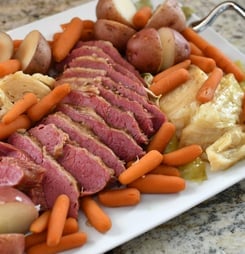
Irish immigrants began buying this salted beef, boiling it with cabbage and root vegetables in a one-pot meal that echoed older traditions but centered on brisket, which ultimately became a St. Patrick’s Day staple in Irish-American communities.
Montreal Smoked Meat: A Cousin of Brisket Pastrami
Montreal smoked meat, a signature delicacy of Quebec, is typically made from whole beef brisket that is cured with a spice blend, smoked, and then steamed.
Food historians trace it to Jewish immigrants from Eastern Europe who brought curing traditions similar to pastrami, but local preferences favored using the full brisket with varying fat levels instead of the leaner navel cut often used in New York delicatessens.
The result is a distinct texture and flavor profile that shows how a single cut of meat can evolve into different regional specialties through spice, curing, and smoking techniques.