
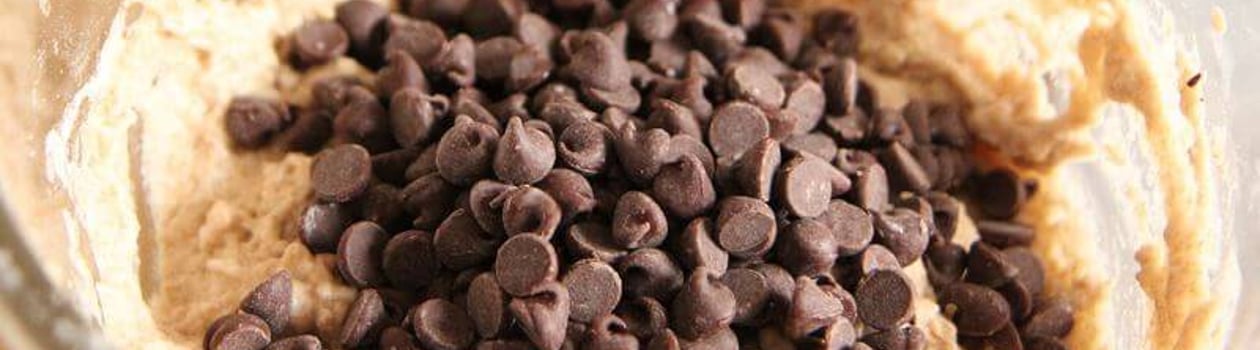
Is there anything that makes everything better like chocolate? Obviously not, that’s why the ultimate in chocolate portability was designed, the chocolate chip.
Chocolate chips are not only easy to transport around, they’re also completely versatile! Want to make any cookie better? Add chocolate chips! (Oatmeal, Macadamia, Peanut Butter?
All cookies that are better with chocolate chips!) National Chocolate Chip Day celebrates these amazing little culinary inventions, and all that they can do.
How to Celebrate National Chocolate Chip Day
Enjoy Food with Chocolate Chips
Well, the first thing to do is remember that National Chocolate Chip Day isn’t just about cookies, it’s about all the things you can include chocolate chips in!
Pancakes, muffins, pudding, ice cream, granola bars, pies, these are just a few of the wonderful creations you can add them to. We’ll be honest though, our favorite way to enjoy chocolate chips? By the handful out of the bag.
Include Chocolate Chips in Each Meal
If you’re really committed to the cause, though, why not add chocolate chips to all of your meals? For breakfast, add some chocolate chips to your cereal or start the day with some delicious chocolate chip pancakes!
For lunch, why not add some chocolate chips to your yogurt? You can then enjoy a tasty chocolate chip muffin or chocolate chip cookie as a midday snack.
And then, finish off the day with some chocolate chip ice cream after your dinner! It’s only one day of the year, so you may as well make the most of it, right?
National Chocolate Chip Day Timeline
Ruth Wakefield Creates the First Chocolate Chip Cookie
At the Toll House Inn in Whitman, Massachusetts, Ruth Graves Wakefield chops a Nestlé semi-sweet chocolate bar into bits and mixes them into cookie dough, creating what becomes known as the chocolate chip cookie.
Nestlé Prints Toll House Cookie Recipe and Adds Scoring to Bars
Responding to demand for Wakefield’s cookie, Nestlé makes a deal to print the Toll House Chocolate Crunch Cookie recipe on its semi-sweet chocolate bar wrappers and begins scoring the bars to make them easier to break into pieces.
Commercial Chocolate Chips (Morsels) Reach Grocery Shelves
Nestlé begins producing ready-made semi-sweet chocolate “morsels” specifically for baking, turning the chocolate chip into a distinct, mass-produced ingredient for home cooks.
Chips Ahoy! Brings Packaged Chocolate Chip Cookies to the Masses
Nabisco introduces Chips Ahoy! cookies as one of the first mass-market packaged chocolate chip cookies in U.S. supermarkets, helping make chocolate chip cookies a standard store-bought treat.
Chocolate Chip Cookie Dough Ice Cream Goes Nationwide
After experimenting with chunks of chocolate chip cookie dough in the early 1980s, Ben & Jerry’s rolled out Chocolate Chip Cookie Dough ice cream nationwide in the United States, cementing cookie dough and chips as a popular flavor.
History of National Chocolate Chip Day
It all started at a little place you may recognize the name of, the Toll House Inn! Located in Whitman, Massachusetts, it just happens to be the home of that most favorite of cookies, the chocolate chip cookie.
Ruth Graves Wakefield had originally planned on making a chocolate cookie, and decided to do so by throwing in chunks of a chocolate bar into it. In a happy accident, it turned out that the chocolate did not melt and mix with the rest of the cookie, but maintained its shape, filling the cookie with delicious little chocolate bits.
Thus was born the chocolate chip cookie, and the Toll House Cookie Company! From that day forward there have been new forms of chocolate chip added, white chocolate chip, mint chocolate, milk chocolate, bittersweet chocolate, even dark chocolate.
All of these varieties being added to delicious new recipes to create fantastic new treats for you to enjoy!
But it didn’t immediately go from chocolate bar to chocolate chip, there was a little innovation that happened in between first. Based off of the success of the cookies she made, Nestle agreed to add Ms. Wakefield’s recipe to their wrapper.
What did they pay her for this honor? A lifetime supply of chocolate! Sounds like an awesome deal to us too!
Nestle (and at least one other company) went on to include a chopping tool to help prepare the bars for use in cookies. That is, right up until 1941 when they started selling them as ‘chocolate chips’ or ‘chocolate morsels’.
Originally, the flavor of chocolate chips was semi-sweet. Today, we have seen so many different inventions.
Of course, semi-sweet is still as popular as ever. However, we’ve also got white and dark swirled, white chocolate, milk chocolate, dark chocolate, and bittersweet chocolate chips to feast on. Your imagination is the only limit when it comes to baking with this ingredient.
Bonus: Chocolate Chip Cookie Dough Pops Recipe
If you take a look on the Internet, you will see some exciting recipes for National Chocolate Chip Cookie Day. One of our favorite recipes is chocolate chip cookie dough pops. Here’s how to make them…
Ingredients
- 10 oz dark chocolate melting wafers
- ½ cup mini chocolate chips
- ½ teaspoon salt
- 1teaspoon vanilla extract
- ¼ cup of sugar
- 1 ½ cups of brown sugar
- 1 cup of unsalted butter, which has been softened to room temperature
- 1 ¾ cup of all-purpose flour
- Sprinkles are optional!
Instructions
- Grab a large bowl and place the sugars and softened butter inside. Use an electric mixer to combine the two ingredients until they are creamy.
- Add the salt and vanilla extract. Stir well.
- Gradually add the sifted, cooled flour mixture. Stir until the ingredients are combined fully.
- Now, we’re ready for the chocolate chips! Stir them in.
- You should now have your cookie dough mixture. Scoop it up into one and ½ tablespoon-sized balls. Roll the mixture between your palms until it is smooth.
- Place the dough balls onto a baking sheet that has been lined with wax paper, and leave it to chill in the fridge for 20 minutes.
- While the cooking dough is chilling in the fridge, you can prepare a box of the cookie dough pops to be placed inside. You can use a piece of styrofoam or any sort of box that you have in the home whereby a tiny hole can be pierced into the surface. Make sure that the cake pop stick is going to fit through the hole and that the stick will be supported once the cookie dough has been added to the end of it.
- Once your cookie dough balls are fully chilled, you can then prepare the melting wafers. There should be instructions on the package. It is best to follow this.
- Place a cake pop stick into a cookie dough ball, and then dip it into the melted chocolate. Drain off any excess chocolate, and add some sprinkles if you want to.
The Science and Secrets Behind Chocolate Chips
Chocolate chips may look simple, but there’s a surprising amount of science and history behind them.
From how they are designed to hold their shape in the oven to how their size and ratios affect the final cookie, these small ingredients play a big role in texture, flavor, and the classic chocolate chip cookie experience.
Industrial “Chips” Are Formulated Not To Lose Their Shape
Commercial chocolate chips are engineered differently from chocolate bars so they can survive a hot oven without simply melting into a puddle.
Many brands use a slightly lower cocoa butter content and add stabilizers such as soy lecithin or a higher proportion of sugar and milk solids, which raises the melting point and helps the pieces keep their distinctive teardrop or disc shape while still softening enough to create pockets of molten chocolate.
Standard Chip Sizes Quietly Shape Cookie Texture
Baking companies recognize at least three common chip sizes, and each one affects the final cookie differently.
Standard morsels are around 1,000 pieces per pound, while “mini” chips can be roughly 2,000 to 3,000 per pound and “jumbo” or “chunk” formats far fewer.
More, smaller chips distribute chocolate flavor evenly and encourage a more uniform crumb, while larger pieces create dramatic pockets of melted chocolate and can cause cookies to spread and crack in distinctive ways.
The Classic Toll House Ratio Became a Baking Template
The original Toll House chocolate chip cookie recipe, published in the late 1930s, used a now-classic balance of flour, fat, sugar, and semi-sweet chocolate pieces that has been copied and tweaked by generations of bakers.
Food historians note that its proportions of brown to white sugar and generous inclusion of chocolate morsels created the chewy, slightly crisp edge that many Americans still consider the “standard” chocolate chip cookie, influencing countless commercial and home recipes worldwide.
World War II Care Packages Helped Popularize Chocolate Chips
Chocolate chip cookies and the chips inside them spread across the United States during World War II through care packages mailed to soldiers.
Servicemen from New England received boxes of Toll House–style cookies from home and shared them with troops from other regions, creating demand for the recipe and for ready-to-use chocolate morsels when those soldiers returned home after the war.
Chocolate Chips Help Anchor a Multibillion-Dollar Cookie Market
Chocolate chip cookies remain the dominant style of packaged cookie in the United States, and chocolate chips are a core ingredient driving that market.
Industry analyses estimate that cookies account for several billion dollars in annual U.S. sales, with chocolate chip varieties consistently leading the category and helping sustain a steady demand for baking chips sold both to industrial bakeries and home bakers.
“Drop Cookies” Turned Chips into a Home-Baking Staple
The rise of “drop cookies” in 20th-century American cookbooks made chocolate chips an everyday pantry item.
Instead of rolled and cut dough, home bakers were encouraged to simply drop spoonfuls of soft batter studded with chocolate pieces onto baking sheets, saving time and skill.
This technique, paired with pre-sized morsels, helped standardize results and made the chocolate chip cookie one of the most approachable recipes for novice bakers.
Modern Chips Range From Single-Origin to Allergy-Friendly
Today’s baking chips extend far beyond basic semi-sweet morsels.
Manufacturers now produce single-origin dark chocolate chips that highlight specific cocoa-growing regions, dairy-free and soy-free chips for people with allergies, and even chips made from alternative sweeteners like coconut sugar or sugar alcohols.
These variations allow bakers to adjust flavor intensity, sweetness, and dietary profile without changing the familiar cookie format.
National Chocolate Chip Day FAQs
Did you know the chocolate chip cookie was invented by accident?
In 1938, Ruth Graves Wakefield, owner of the Toll House Inn in Massachusetts, intended to bake chocolate cookies.
Lacking baker’s chocolate, she substituted broken pieces of semi-sweet chocolate, expecting them to melt. Instead, the chunks retained their shape, leading to the creation of the first chocolate chip cookie.
How did chocolate chips become a staple in baking?
After the chocolate chip cookie’s invention, Nestlé saw a surge in demand for their semi-sweet chocolate.
They struck a deal with Ruth Wakefield to print her recipe on their packaging.
In exchange, she received a lifetime supply of chocolate. Nestlé then began producing ready-made chocolate chips to simplify the baking process.
What is the origin of National Chocolate Chip Day?
National Chocolate Chip Day is celebrated annually on May 15th.
While the exact origins of the holiday are unclear, it serves as a day to honor the versatile chocolate chip, encouraging enthusiasts to incorporate them into various recipes and indulge in chocolate chip treats.
How did chocolate chip cookies gain popularity during World War II?
During World War II, soldiers from Massachusetts shared chocolate chip cookies sent from home with fellow soldiers from other parts of the United States.
This sharing introduced the treat to a wider audience, significantly boosting its popularity nationwide.
What is the record for the world’s largest chocolate chip cookie?
In 2003, the Immaculate Baking Company in Flat Rock, North Carolina, baked a chocolate chip cookie weighing over 40,000 pounds.
The colossal cookie measured 102 feet in diameter and required a specially constructed oven for baking.
Are there variations of chocolate chips beyond the traditional semi-sweet?
Yes, chocolate chips come in various flavors, including milk chocolate, dark chocolate, white chocolate, and even flavored varieties like mint or peanut butter.
This diversity allows bakers to experiment with different tastes in their recipes.
Is there a difference between chocolate chips and chocolate morsels?
The terms “chips” and “morsels” are often used interchangeably.
However, some brands, like Nestlé, prefer the term “morsels.” Despite the naming differences, both refer to small chunks of chocolate used primarily in baking.
How did the chocolate chip cookie become Massachusetts’ official state cookie?
In 1997, Massachusetts designated the chocolate chip cookie as its official state cookie. This decision honored Ruth Wakefield’s creation of the cookie at the Toll House Inn in Whitman, Massachusetts.
What role did the Toll House Inn play in the history of chocolate chip cookies?
The Toll House Inn, owned by Ruth Graves Wakefield, is where the chocolate chip cookie was invented.
The inn’s popularity and the cookie’s subsequent fame led to the widespread adoption of the recipe, making it a staple in American households.
How have chocolate chip cookies influenced popular culture?
Chocolate chip cookies have become an iconic American treat, inspiring various adaptations in desserts like ice creams, cakes, and even being featured in popular media.
Their enduring popularity showcases their significant impact on culinary traditions and popular culture.

You may also like
National Cookie Dough Day
Unbaked delight with a mix of sweetness and texture, a culinary temptation awaiting the oven's transformative touch.
- Australia
- Canada
- United Kingdom
- and 1 more

National Chocolate Chip Cookie Day
Soft, gooey dough studded with sweet morsels of delight, fresh from the oven - a timeless treat that's sure to satisfy your sweet tooth.
National Corn Chip Day
Corn chips have long been a beloved snack, satisfying cravings with their distinctive crunch and bold corn flavor. Typically crafted from ground cornmeal, shaped and then fried or baked, these bite-sized morsels have made their mark as one of the most versatile and accessible snack foods on the market. National...
National Potato Chip Day
Crunchy and salty, these crispy snacks are perfect for any occasion. Pair with your favorite dip or enjoy them on their own.
- Australia
- Canada
- United Kingdom
- and 1 more
National days and holidays on May 15

Cannes Film Festival
The Cannes Film Festival is one of the most glamorous and important events in the film industry. Held annually in the beautiful city of Cannes on the French Riviera, this festival draws the biggest names in cinema, from directors to actors. The red carpet is a dazzling display of style...

National Bike to Work Day
Discover National Bike to Work Day, celebrating cycling as a healthier, eco-friendly commute that boosts fitness, saves money, and energizes the workday.

National NASCAR Day
Celebrate National NASCAR Day with thrilling stock car racing, fan events, and charitable giving that supports children’s health through the NASCAR Foundation.

National Safety Dose Day
Discover how National Safety Dose Day promotes safe prescription use, opioid awareness, proper storage, and disposal to prevent misuse, overdose, and harm.
Seize Every Day
Join free for personalised recommendations, email reminders and exclusive guides. Never miss a day.