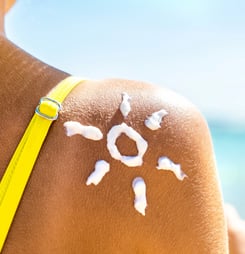

Although it might sound more like a dieter’s mantra, Don’t Fry Day is actually not about eating healthy food. Instead, the day is an initiative of the National Council on Skin Cancer Prevention.
So get that SPF sunscreen on hand and get ready to celebrate Don’t Fry Day!
Don’t Fry Day Timeline
Hippocratic observations on sun and skin
Ancient Greek physician Hippocrates notes both beneficial and harmful effects of sun exposure on the skin, an early recognition that sunlight can damage as well as heal.
First medical report linking sunlight to skin cancer
Swedish physician Erik Johan Widmark publishes one of the first documented clinical descriptions suggesting a connection between chronic sun exposure and skin tumors.
Modern sunscreen is created
Austrian chemist Franz Greiter develops “Gletscher Crème” after suffering severe sunburn while climbing Mount Piz Buin, helping launch the modern era of topical sun protection.
SPF rating system is standardized
The U.S. Food and Drug Administration begins formal regulation of over-the-counter sunscreen products and adopts the Sun Protection Factor (SPF) system to quantify protection against UVB radiation.
“Slip! Slop! Slap!” sun safety campaign launches
Australia’s Cancer Council debuts the “Slip! Slop! Slap!” campaign on television, using a cartoon seagull to popularize slipping on a shirt, slopping on sunscreen, and slapping on a hat.
Ozone layer and UV health risks recognized globally
The United Nations Framework Convention on Climate Change and ongoing Montreal Protocol actions highlight the health dangers of increased ultraviolet radiation from ozone depletion, including heightened skin cancer risk.
WHO classifies UV radiation as carcinogenic
The World Health Organization’s International Agency for Research on Cancer confirms solar ultraviolet radiation as a Group 1 carcinogen, firmly establishing excessive sun exposure as a major cause of skin cancer.
How to Celebrate Don’t Fry Day
Try out some of these ideas for celebrating Don’t Fry Day:
Use Sunburn Precaution Tactics
With the days of tanning and basking in the sun all day long behind us, the words on everyone’s lips these days might be something along the lines of ‘slip, slop, slap and wrap’.
This little mantra can be a great encouragement for sun worshippers to slip on a shirt, slop on sunscreen (SPF 30 and above is ideal), slap on a hat, and wrap on sunglasses.
Throw Out Old Sunscreen
One important thing to remember is that sunscreen can lose its effectiveness after sitting for a while. So be sure to check the expiration dates on bottles of sunscreen and throw out anything that is too old to be effective.
If there’s not a date on the bottle and no one in the family can remember when it was purchased, then it’s probably time for it to go!
Teach Kids About Sun Exposure
Don’t Fry Day is a great opportunity to teach kids about being sun smart in a light-hearted way. Sure, a little sunburn might not feel like the end of the world just one time, but kids need to know that prolonged exposure to the sun without protection, especially in certain areas of the world, can be a health risk.
So perhaps parents and teachers can try to make the education about Don’t Fry Day a bit fun and talk about ways to avoid becoming a lobster and living in the pain of sunburn through prevention and protection methods.
Host an Indoor Activity
Rather than staying out in the sun all day, why not celebrate by holding an indoor picnic and having a movie marathon for at least part of the day?
Or if the weather’s nice, grab some friends, get a beach umbrella, and have some sun-smart fun in the great outdoors. Just remember to follow the rules: slip, slop, slap and wrap between the hours of 10 and 4!
History of Don’t Fry Day
Since the beginning of time, the sun has been critical for human life on planet Earth. Without the sun, people would literally freeze to death!
But, less dramatically, people who do not get enough exposure to sunlight can have health problems such as Vitamin D deficiency and decreased serotonin. Lack of sunshine has also been linked to other health problems such as bone problems, skin problems, weight gain, depression, some cancers and more.
With that in mind, it’s important to remember that this day is not about making sure that people don’t get any sun exposure at all! The purpose of Don’t Fry Day is just what the name says – be careful not to get a sunburn.
The Skin Cancer Foundation, National Council on Skin Cancer Prevention, and other important organizations have made it clear that getting a little sun is good, but getting too much sun, or a sunburn, can be dangerous.
Especially if sunburns are repeated over and over again. In fact, sunburn is a leading cause of a few different forms of skin cancer, including the most deadly one, melanoma.
The great news is that sunburn is completely preventable! And that’s why Don’t Fry Day was established by the National Council on Skin Cancer Prevention, to raise awareness for the various actions that can be taken to protect and prevent children and adults from too much exposure to the sun. The event is also supported by the Envirnomental Protection Agency.
Situated just in advance of the warmest months of the year, at least in the northern hemisphere, Don’t Fry Day offers a kind reminder each year for people to be careful and take care of their skin health!
Facts About Don’t Fry Day
UV Radiation Reaches Skin in Different Ways
Sunlight contains UVA and UVB radiation that penetrate the skin at different depths.
UVB rays are mostly responsible for sunburn because they are largely absorbed by the epidermis, directly damaging DNA, while UVA rays penetrate more deeply into the dermis and contribute heavily to photoaging and indirect DNA damage through reactive oxygen species.
Both UVA and UVB are now recognized as carcinogenic to humans.
Childhood Sunburns Have a Long-Term Cancer Cost
A history of blistering sunburns in childhood or adolescence significantly raises the risk of melanoma and other skin cancers later in life.
Large cohort studies have found that people who report five or more blistering sunburns between ages 15 and 20 have about double the risk of melanoma in adulthood compared with those who were not severely burned, underscoring how intermittent intense exposure can be more dangerous than regular modest exposure.
Shade and Clothing Often Protect Better Than Sunscreen Alone
Public health guidance now emphasizes a hierarchy of sun protection that starts with shade and protective clothing before sunscreen.
Wide-brimmed hats, tightly woven long sleeves, and UV-blocking sunglasses can physically block most ultraviolet radiation, and the World Health Organization notes that these measures, combined with seeking shade during midday hours, often provide more reliable protection than sunscreen used by itself or applied too thinly.
Most People Underapply Sunscreen by More Than Half
Standard SPF testing assumes sunscreen is applied at 2 milligrams per square centimeter of skin, but observational studies show that typical users apply only 25 to 50 percent of this amount.
As a result, an SPF 30 product may deliver protection closer to SPF 9 to 15 in everyday use, which is why dermatology organizations recommend generous application, reapplication every two hours, and pairing sunscreen with other sun-safe behaviors.
The Modern Sun-Protection Factor System Emerged in the 1970s
Although various sunblocking creams existed earlier, the numerical Sun Protection Factor (SPF) system was developed in the 1960s and gained international traction in the 1970s as a standardized way to compare products.
SPF measures how much longer protected skin can be exposed to UVB before burning relative to unprotected skin, and regulatory agencies such as the U.S. Food and Drug Administration now require testing protocols and labeling that distinguish between UVB-only and broad-spectrum (UVA and UVB) protection.
The UV Index Translates Invisible Radiation into a Simple Scale
To help the public understand daily risk from ultraviolet radiation, meteorological and health agencies created the UV Index, a scale that typically runs from 0 to 11+.
Developed in the early 1990s and later standardized by the World Health Organization, World Meteorological Organization, United Nations Environment Programme, and the International Commission on Non-Ionizing Radiation Protection, the index ties specific protection advice to each level, such as seeking shade and using SPF 30+ when values reach 3 or higher.
Skin Cancer Rates Reflect Latitude and Lifestyle
Nonmelanoma and melanoma skin cancers are among the most common cancers worldwide, and their incidence patterns strongly reflect geography and behavior.
Countries with large fair-skinned populations living at lower latitudes, such as Australia and New Zealand, report some of the highest melanoma rates, especially among outdoor workers and recreational sunbathers, while darker-skinned populations have lower overall incidence but often present with more advanced disease when it does occur.