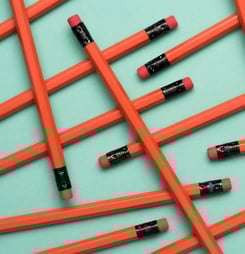

You know you’ve always wanted to, to grasp a piece of charcoal and strike your creativity out across the world in a million shades of grey.
To pick up a pencil and create the world in your head on the page in front of you, maybe it’s crayons that’s your thing.
Whatever your medium, Drawing Day is dedicated to the artist inside us, encouraging it to come out and letting it flourish every day of the year to follow!
Drawing Day Timeline
Prehistoric Cave Drawings
Early humans created figurative images of animals and symbols on cave walls in sites such as Lascaux in France, using mineral pigments and charcoal; these drawings serve as some of the earliest known examples of visual communication.
Classical Drawing in Greece and Rome
Ancient Greek and Roman artists refine line drawing on pottery, wall paintings, and preparatory sketches, using stylus and brush to study the human figure and proportion, establishing many of the conventions later adopted in Western art.
Paper Reaches Europe
Paper, invented in China centuries earlier, is manufactured in Europe by the late 1200s, giving artists a more affordable and portable surface for sketching and practice, which encourages wider use of drawing for study and experimentation.
Renaissance Sketchbooks and Scientific Drawing
Artists like Leonardo da Vinci fill notebooks with anatomical studies, mechanical designs, and compositional sketches, treating drawing as both an artistic and investigative tool and elevating it as the intellectual foundation of painting and sculpture.
Académie Royale and Academic Figure Drawing
The French Académie Royale de Peinture et de Sculpture was founded in Paris and established systematic training in drawing from plaster casts and live nude models, making figure drawing the core discipline for professional artists in Europe.
Commercial Graphite Pencils Standardized
Nicholas-Jacques Conté in France patents a method of mixing graphite with clay and firing it, creating durable, graded graphite pencils that become a primary tool for artists, engineers, and students worldwide.
École des Beaux-Arts and Formal Drawing Curriculum
The École des Beaux-Arts in Paris formalizes a rigorous curriculum centered on drawing, from copying Old Masters to life drawing, influencing art education across Europe and North America and reinforcing drawing as the essential base of visual art training.
How to Celebrate Drawing Day
It’s not rocket science (although a rocket can be your first drawing); all you need is a pencil and paper to get going!
Start Drawing
Don’t fear the blank page; let it fear you! To start off easy, study the things close to you. A table lamp, a sofa, a pet or perhaps birds in your garden. Get your wrist flowing and the cognitive part of your brain to link what you see to your physical body.
Let your pencil run free; don’t worry about making mistakes. Drawing is kind of like writing; sometimes you just need to let the words flow out without stopping to fully flesh out an idea.
Draw with Feeling
They say the eyes are a wreveal a person’s inner selfng is the door. A picture speaks a thousand words and drawings will act as a bridge of expression, transporting them to a better place mentally!
Once you feel loosened up with sketching, it might be time to get serious. When you begin to open up your heart and mind, you will let out your true energy and nature. What are the emotions you feel the most?
Learn About Famous Drawings
Some of the most vividly haunting paintings ever have been about everyday emotions that we go through.
One of the most iconic paintings that illustrate despair, sadness, and desperation is ‘The Scream’ by Edvard Munch. Sold for an incredible $120 million in New York in 2012, it’s a painting that started off as a very simple sketch.
Draw with Your Children
Sitting down with your children to draw with them will give them the confidence to let out a side of them they would be embarrassed or shy about with anyone else.
No matter if your kids are below 10 or in their late teens, ask them to join you in this amazing event. Be prepared to lead by example and make a few laugh-out-loud bad drawings before you really put some effort into your pencil strokes.
Donate Drawing Supplies to Others
Drawing Day is for everyone and nobody should be excluded because they don’t have the equipment. Go onto an art supplies website and buy as much as you can.
Make sure to source different varieties of the same type of product for different effects.
Buying sketch pads, drawing pencils, pastel crayons and painting kits for the needy children in your neighborhood may spawn a diamond in the rough. A child’s life may be impacted because of the things you donated to your local community center or school!
History of Drawing Day
This event was first celebrated in 2008 when it was started by a grassroots movement of folks who wanted to shine a spotlight on the importance of drawing and art in our daily lives.
Drawing Day is here to remind us of the time when we were too tied up in the amazing and beautiful things that came out of our imagination and onto the page to be self-conscious about them.
Drawing Day acts as a reminder that everything inside you is worthwhile and worthy of being shared with the world. It’s also there to bring much-needed appreciation and awareness to illustrators and artists.
Anywhere you see a picture, from a business card to a beautiful mural on a painting to every birthday card you’ve ever bought, an artist was involved in making it.
The best way we can thank these intrepid creative souls is by picking up the pencil and making some noise for the lost and forgotten artists of the world. And maybe find a few more in the process.
This event is also a great chance to introduce a unique kind of treatment. If you have autistic children or depressed members of your household, drawing will act as a form of emotional therapy. It allows them to take their mind off their worries and focus on themselves.
Facts About Drawing Day
The First Known “Drawing Manuals” Appeared in Renaissance Italy
Although people had drawn for millennia, systematic instruction in drawing only became widespread in Renaissance Italy, when artists such as Cennino Cennini wrote treatises explaining techniques, materials, and step‑by‑step methods for learning to draw from life.
These early manuals helped shift drawing from a mostly workshop craft to a discipline that could be taught, analyzed, and consciously improved, laying the groundwork for later art academies.
Architects Once Designed Entire Cities Using Only Hand Drawings
Before computer-aided design, architects and urban planners relied entirely on hand drawing to imagine and communicate projects at every scale, from door handles to whole cities.
The modernist master Le Corbusier, for example, developed his influential urban visions such as the “Ville Radieuse” through hundreds of freehand sketches and diagrammatic drawings, showing how drawing functioned as both a thinking tool and a final form of representation.
Doctors Used Drawing to Teach Anatomy Long Before Photography
In the 16th century, anatomists such as Andreas Vesalius commissioned detailed drawings of dissected bodies for printed atlases, because accurate images were crucial for teaching medicine.
These hand‑drawn plates, based on direct observation, corrected long‑standing errors from earlier texts and helped standardize anatomical knowledge across Europe in a way that written descriptions alone could not.
Drawing Can Enhance Memory More Than Writing or Reading Alone
Psychology experiments have found that people remember information better when they draw it instead of just writing or reading it.
In one study, participants who sketched simple pictures of words such as “apple” or “balloon” later recalled almost twice as many items as those who copied the words repeatedly, suggesting that drawing recruits multiple systems in the brain, including motor control, imagery, and semantic processing.
Children’s Drawings Reveal Predictable Stages of Development
Developmental psychologists have observed that children’s drawings follow a fairly consistent progression worldwide, from early “scribbles” around age 2 to recognizable human figures and spatial organization by about age 6 or 7.
These changes track advances in motor control, perception, and symbolic thinking, which is why clinicians sometimes use drawing tasks as informal windows into a child’s cognitive and emotional development.
Hand Drawing Remains Central to Engineering and Design Education
Even in the age of 3‑D modeling software, many engineering and industrial design programs still require courses in freehand technical sketching.
Educators argue that the act of drawing mechanisms, products, and diagrams by hand strengthens spatial reasoning and helps students detect design flaws early, making sketching a practical problem‑solving skill rather than just an artistic extra.
Ancient Rock and Cave Drawings Functioned as Early Data Records
Prehistoric drawings on rock walls and cave ceilings often went beyond simple decoration, recording information such as animal behavior, migration routes, and seasonal changes.
Recent analyses of European cave markings suggest that some Ice Age hunters used repeated symbols next to animals to track mating or birthing cycles, indicating that drawing played a role in early attempts to systematically record and transmit practical knowledge.