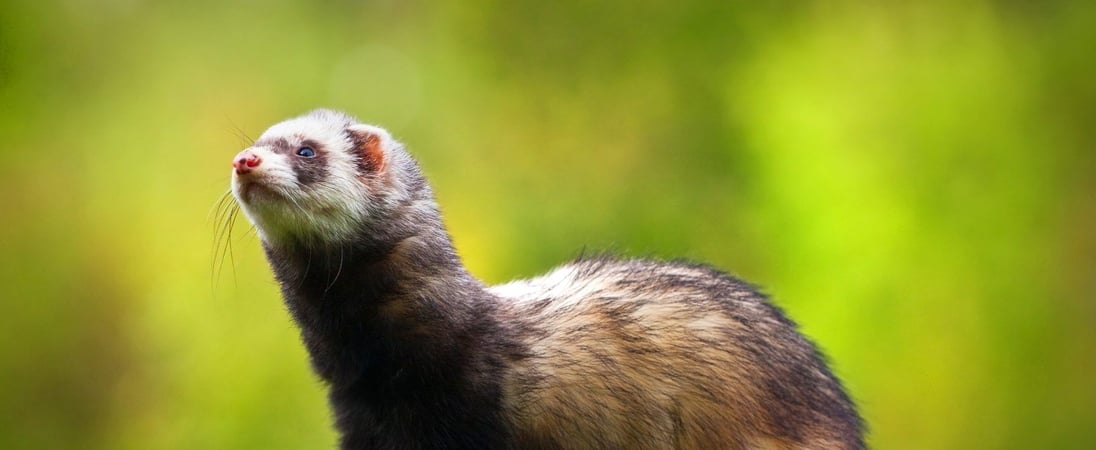
National Ferret Day
Spend time with your pet ferret, support a ferret rescue or adoption center, or learn about these fascinating mustelids on National Ferret Day.
The ferret is a much maligned and misunderstood animal, widely believed to be a smelly, quarrelsome, amoral, biting beast. All you have to do is take a quick look at some of the most popular children’s stories like Wind in the Willows to observe this phenomenon.
However, this stereotype couldn’t be further from the truth. Ferrets are often kept as working animals due to their agility and intelligence but are also increasingly known to make loyal and rewarding companions.
National Ferret Day promotes the true virtues of this cute, cuddly critter and furthers the welfare of ferrets everywhere!
How to Celebrate National Ferret Day
Spend Time with Ferrets
If you have a ferret, celebrating this day is as simple as spending some extra time with your pet – like all pets, nothing could make your ferret happier than just having some fun with you.
Ferrets love having their curiosity and quick wits satisfied, so set up some games and challenges for them such as mazes and obstacle courses or teach them a new trick!
Visit a Pet Store
Even if you don’t have a pet ferret (yet!), there’s no reason why you shouldn’t celebrate National Ferret Day! Why not head over to your local pet store and say hello to their ferrets?
Even if you’re not looking to get one, you can still have a cuddle and see these animals up close and personal. And who knows – you may even be inspired to welcome one or more into your home!
You could also try pet sitting for someone you know or via a website – volunteer your services and make some furry friends.
Support an Animal Welfare Center
If you’re really serious about these creatures, then consider supporting an animal welfare center or shelter that rescues lost and abandoned ferrets, either through donations or volunteering.
You could also contribute to a charity such as the World Wide Fund for Nature (WWF) that works to protect the black-footed ferret from extinction.
These wild ferrets, native to North America, are endangered due to habitat loss and disease, but dedicated conservation efforts mean they’re starting to see a comeback!
Watch a Movie About Ferrets
There are also some great movies and documentaries featuring these amazing little animals. Check out the documentary Ferret Town to learn more about the rediscovery and conservation of the black-footed ferret.
Kindergarten Cop features a ferret as the class mascot (although ironically the star of the film, Arnold Schwarzenegger, vetoed a bill lifting a ban on ferrets in California when he was governor!), while Harry Potter and the Goblet of Fire sees Draco Malfoy turned into a white ferret as punishment!
Learn Fun Facts About Ferrets in Pop Culture
In the UK, rural fairs and festivals organize ferret racing competitions in which the ferrets run through pipes while their owners bet on which animal will make it through first.
There’s also a rather niche and unusual sport called ferret-legging – not for the faint-hearted, it involves putting a couple of ferrets down your trousers and seeing how long you can stand it, with the world record holder lasting five and a half hours!
Ferrets have even featured in well-known artworks. The most famous artistic portrayal of a ferret is undoubtedly Leonardo da Vinci’s Lady with an Ermine painting, dating back to 1490, which many scholars believe in fact features a ferret.
There’s also a portrait of Queen Elizabeth the First with a pet ferret that’s wearing a tiny crown as a collar.
With so many ways to celebrate, you can be sure to have a whole bundle of fun this National Ferret Day!
1933
Ferrets Established as a Model for Human Influenza
British researchers showed in 1933 that ferrets could be infected with and transmit human influenza, launching their long-standing use as a premier model for respiratory virus pathogenesis, transmission, and vaccine testing.
National Ferret Day Timeline
4th century BCE
Early Domestication in the Mediterranean
Classical sources suggest small mustelids closely related to today’s ferrets were tamed around the Mediterranean to protect grain from rodents and to flush rabbits from burrows.
6 BCE
Use of Ferrets for Rabbit Control in the Balearic Islands
Roman accounts describe rabbits overrunning the Balearic Islands and report that Julius Caesar ordered the use of ferrets to drive rabbits from their burrows, an early recorded public pest-control campaign.
Middle Ages (c. 1200s–1400s)
Ferreting Becomes an Established Hunting Practice in Europe
By medieval times, “ferreting” with nets and ferrets was a common method of rabbit hunting across Europe, depicted in manuscripts and legal texts and practiced by both nobles and farmers.
Mid‑19th century
Domesticated Ferrets Spread on Ships for Rodent Control
As global trade expanded, ships routinely carried domesticated ferrets to control rats and mice aboard vessels, helping protect food stores and cargo on long voyages.
1880s–1890s
Introduction of Ferrets for Rabbit Control in New Zealand
Thousands of ferrets were imported into New Zealand and released or bred to curb exploding rabbit populations, a large‑scale biological control effort that later created serious impacts on native wildlife.
1911
First Recorded Biomedical Research Study Using Domestic Ferrets
The earliest published biomedical study using the domestic ferret appeared in 1911, marking the beginning of its role as a laboratory animal for physiology and disease research.
1933
Ferrets Established as a Model for Human Influenza
British researchers showed in 1933 that ferrets could be infected with and transmit human influenza, launching their long-standing use as a premier model for respiratory virus pathogenesis, transmission, and vaccine testing.
History of National Ferret Day
The word ‘ferret’ comes from the Latin for ‘little thief’, which perfectly captures these creatures’ nature of ‘ferreting’ things out.
Humans are thought to have domesticated ferrets from the European polecat about 2,500 years ago, and historians believe this was most likely for hunting purposes, for example by the Romans.
When Europeans traveled to America, they soon decided to bring ferrets to their colonies as a way of getting any rodent problems under control. And they’re still used to manage so-called plague species, such as rabbits, to this day.
Nowadays ferrets are of course relatively common household pets, but that’s not their only role in the modern era.
These animals have also been used in many areas of research, such as the pathogenesis and treatment of various diseases, with fields such as virology, endocrinology and neuroscience using ferrets as experimental subjects. They’ve even been used in studies of Covid-19 and the development of a vaccine.
Ferrets also play a role in the construction industry due to their adeptness at running through pipes and cables.
Thanks to their slender build, they’ve run wire for some of the most important events in recent UK history, such as the wedding of Prince Charles and Princess Diana in Buckingham Palace and the London Millennium Concert in Greenwich Park.
National Ferret Day was officially recognized in 2014, although it had in fact been created several years before that by Carol Roche, a New Yorker enchanted by her new pet, which she said was “as affectionate and social as a puppy and independent and playful as a kitten”.
National Ferret Day seeks to celebrate these remarkable and resilient creatures as well as raise awareness about the best standards of welfare, nutrition and care.
National Ferret Day provides a focus for ferret lovers to work together and share their passion, as well as educate the wider public about this fine, upstanding member of the weasel family.
Bonus: How to Care for Ferrets
As with all pets, it’s important to ensure ferrets are well-cared for. They’re sociable animals (in fact a group of ferrets is called a “business”, and they definitely have fun like nobody’s business!) so it’s best to have at least two if you can and to spend lots of time playing and exercising with them.
They can also be a real handful if not properly trained, so put them on their best behavior from a young age, for example by training them to use a litter box.
Ferrets are carnivores, meaning a diet of cat-food or tailored ferret food suits them well. Older ferrets tend to turn their nose up to food they haven’t tried before, so give them as varied a diet as possible in their first six months.
They love to sleep, dozing for up to 18 hours daily, and are most active at dawn and dusk. However, don’t be alarmed if your ferret starts jumping about excitedly and bumping into things – this behavior is known as a “war dance” and is a way of expressing joy!
Fascinating Scientific Facts About Ferrets
Ferrets are curious, energetic animals with unique biological traits that make them interesting not only as pets but also as valuable subjects in scientific research.
The following facts explore how ferrets’ specialized metabolism shapes their diet and how their respiratory systems make them important models for studying human viruses and infectious diseases.
-
Ferrets’ Specialized Carnivore Metabolism
Domesticated ferrets have a very short digestive tract and lack a cecum, which means they cannot efficiently process fiber and must eat a highly digestible, meat-based diet.
Veterinary nutrition studies show that ferrets rely almost entirely on animal protein and fat for energy, with rapid gut transit times of about 3 to 4 hours, which is why free‑feeding or multiple small meals of high‑protein food are recommended for their health.
-
Why Ferrets Are a Go‑To Model for Human Respiratory Viruses
Researchers use ferrets extensively to study human influenza and SARS‑CoV‑2 because their upper respiratory tract is anatomically similar to that of humans, and they show comparable clinical signs, like fever, sneezing, and virus shedding.
Experimental infections demonstrate that ferrets can be infected with many human flu strains and transmit them via respiratory droplets, making them one of the closest small‑animal models for understanding how these viruses spread in people.
-
Ferrets’ Role in Early COVID‑19 Research
In the early stages of the COVID‑19 pandemic, ferrets helped scientists test how efficiently SARS‑CoV‑2 spread through the air and how well vaccines and antiviral drugs might work.
Controlled studies found that infected ferrets readily transmitted the virus to others in nearby cages, and that their neutralizing antibody responses after infection or vaccination closely paralleled those seen in human patients, providing crucial preclinical data before large human trials.
-
An Almost‑Lost Predator: The Black‑Footed Ferret Bottleneck
The black-footed ferret, North America’s only native ferret species, experienced one of the most extreme population bottlenecks recorded for a mammal.
After being presumed extinct twice, just 18 individuals discovered in Meeteetse, Wyoming, in the 1980s became the founders of an intensive captive‑breeding and reintroduction program, and every black‑footed ferret alive today descends from this tiny group.
-
From Zero to Hundreds: Black‑Footed Ferret Recovery Efforts
Since the U.S. Fish and Wildlife Service launched its black‑footed ferret recovery program, more than 4,000 captive‑bred ferrets have been released at dozens of reintroduction sites across the Great Plains.
Although the species remains endangered and vulnerable to habitat loss and diseases like sylvatic plague, several wild populations are now reproducing on their own, and a few hundred ferrets are estimated to live in the wild at any given time.
-
How Domesticated Ferrets Differ from Their Wild Relatives
Genetic and behavioral studies suggest that domesticated ferrets were derived from the European polecat, yet centuries of selective breeding have made them far more tolerant of handling and dependent on humans.
Unlike polecats, which lead largely solitary, territorial lives, pet ferrets show reduced fear of humans, greater social play, and altered coat colors, all classic signatures of long‑term domestication.
-
Ferrets’ Unusual Sleep and Activity Pattern
Ferrets are crepuscular, meaning they are most active at dawn and dusk, and they typically sleep 14 to 18 hours per day.
Studies of their daily activity cycles show that, given the chance, ferrets consolidate wakeful periods into two main bursts of high‑energy play and exploration, which is one reason structured play sessions at these times align so well with their natural biology.
National Ferret Day FAQs
What is the history behind ferrets being used as hunting companions?
Ferrets have been hunting partners for centuries. Ancient Romans used them to control rodents and flush rabbits from burrows.
They were also favored in medieval Europe for their agility in tight spaces.
Historical texts even reference ferrets in farming communities, where they played crucial roles in pest control.
Their hunting skills were prized until the introduction of advanced tools and traps.
Why is a group of ferrets called a ‘business’?
The term ‘business’ for a group of ferrets stems from their busy, curious nature.
Ferrets are highly social and love exploring together. The name likely originated from observing their relentless energy and teamwork when hunting or playing.
This quirky terminology highlights their unique behavior compared to other animals.
How did ferrets assist during the COVID-19 pandemic?
Ferrets became key players in COVID-19 research. Scientists discovered that ferrets’ respiratory systems closely mimic humans’.
Researchers studied virus transmission and vaccine efficacy using ferrets, gaining valuable insights into how COVID-19 spread and how vaccines could prevent it.
What unusual roles have ferrets played in modern technology?
Ferrets have assisted in laying cables for complex projects. For example, they helped thread wiring in tight spaces during events like Prince Charles and Princess Diana’s wedding.
Their slim, flexible bodies made them perfect for tasks in places human workers couldn’t reach. Engineers sometimes still use ferrets for similar jobs today.
What is the ‘weasel war dance,’ and why do ferrets do it?
The ‘weasel war dance’ is a display of excitement. Ferrets puff their tails, arch their backs, and hop wildly.
This behavior may seem aggressive but is usually a sign of playful energy or the thrill of capturing prey. Ferret owners often see this dance during playtime.
Are there any cultural superstitions about ferrets?
In some cultures, ferrets are considered symbols of cleverness and stealth.
Medieval Europeans thought ferrets could ward off evil spirits, thanks to their ability to chase pests.
However, they were also linked to mischief in literature and folklore, often representing tricksters or sneaky characters.
What unique celebrations exist for National Ferret Day around the world?
In the United States, ferret owners organize costume contests, parades, and educational events to honor their pets.
In the UK, some towns host ‘ferret racing,’ where the animals run through tunnels in playful competitions.
These events celebrate ferrets’ agility and charm while promoting responsible pet ownership.
How did ferrets become domesticated?
Domesticated ferrets are thought to descend from the European polecat, a wild cousin.
Humans began breeding ferrets over 2,500 years ago for pest control. Unlike their wild relatives, domesticated ferrets rely entirely on humans for food and care.
They’re among the oldest domesticated animals, alongside dogs and cats.
What is the significance of ferrets in literature and media?
Ferrets often appear in stories as cunning, mischievous characters.
For example, they’re portrayed as villains in The Wind in the Willows. More recently, ferrets feature in films like Along Came Polly, where their playful antics steal the show.
These depictions reflect both admiration for and stereotypes about their curious nature.
How do ferrets communicate with each other and their owners?
Ferrets use a mix of vocalizations and body language. When happy, they make a distinctive “dooking” sound, similar to a chuckle.
Tail wagging or puffing signals excitement or fear. Understanding these cues helps owners bond with their pets and respond to their needs.
Also on ...
View all holidays
International Children’s Book Day
Revisit your childhood favorites, or read them to your own kids or grandkids. Check out new children’s book recommendations, and help kids learn to love reading.

National Burrito Day
Line up some meat, beans and cheese on a large flour tortilla. Fold in the sides, fold up the bottom and then roll on, my friend, roll on! And it’s the rolling that really makes the burrito come alive.

National Love Your Produce Manager Day
Year-round berries, citrus, veggies, and more all at once would have once been impossible. But Produce managers give you all of these options, carefully selected.