I am and always will be the optimist. The hoper of far-flung hopes, and the dreamer of improbable dreams.
11th Doctor Who
Some food pairings make perfect sense. Others feel like they were assembled by a time traveler rummaging through a freezer with one hand and a dessert cup with the other.
Fish Fingers and Custard Day celebrates the second category, honoring a famously odd snack from Doctor Who that somehow became a lovable badge of fandom and a tasty dare all at once.
History of Fish Fingers and Custard Day
Since the early 1960s, the BBC television series Doctor Who has been appearing in living rooms with a mix of science fiction, mystery, humor, and just enough heartfelt weirdness to make it unlike anything else on TV. The original run lasted from 1963 to 1989, and the series later returned in 2005 with a new era that welcomed longtime devotees and brand-new viewers alike.
Over the decades, the show’s central idea has remained delightfully simple: a brilliant alien known as the Doctor travels through time and space, saving civilizations, making mistakes, learning lessons, and picking up companions who keep the Doctor grounded.
The Doctor changes faces through regeneration, which allows the character to evolve while still remaining the same person at the core. That built-in reinvention is part of why the show’s fanbase stays lively. Every Doctor brings new quirks, new tastes, and new catchphrases. And occasionally, a new Doctor brings a snack that no reasonable person would request with a straight face.
Fish fingers and custard entered the Whoniverse in the modern series episode “The Eleventh Hour,” the first episode featuring Matt Smith as the Eleventh Doctor. In that story, the Doctor is fresh from regeneration and not exactly running at full capacity.
Regenerations on Doctor Who often come with a hazy adjustment period, and the Eleventh Doctor’s post-regeneration confusion plays out in a domestic setting that makes the sci-fi feel oddly relatable. He’s hungry, picky, and determined to find the “right” food to settle his new body.
That’s where the now-iconic moment happens: the Doctor samples a series of ordinary foods offered by a young Amelia Pond. He rejects them in rapid, comedic succession. Then he discovers fish fingers and custard and decides, with total confidence, that this is the answer.
The combination is presented with the show’s signature blend of sincerity and absurdity: it’s funny because it’s strange, but it also signals something important about the Doctor. He’s alien. He’s unpredictable. And he’s willing to commit fully to an improbable idea.
What could have been a one-off gag remained in the fandom’s imagination. Fans repeated the pairing at viewing parties, referenced it in jokes, recreated it in photos and videos, and treated it as a shorthand for the Eleventh Doctor’s era.
Even within the series, the snack becomes a kind of emotional touchstone, tied to the Doctor’s relationship with Amy Pond and to the feeling of recognizing someone who has changed yet is still familiar.
Fish Fingers and Custard Day grew out of that cultural ripple effect. It is often associated with the anniversary of “The Eleventh Hour,” and it has been promoted as a fan-friendly occasion to try the snack, revisit the episode, and generally embrace the playful side of being a Doctor Who viewer.
Like many pop-culture celebrations, it thrives because it is easy to participate in. All that is required is curiosity, a sense of humor, and a willingness to dip something savory into something sweet just to see what happens.
It also helps that the components are recognizable comfort foods in many households. “Fish fingers” are typically breaded, finger-length pieces of white fish, commonly found in the frozen section. In the United States, they are more often called fish sticks.
“Custard” in this context generally means a sweet vanilla custard, similar in spirit to vanilla pudding. Put them together, and the results can range from “surprisingly okay” to “why did that work?” depending on the exact brands, temperatures, and personal expectations.
In other words, it is the perfect celebration for optimists, hoppers of far-flung hopes, and dreamers of improbable dreams.
Fish Fingers and Custard Day Timeline
1844
Alfred Bird Develops Egg‑Free Custard Powder
British chemist Alfred Bird created a custard powder made without eggs, helping turn easy-to-make pouring custard into an everyday dessert sauce in Victorian homes.
[1]
1900
Early Use of the Term “Fish Finger”
A popular British magazine prints a recipe using the term “fish finger,” showing that finger-shaped fried fish appears in print decades before the modern frozen product.
[2]
1920s
Clarence Birdseye Pioneers Quick Freezing
American inventor Clarence Birdseye developed commercial quick-freezing methods, laying essential technological groundwork for later frozen foods such as fish sticks and fish fingers.
[3]
October 2, 1953
Frozen Fish Sticks Debut in the United States
General Foods releases breaded frozen fish sticks under the Birds Eye label, giving American shoppers a new, convenient way to cook fish at home.
[4]
September 26, 1955
Birds Eye Launches Fish Fingers in Britain
Birds Eye officially launches its fish fingers from the Great Yarmouth factory, with trials showing cod-based fingers are preferred and the name “fish fingers” is adopted for the new product.
[5]
How to Celebrate Fish Fingers and Custard Day
As the Fourth Doctor would say, “There’s no point in being grown up if you can’t be childish sometimes.” Fish Fingers and Custard Day exists to prove exactly that. The whole idea is delightfully ridiculous: try a snack that sounds completely wrong and enjoy the experience anyway. Whether you are a dedicated Doctor Who fan or simply curious about the strange combination, these ideas keep the celebration playful, simple, and welcoming.
Try Fish Fingers and Custard
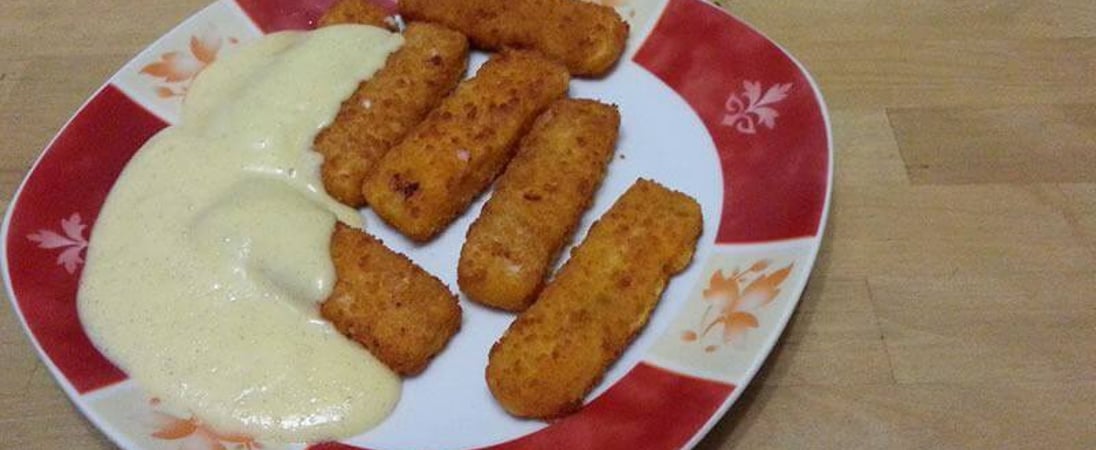
The main event is exactly what it sounds like. Cook fish fingers (or fish sticks), prepare vanilla custard, and dip one into the other. It may sound unusual, but that is the entire point of the tradition.
A few practical tips can make the experience closer to the spirit of the show and, honestly, a bit more enjoyable to eat:
- Aim for crispy fish. Bake or air-fry the fish fingers so the coating stays crunchy. If they are soggy, the custard tends to slide off and the texture becomes less charming and more confusing.
- Keep the custard thick and smooth. A thicker custard works better for dipping. If it is very thin, it behaves more like a sweet sauce and changes the whole experience.
- Try warm fish with cool custard. Many fans enjoy the contrast between hot, crispy fish and cool, creamy custard. Others prefer both slightly warm. Trying a couple of bites at different temperatures can help you find what works best.
- Start small. One fish finger dipped once is enough to understand the concept. There is no need to commit to a full plate before deciding whether it is surprisingly pleasant or simply a funny experiment.
- Choose a mild fish. Traditional fish fingers use mild white fish, which pairs better with sweetness. Stronger fish flavors can make the custard taste overly fishy.
The taste is difficult to predict until you try it. The breading provides salt and crunch, the fish offers a soft savory center, and the custard adds sweetness and creaminess. Some people say the custard functions like a gentler, sweeter dipping sauce, somewhat similar to how tartar sauce adds creaminess to fried fish. It is not that fish and custard were meant to go together; it is simply that crispy, salty foods sometimes work surprisingly well with sweet, creamy flavors.
For a group celebration, it can easily become a lighthearted tasting activity:
- Offer small “trial bites.” Cut fish fingers into smaller pieces so everyone can sample without pressure.
- Provide optional extras. Some people like a pinch of black pepper on the custard, or fries on the side to reset the palate between bites.
- Record reactions. Watching people take their first bite has become part of the tradition. The hesitation, the thoughtful chew, and the final verdict are often the best part.
If you want to lean into the theatrical side of Doctor Who, presentation can add to the fun. Serve the custard in a small dipping bowl and arrange the fish fingers neatly on a plate, as if they are being presented to a very particular Time Lord. The more serious the presentation, the funnier the moment becomes.
Watch Some Doctor Who Episodes
Fish Fingers and Custard Day is the perfect excuse for a Doctor Who watch session. It can be as simple as enjoying one episode with snacks or as ambitious as a marathon featuring several Doctors from different eras.
A few ideas make it easy to organize:
- Rewatch the moment that started it all. “The Eleventh Hour” is the obvious choice. It introduces the famous snack and serves as the first episode featuring the Eleventh Doctor. It also works well for new viewers because it begins a fresh storyline.
- Alternate novelty snacks with normal ones. Enjoy fish fingers and custard during the key episode, then switch to more familiar snacks afterward.
- Create a character-inspired snack table. Add small extras that feel playful and eccentric, like jelly beans, tea, or other quirky treats that match the spirit of the series.
If someone in the group is new to the show, these episodes offer a nice introduction to different sides of Doctor Who:
- An Unearthly Child (1963). The very beginning of the series. It introduces the Doctor and the basic idea of traveling through time and space. Watching it highlights how much the show has evolved over the decades.
- The Eleventh Hour (2010). The essential Fish Fingers and Custard Day episode. It captures the Eleventh Doctor’s quirky personality and introduces important characters in that era of the series.
- Blink (2007). One of the most famous episodes is known for its clever storytelling and unforgettable monsters. It also shows how inventive and suspenseful the series can be.
Watching Doctor Who with others adds to the enjoyment. The show naturally invites conversation, theories, and the occasional pause to ask, “Wait, what just happened?” Fish Fingers and Custard Day gives that shared experience a playful theme: try the strange snack, laugh about it together, and celebrate how one small, odd moment from a television show became a lasting piece of pop-culture history.
Whether dipping fish fingers into custard becomes a yearly tradition or just a one-time experiment, the spirit of the day remains the same: celebrate imagination, embrace a little silliness, and remember that sometimes the strangest ideas create the most memorable stories.
The Surprising History Behind Fish Fingers and Custard
The unusual pairing of fish fingers and custard may sound like a playful invention from science fiction, but the ingredients themselves have long and fascinating histories.
From medieval kitchens to postwar frozen-food innovation, both fish fingers and custard developed along very different culinary paths before eventually colliding in one of pop culture’s most memorable snack combinations.
These facts explore how two ordinary foods from different eras and traditions ended up sharing the same plate.
-
Frozen Fish Fingers Were Born In Postwar Britain
Fish fingers, as people know them today, were introduced to the British market in 1955 by Birds Eye, after tests at its Great Yarmouth factory showed that consumers preferred neat coated “fingers” of cod over earlier herring-based prototypes.
The product quickly became a staple of postwar convenience food culture, with the National Maritime Museum estimating that Britons now eat around 1.5 million fish fingers every day.
-
Fish Sticks Were Perfected Separately In The United States
While Britain settled on the name “fish fingers,” a similar product was being developed in the United States under the name “fish sticks.”
In the early 1950s, food technologist Aaron L. Brody worked at Gorton-Pew Fisheries to solve the problem of marketing frozen fish in uniform, quick-cooking portions, leading to the successful launch of Gorton’s Fish Sticks in 1953 and helping to normalize frozen seafood in American home kitchens.
-
The First Printed “Fish Finger” Recipe Dates Back To 1900
Long before factory-made boxes hit supermarket freezers, a British newspaper printed a recipe calling for “fish fingers” in 1900.
The Tamworth Herald used the term to describe small pieces of fish cut and cooked for the table, showing that the idea of finger-sized fish portions predates industrial frozen foods by more than half a century.
-
Custard Began As A Medieval Pie Filling, Not A Pouring Sauce
The word “custard” comes from the Old French “croustade,” meaning a crust or tart, because early custards were baked in pastry rather than served as a sauce. Medieval English manuscripts such as the 14th‑century “Forme of Cury” include recipes for “crustades” filled with egg-thickened mixtures, and only later did custard evolve into the smooth, pourable dessert cream familiar today.
-
A Victorian Chemist Invented Egg‑Free Custard Powder For His Wife
Modern packet custard owes its existence to Alfred Bird, a British chemist who created an egg‑free custard powder in 1837 so his wife, who was allergic to eggs, could still enjoy the dish.
Bird’s cornflour-based mixture thickened when boiled with milk and sugar, and once he began selling it commercially in the 1840s, it became a household staple throughout Britain and much of the British Empire.
-
Frozen Custard Was Engineered To Be Creamier Than Ice Cream
Frozen custard as a frozen dessert emerged in Coney Island around 1919, when brothers Archie and Elton Kohr discovered that adding egg yolks to ice cream base and churning it more slowly produced a denser, silkier texture that melted more slowly.
The treat became so popular that the Kohrs reportedly sold thousands of cones on a single summer weekend, and the style later found a devoted regional home in Wisconsin.
-
Matt Smith Was Not Eating Real Fish Fingers And Custard On Set
In the Doctor Who episode that made the pairing famous, actor Matt Smith did not repeatedly eat actual battered fish with dairy custard.
According to fan-oriented behind‑the‑scenes reporting, the “fish fingers” were sweet breaded coconut cakes, chosen so the actor could stomach multiple takes of the scene without consuming large quantities of greasy fish and cold custard.