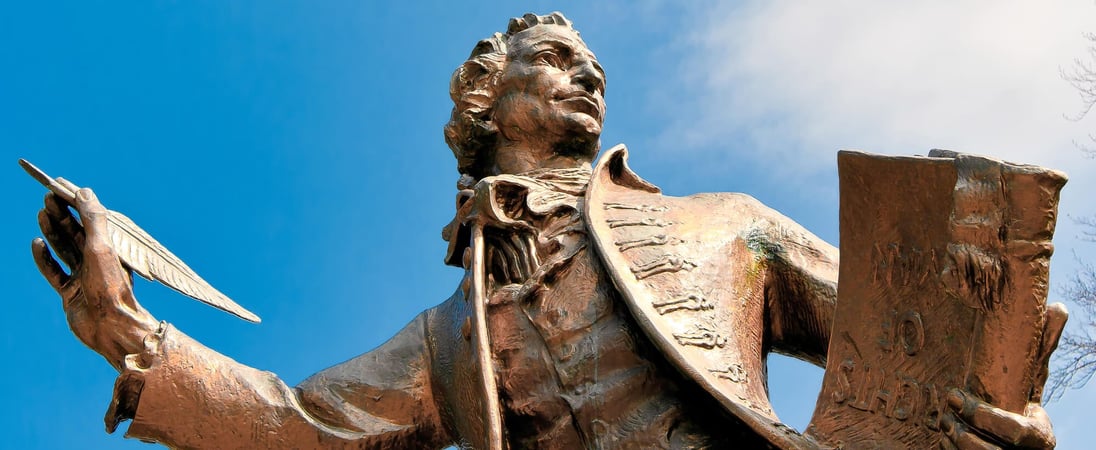
Freethinkers Day
Exploring ideas with open minds, embracing the art of independent thought and challenging norms, paving the way for unique perspectives.
Get ready to open up your mind to new possibilities and ideas on this day when people are not only allowed to think outside the box, but are even encouraged to do so!
How to Celebrate Freethinkers Day
Embrace Freethinkers Day by challenging arbitrary authority, questioning the status quo, and constructing logical and reasonable arguments against ingrained behavior. Try out some of these ideas to commemorate the day:
Enjoy Some White Roses
Appreciate the day by buying white roses (with thorns, of course!) to display on your desk at the office. Or better, yet, grab a dozen and pass them out to friends, family and coworkers. But don’t forget to explain that they are meant to represent Freethinkers Day! This type of activity might be a great way to get started in an interesting conversation about Thomas Paine and his influence on the freedoms that are now enjoyed in the United States of American.
Enjoy Some of Thomas Paine’s Work
Go back to where it all began and get educated on the views of Freethinking and Freethinkers by reading some of Paine’s original works. His most well-known (and perhaps infamous) pamphlet, Common Sense, was written in 1776 and the ideas it contained were said to have been an important instigator for the American Revolution. Other works he wrote include:
- Rights of Man (1791). Focusing on the natural rights given to people when they are born, this was the author’s response to those who had attacked the French Revolution.
- The American Crisis. (1776-1783) Encouraging readers to consider the magnitude of their plight, this series of papers argued for an independent, self-governing America.
- The Age of Reason (1794). This book popularized the idea that the people should be able to revolt when the government does not take care of their rights and interests. It is an assault on the commonly held belief that the Bible has authority for life and, in fact, caused Paine to be ostracized and alienated from society.
Read the Declaration of Independence
While this document is vitally important to the formation and continuation of the United States, many Americans have not actually read the whole thing. Some might have glanced over it as kids in school, but most adults couldn’t really quote something from it.
Thomas Paine was believed to have been a strongly influential part of the drafting of the document. Whether or not he actually penned any of it remains a mystery (some people are adamant that he authored the whole thing while others vehemently deny it). And he didn’t sign it either.
But many of the ideas that are contained in the Declaration of Independence are certainly tied to Paine’s works. In addition, there are strong ties of friendship between Paine and Thomas Jefferson, who has most often been attributed with the writing of the document.
In any case, no matter who actually wrote it, the Declaration contains critically important ideas that stand behind many of the precepts that Freethinkers Day has been founded upon. While the original is carefully preserved in the National Archives Museum in Washington, DC, a quick online search makes the document available for anyone to read.
Learn About the Freethought Society
Advocating for the separation of government and religious entities, this organization promotes education, science appreciation and critical thinking. They are particularly a non-theist community that promotes discourse and discussion related to the various issues of the lives of its members. They offer online as well as in-person events for the members to join in. Begun in Philadelphia, Pennsylvania, the group’s core purposes are toward “education, investigation and understanding”.
History of Freethinkers Day
Freethinkers Day falls on the birthday of Thomas Paine, a prominent thinker whose work and publications promoting a philosophy of Enlightenment heavily influenced the course of the American and French revolutions. Although he was English-born, Paine was a courageous man whose life and work was an inspiration for those who wanted to find their independence (particularly from his native land of England). Particularly, his efforts promoted the rejection of abstract authority that embodied power and self-promotion over reason.
Although his influence began a couple of hundred years ago, it wasn’t until the 1990s that The Truth Seeker Magazine began honoring the day. It was slated for January 29, as a nod to Thomas Paine’s birthday, which was on this date in 1737. The purpose was to bring about education and awareness of the day as well as the general benefits of freedom and liberty.
One way that the magazine suggested the day be celebrated was by displaying a white rose with thorns. The symbol of the color white was for purity, fragility and beauty, but the thorns also represent danger.
It was during this same period of time in the 1990s that the Thomas Paine Foundation in the US began celebrating Thomas Paine Day, which takes place on the anniversary of his death, June 8 (1809).
Facts About Freethinkers
Freethought is rooted in the idea that beliefs should be shaped by reason, evidence, and independent thinking, rather than tradition or imposed authority. Across history, freethinkers have challenged dominant religious, political, and social norms, often at great personal risk. The following facts highlight how freethought influenced society, science, and individual freedoms.
-
Role of Freethought in the Enlightenment
The concept of freethought played a significant role during the Enlightenment era, as intellectuals began to challenge traditional authority, encourage scientific inquiry, and advocate for reason and evidence in shaping beliefs. These principles helped lay the groundwork for modern concepts of individual rights, democracy, and secular governance.
-
Women as Early Advocates of Freethought
Throughout the 19th century, numerous women, such as Ernestine Rose, Elizabeth Cady Stanton, and Matilda Joslyn Gage, were prominent figures in the American freethought movement. They advocated for civil liberties, women’s rights, and the separation of church and state, intertwining feminist goals with secular principles.
-
Freethought and the Separation of Church and State
Freethought movements have historically championed the separation of church and state, emphasizing that government policies and laws should be based on reason and secular morality rather than religious doctrine. This advocacy contributed to constitutional principles in several democracies, including the First Amendment to the U.S. Constitution.
-
Freethought Publications and Censorship
During the 18th and 19th centuries, freethought publications were often subject to censorship and legal persecution, especially in Europe. In England, freethinkers like Richard Carlile were imprisoned for publishing materials that challenged religious orthodoxy, reflecting the risks historically associated with promoting skeptical or secular ideas.
-
Freethought and Scientific Advancement
Freethinking attitudes encouraged open inquiry and skepticism, accelerating scientific progress in the 17th and 18th centuries by promoting critical examination of received dogma. Figures such as Galileo Galilei and Isaac Newton, though not always labeled as freethinkers, exemplified this spirit by prioritizing empirical evidence over established beliefs.
Also on ...
View all holidays
National Puzzle Day
From jigsaws to Rubik’s Cubes, crosswords to riddles, give your brain a rewarding workout or try inventing a brand new puzzle of your own.



We think you may also like...

Positive Media Day
With fear, hatred, and sadness crossing our television and computer screens all day, Positive Media Day is a time to step back and boost the positive stories.
Thales Day
An ancient philosopher, he revolutionized early Greek thought with his inquiries into the nature of the universe.

World Humanist Day
Consider your own agency and actions as a human, and how you might benefit yourself and others by striving to do good, be kind, and participate in society.
Christopher Street Day
Celebrating diverse identities and promoting equality, an annual event advocating for LGBTQ+ rights and fostering a sense of community.