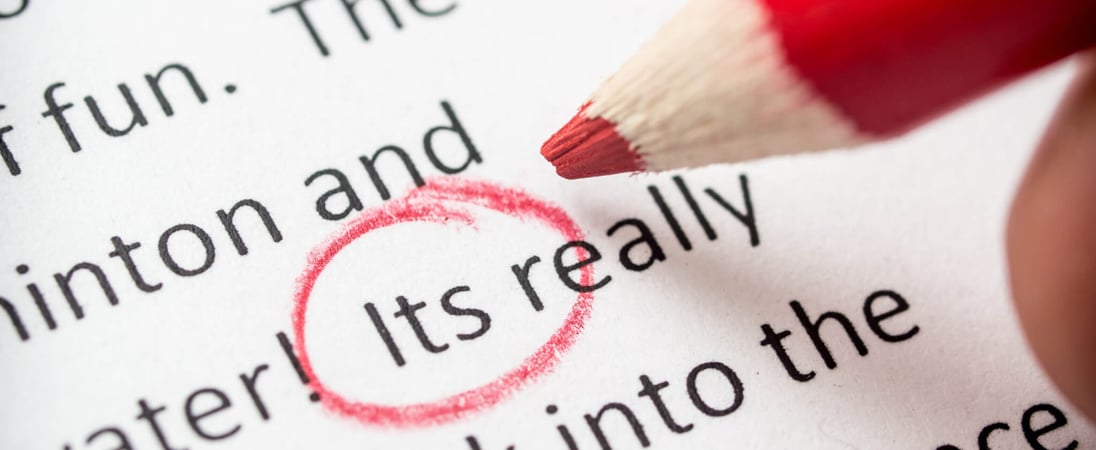
National Grammar Day
Crafting sentences with precision, nailing the art of clear communication, ensuring words flow seamlessly for a confident and impactful message.
Do you know what day it are? Your shore to be surprised when you figure it out, though u may be sad when you saw it. It’s not bad grammar day, its just National Grammar Day!
Alright, that’s just about enough of that! National Grammar Day was established to promote awareness and understanding of proper grammar, and perhaps just another chance to smack those people who can’t seem to compose a decent sentence right upside the head for being daft.
Whether you’re new to reading and writing, or an established user of the written word, the importance of Grammar cannot be understated, especially on National Grammar Day!
Avid writers, readers, or just people who care about doing things in the correct way will love the aim of National Grammar Day: promoting the use of good grammar.
It’s the day when it’s perfectly acceptable to be something of a “grammar Nazi,” not only brushing up on your own grammar but helping to keep other people’s grammar in line too.
It might have been a while since you last had an English lesson, but it’s never too late to brush up on how to use a comma or when you should start a new paragraph.
Sticklers for grammar won’t want to miss out on this important day that puts everything to do with technically correct writing in the spotlight.
It doesn’t matter if you’re already a grammar expert or you want to finally learn the difference between they’re, their, and there – this grammar-focused day is the time to celebrate all things related to the perfectly written word.
You can use the day to improve your own grammar and to share your love of correct grammar with people around you.
National Grammar Day Timeline
c. 100 BCE
Dionysius Thrax Systematizes Greek Grammar
The Alexandrian scholar Dionysius Thrax composes the Techne Grammatikē, one of the earliest surviving handbooks to define grammar and describe parts of speech for teaching correct Greek.
c. 5th–4th century BCE
Pāṇini Composes the Aṣṭādhyāyī
Indian grammarian Pāṇini formulates the Aṣṭādhyāyī, an extremely concise and systematic description of Sanskrit whose rule-based approach has influenced later traditions of linguistic and grammatical analysis.
1476
Caxton’s Printing Press Promotes Written Standardization
William Caxton sets up the first printing press in England, and the wider circulation of printed texts begins to encourage more regular spelling and grammatical usage in written English.
1762
Robert Lowth Publishes A Short Introduction to English Grammar
Bishop Robert Lowth issues a widely read grammar textbook that lays out prescriptive rules for “correct” English, powerfully shaping school instruction and popular attitudes toward grammatical correctness.
1957
Noam Chomsky Introduces Generative Grammar
With Syntactic Structures, Noam Chomsky presents generative grammar, arguing that humans possess an innate capacity for language and redirecting modern linguistics toward studying underlying grammatical competence.
History of National Grammar Day
Martha Brockenbrough had had enough. She had seen the word abused and abased and simply wouldn’t stand for another instance of the poor innocent language being treated poorly in her presence. Not on her watch!
So it was that Martha decided that all good verbs, adverbs, nouns, and adjectives deserved a day when people stood up for their rights and refused to allow them to be abused. No more would apostrophes be lost, forgotten, or misplaced.
No more would we find commas left out and proper nouns in lower case; those days were in the past, and thus she wrote “Things that makes us [sic]” to help spread the word about poor grammar.
National Grammar Day was first held in 2008 and it’s still going strong. Martha Brockenbrough also happens to be the founder of the Society for the Promotion of Good Grammar, which helps to promote excellent grammar all year.
In the first year that the day was held, it was commemorated in a letter sent by former President George W. Bush. Even the chosen date has a special meaning. Brockenbrough chose March 4th because it’s also an instruction – “March forth!” She wants people to speak well, write well, and help others to do the same thing.
The day was developed not just to berate people for making the wrong grammar choices but also to celebrate the positive side of language.
Good use of grammar and language ensures your intended meaning comes across. And once you have grasped the foundation of good grammar, you can use it to be creative, educational, informative and passionate about anything that you want to write about.
Grammar is a vital part of communication, as the inclusion or exclusion of certain grammatical elements can completely change the meaning of a sentence.
What do you do when you see signs marked with a “Harsh Brown Potato” breakfast? Or grocer signs that announce that you can get your “Glutten Free” foods here?
How about the time KEYE TV in Texas proclaimed “Department of Criminal Justice: What their doing to fix it”? Really, no matter where you go or what you do for a living, grammatical errors are a problem that we all need to be aware of.
How to Celebrate National Grammar Day
Straight forward and simple, all you have to do to celebrate National Grammar Day is take a little extra effort in making your sentences grammatically correct.
Brush up on your lessons from primary school and double-check your sentences to ensure that the message you mean to send is, in fact, the message you’re sending.
Those you’re communicating with will appreciate it, and those of us who grind our teeth anytime we see grammar improperly used will have one less reason to see the dentist.
However, you don’t just have to work on your own skills. You might celebrate the day by helping someone else with their grammar, especially if they’ve asked you to help them.
National Grammar Day isn’t just for helping you improve your own grammar, but also a chance to help other people be passionate about good grammar too. Doing some reading and writing is also a fantastic way to celebrate, whether you keep it to yourself or share with others.
If you do spend any of your time during the day writing, take care to get everything right. Give an extra glance over your writing, and maybe even put it through a grammar checker to double-check that you’ve got everything right.
And if you’re really passionate about good grammar, you could volunteer to help other people with making sure that they’ve written everything correctly too. You could even go further and do something like holding a writing competition or starting a book club.
Facts About National Grammar Day
Word Order Helps the Brain Parse Meaning in Milliseconds
Psycholinguistic experiments using eye tracking and brain imaging show that humans rely on predictable grammatical word order to understand sentences in real time, often resolving ambiguity within a few hundred milliseconds.
For example, English speakers process “The dog chased the cat” more quickly and accurately than a scrambled version with the same words, because standard subject‑verb‑object order allows the brain to anticipate likely roles and meanings.
Punctuation Can Change Legal Outcomes
Courts in several countries have ruled that the presence or absence of a comma or other punctuation mark can alter the legal force of contracts and statutes.
A well‑known Canadian case about overtime pay turned on how a single misplaced comma in a contract clause affected whether a company could terminate an agreement early, ultimately costing the firm millions of dollars.
Standard English Grammar Was Codified Relatively Late
What many people think of as “standard English grammar” largely took shape in the 18th century, when grammarians such as Robert Lowth and Lindley Murray published influential prescriptive grammar books.
Before that, English usage was far more variable, and printers, educators, and grammarians gradually pushed toward standard spellings and sentence structures to stabilize communication across regions and social classes.
Prescriptive and Descriptive Grammar Serve Different Purposes
Linguists distinguish between prescriptive grammar, which sets out rules about how people “should” use language, and descriptive grammar, which documents how speakers actually talk and write.
Modern linguistics departments emphasize description for scientific study of language, while schools, style guides, and professional communication often rely on prescriptive norms to promote clarity and shared expectations.
Grammatical Judgments Can Reveal Unconscious Language Knowledge
Studies using “grammaticality judgment tasks,” where participants decide whether sentences “sound right,” show that even young children and second‑language learners possess detailed, often unconscious knowledge of grammar.
Participants reliably reject sentences that violate subtle rules they have never been formally taught, indicating that much of grammar is internalized through exposure rather than explicit instruction.
Attitudes Toward Grammar Often Reflect Social Bias
Sociolinguistic research has found that “nonstandard” grammar features, such as double negatives or regional verb forms, are often stigmatized not because they are illogical but because they are associated with marginalized social groups.
Linguists note that these patterns are rule‑governed within their speech communities, and judgments about them frequently track prejudice about class, race, or region more than actual communicative effectiveness.
Writing Systems and Grammar Co‑evolved to Support Complex Societies
Historical linguistics and archaeology suggest that as societies developed writing systems, they also began to explicitly analyze and describe grammatical patterns in order to manage administration, religion, and education.
Ancient Sumerian and later Sanskrit and Greek traditions all produced early grammars that tried to capture how language worked, marking the beginning of grammar as a formal object of study rather than just an implicit skill.
National Grammar Day FAQs
Is grammar the same as spelling and punctuation?
Grammar, spelling, and punctuation are related but not identical. Grammar refers to how words are structured and combined to create meaningful sentences, including word order, verb tense, and agreement between subjects and verbs.
Spelling is about writing words with the correct sequence of letters, and punctuation uses symbols such as commas and periods to clarify meaning.
Linguists treat these as separate components of writing, although they often interact in practice.
Why do linguists say there is a difference between “correct” grammar and how people actually speak?
Linguists distinguish prescriptive grammar, which sets rules about how people “should” use language, from descriptive grammar, which documents how people actually speak and write.
Prescriptive approaches often reflect social norms and education, while descriptive approaches analyze real usage without judging it as right or wrong.
Modern linguistics relies mainly on descriptive grammar to understand language as a human behavior, even when that behavior differs from school-taught rules.
Does having good grammar really matter for jobs and professional communication?
Research on employment communication shows that grammar errors in resumes, emails, and reports can negatively affect how applicants and employees are perceived.
Hiring managers often interpret frequent errors as signs of carelessness or weak communication skills, which can harm job prospects or promotion opportunities.
Clear, mostly error‑free writing helps convey professionalism and can make it easier for colleagues and clients to understand and trust the message.
Is there one “correct” form of English grammar worldwide?
There is no single worldwide standard for English grammar.
Instead, there are several widely recognized standard varieties, such as American, British, and Australian English, each with its own conventions for spelling, vocabulary, and some grammatical patterns.
Style guides and dictionaries describe these regional norms, and most teachers and editors recommend following the standard that fits the audience and context rather than treating one variety as universally superior.
Do grammar rules ever change, or are they fixed?
Grammar rules change over time as speakers and writers adopt new patterns and abandon old ones.
Historical studies of English show shifts in word order, verb forms, and pronoun usage, such as the fading of “thou” and “thee” and growing acceptance of singular “they.”
Usage panels and modern dictionaries periodically update their guidance to reflect changes that have become widespread and stable, which means what counts as “correct” can evolve from one generation to the next.
Are automated grammar checkers reliable enough to replace human editing?
Automated grammar checkers can catch many common issues, such as subject‑verb agreement or missing articles, and they are useful for quick self‑review.
However, studies of writing tools find that they often miss errors involving context, nuance, or specialized terminology, and they may flag perfectly acceptable stylistic choices as mistakes.
Professional editors and writing instructors recommend using these tools as aids rather than substitutes for human judgment and careful proofreading.
Is it rude to correct other people’s grammar in everyday conversation?
Many etiquette experts and communication specialists note that unsolicited grammar corrections can embarrass others and strain relationships, especially in informal settings.
Correcting someone’s language is often interpreted as a criticism of their intelligence or social status, even when that is not the intent.
Guidance from business and social etiquette sources suggests offering help only when it is requested or clearly needed for safety or legal accuracy, and focusing on clarity instead of minor errors.
Also on ...
View all holidays

World Obesity Day
Maintaining a healthy weight can be a challenge, but a balanced diet and regular exercise can improve physical health and mental wellbeing.


We think you may also like...
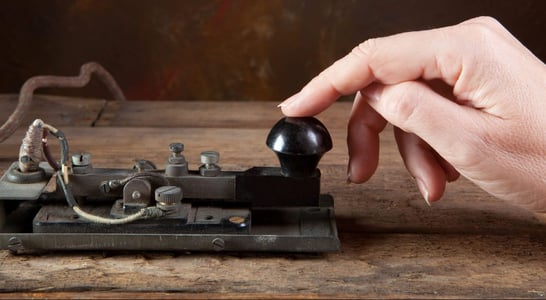
Morse Code Day
Learn a valuable skill, and a fun new way to communicate with friends and family by trying your hand at the simple but highly useful Morse Code.

National Thesaurus Day
Handy books full of synonyms, they're like treasure chests of linguistic options, adding depth and variety to languages.
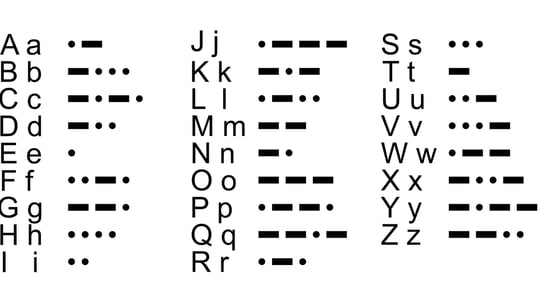
National Learn Your Name In Morse Code Day
Discover the dots and dashes that make you unique - it's like a secret code that connects you to history's great communicators.

Russian Language Day
Sign up for a class or download Duolingo and start learning Russian. It opens up job opportunities, expands your pool of people to talk to, and helps the brain.