
Harvey Milk Day, observed annually, commemorates Milk’s birthday and legacy. He pioneered the American gay rights movement and was the first openly gay person elected to public office in California.
Harvey Milk Day Timeline
Harvey Milk Is Born in New York
Harvey Bernard Milk is born on May 22 in Woodmere, New York, to Lithuanian Jewish immigrant parents, an upbringing that later informs his sense of justice and minority rights.
Navy Service and Honorable Discharge
Milk serves as a diving officer in the United States Navy during the Korean War era and attains the rank of lieutenant junior grade before receiving an honorable discharge in 1955.
Stonewall Uprising Ignites Modern Gay Rights Movement
Police raids on the Stonewall Inn in New York spark several nights of resistance, widely recognized as the catalyst for the modern LGBTQ rights movement that shapes the context for Milk’s later activism.
Milk’s Early Campaigns in San Francisco’s Castro
After moving to San Francisco and opening a camera shop on Castro Street, Milk runs for city supervisor and other offices, helping transform the Castro into a political base for gay liberation.
Election to San Francisco Board of Supervisors
Harvey Milk wins a seat on the San Francisco Board of Supervisors, becoming one of the first openly gay elected officials in the United States and a prominent voice for coalition-based civil rights.
Defeat of the Briggs Initiative in California
Milk helps lead the successful campaign against Proposition 6, the Briggs Initiative, which would have banned gay and lesbian teachers from California public schools, marking a landmark victory for LGBTQ rights.
Assassination and Aftermath
Former supervisor Dan White assassinates Harvey Milk and Mayor George Moscone at San Francisco City Hall, shocking the nation and galvanizing LGBTQ political organizing and commemoration efforts.
How to Celebrate Harvey Milk Day
Harvey Milk Day’s celebration includes various activities to promote equality and diversity. Public schools and other institutions in California engage in commemorative projects, discussions, and events reflecting on Milk’s life and legacy.
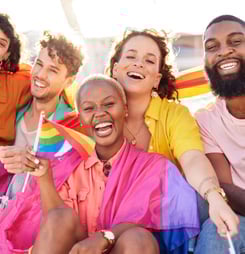
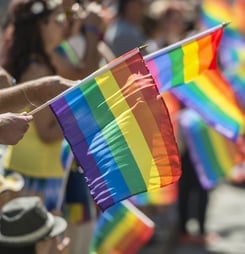
The day also sees rainbow flags flying, symbolizing gay rights and freedom of expression.
The Harvey Milk Foundation, established by Milk’s nephew, Stuart Milk, and his campaign manager, Anne Kronenberg, plays a central role in organizing worldwide events to remember Harvey Milk and continue his fight for equality.
Kick-Off with Colors and Words
Start Harvey Milk Day with a splash of color by hosting a rainbow flag-raising event. This symbol of LGBTQ+ pride sets a vibrant and inclusive tone for the day’s celebrations. Following the colorful start, delve into the powerful words of Harvey Milk himself.
Organize a reading session to read aloud and discuss his impactful speeches and writings. It’s a meaningful way to connect with his message and reflect on the journey of LGBTQ+ rights.
Engage Through Art and Film
In the spirit of creativity, consider organizing a community art project. Invite locals to contribute to a mural or create sidewalk chalk art that celebrates quotes from Harvey Milk.
This activity beautifies your neighborhood and spreads a message of love and inclusivity. Additionally, films such as “The Times of Harvey Milk” or “Milk” offer an enlightening way to learn about his legacy. Follow the movie with a discussion to deepen the understanding of his contributions and their relevance today.
Advocate and Support
Harvey Milk Day is also an opportunity for advocacy and taking a stand. Supporting local representatives to advocate for LGBTQ+ rights is a direct way to continue Milk’s legacy of political engagement.
This action can help effect change and promote equality at the legislative level. Lastly, volunteering or donating to LGBTQ+ charities keeps the spirit of activism alive.
It’s a practical way to support the ongoing fight for rights and to make a tangible difference in the lives of LGBTQ+ individuals.
Why Celebrate Harvey Milk Day?
This day is a testament to Milk’s enduring influence, celebrated mainly in California. It was established as a day of special significance in schools across the state to educate students about Milk’s contributions to the fight for equality and civil rights.
Milk’s life was a beacon of hope and advocacy for the LGBTQ community. Born in New York City in 1930, he served in the military before moving to San Francisco in the early 1970s.
There, Milk became a vocal and charismatic advocate for gay rights. He was vocal for equal rights for all citizens, regardless of their sexual orientation, gender, nationality, religion, or race.
His political career, though short-lived due to his assassination in 1978, was marked by significant achievements, including the passage of a stringent gay rights ordinance in San Francisco.
Harvey Milk believed that the government should serve and represent all individuals, advocating for the participation of LGBT people in the political process. His vision was that visibility and representation could lead to greater acceptance and protections for equal rights.
Today, Harvey Milk Day serves as a reminder of the progress made in LGBTQ rights and the ongoing efforts needed to achieve full equality and inclusion for all, echoing Milk’s belief that “Hope is never silent.”
History of Harvey Milk Day
Harvey Milk Day honors Harvey Milk, a pioneer for LGBTQ+ rights and the first openly gay man elected to public office in California.
This special day marks Harvey Milk’s birthday. It is a time for reflection on his contributions to civil rights and the ongoing fight for equality for all, regardless of sexual orientation or gender identity.
The establishment of Harvey Milk Day as a California state holiday in 2009, under Governor Arnold Schwarzenegger, was a significant milestone.
It resulted from advocacy efforts by the Harvey Milk Foundation, co-founded by Milk’s nephew, Stuart Milk, and Anne Kronenberg, Milk’s campaign manager. The foundation continues Milk’s work, promoting equality and social justice worldwide.
Harvey Milk’s legacy is taught in schools across California, with educational resources available for different grade levels.
This curriculum aims to inform students about Milk’s life, his fight for LGBTQ+ rights, and his impact on society. The teaching materials include biographies, grade-level specific curricula, and resources for books and movies about Milk.
The day encourages reflection on the progress made in LGBTQ+ rights and the continued work in the fight for equality. Harvey Milk’s message of hope, equality, and the importance of coming out remains influential today.
His statement, “Hope will never be silent,” underscores the ongoing struggle for LGBTQ+ rights and the importance of visibility and advocacy in achieving social justice.
Facts About Harvey Milk Day
Early Gay Rights Ballot Fights Helped Shape Modern LGBTQ+ Strategy
In the 1970s, a wave of local ballot initiatives sought to roll back gay rights ordinances across the United States, forcing activists to develop sophisticated campaign strategies long before national marriage debates.
In places like Dade County, Florida, and later California’s statewide Briggs Initiative, organizers learned to frame LGBTQ+ rights as basic civil rights and to build coalitions with unions, religious leaders, and civil liberties groups.
These early campaigns forged many of the political playbooks that LGBTQ+ advocates still use in modern ballot and legislative fights.
San Francisco Became a Laboratory for Municipal LGBTQ+ Protections
By the late 1970s, San Francisco had turned into one of the first American cities to pass broad municipal bans on discrimination based on sexual orientation, helping to normalize the idea that local governments could protect LGBTQ+ residents even when state and federal law did not.
These ordinances covered employment and housing, and their implementation showed that such protections could function in everyday governance, offering a model later echoed in cities from New York to Madison and beyond.
The Rainbow Flag Was Designed as a Replacement for the Pink Triangle
The modern rainbow pride flag, created by artist and activist Gilbert Baker in 1978, was intended to move away from the pink triangle, which had been used by the Nazis to mark and persecute gay men.
Baker chose the rainbow as a positive, forward-looking symbol of diversity, with each original color carrying a specific meaning, such as life, healing, and spirit. The shift from a symbol of victimization to one of community and pride helped redefine how LGBTQ+ people represented themselves in public life.
Early Versions of the Pride Flag Included Eight Distinct Stripes
When it first flew publicly in San Francisco in 1978, the pride flag featured eight colors rather than the six most commonly seen today.
Hot pink, symbolizing sex, and turquoise, symbolizing magic or art, were later removed because of fabric availability and design considerations, leaving the now-familiar six-stripe version. This evolution illustrates how practical production constraints can shape even the most iconic social movement symbols.
“Coming Out” Shifted From Private Revelation to Public Political Strategy
Although the phrase “coming out” originally referred to debuting into gay social circles, by the 1970s it had evolved into a more explicitly political act.
Activists encouraged LGBTQ+ people to disclose their identities to family, coworkers, and neighbors as a way to humanize the community and counter stereotypes.
Social scientists have since documented that personally knowing someone who is gay, lesbian, or bisexual is strongly associated with greater support for LGBTQ+ rights, underscoring how visibility became a deliberate movement tactic.
Violent Backlash Helped Spur Hate Crime Protections
High-profile anti-LGBTQ+ attacks and murders in the late 20th century, including several in California, drew national attention to the vulnerability of sexual and gender minorities.
This visibility contributed to the eventual passage of federal hate crime laws that explicitly cover sexual orientation and gender identity, such as the Matthew Shepard and James Byrd Jr. Hate Crimes Prevention Act of 2009.
The law gave federal authorities broader power to investigate and prosecute violent bias-motivated crimes when local responses were inadequate.
LGBTQ+ Political Representation Has Grown Dramatically Since the 1970s
In the early 1970s, openly LGBTQ+ elected officials in the United States were virtually nonexistent; most gay and lesbian politicians felt compelled to hide their identities for fear of losing office or facing public scandal.
Over the decades, organized efforts such as candidate training programs and support networks have helped thousands of openly LGBTQ+ people win local, state, and federal positions.
By the 2020s, researchers documented more than a thousand openly LGBTQ+ elected officials nationwide, although they still represent a small fraction of all officeholders compared to their share of the population.