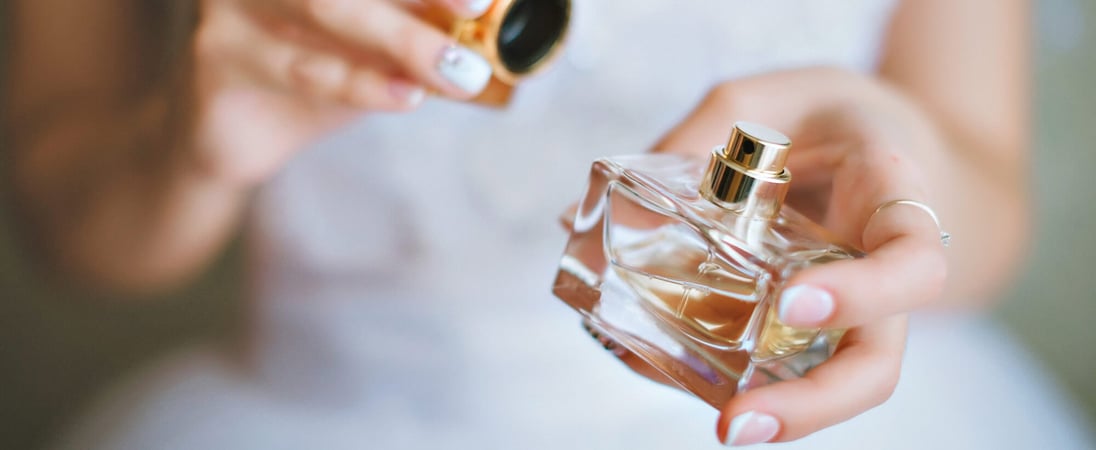
International Fragrance Day
A subtle, alluring way to evoke memories and emotions, fragrances have the power to transport anyone to moments long past.
There are billions of fragrances in the world, and no two noses seem to agree on a single “best” one. Some people live for classic perfumes and colognes, others prefer the grassy snap of a cut herb, the peppery cloud that rises from a simmering pot, or the oddly comforting scent of a well-loved book.
International Fragrance Day is a chance to notice all of it, from high-end bottles to everyday aromas that quietly shape mood, memory, and identity.
For many people, personal scent is part of self-expression, as recognizable as a favorite jacket or a signature hairstyle. Choosing a fragrance can take patience and plenty of testing: one spritz that smells perfect on a paper strip can turn unexpectedly sweet, sharp, or smoky on skin.
That little mystery is part of the fun, and it is also why fragrance has stayed relevant for centuries. Whether the goal is confidence, comfort, romance, or simply enjoyment, International Fragrance Day invites everyone to celebrate what the nose loves most.
How to Celebrate International Fragrance Day
The ways of celebrating this day are virtually endless and depend on what kinds of fragrances are most appealing, along with hobbies, budget, sensitivity to scent, and general taste.
Some people want to discover a new signature perfume, while others would rather take a slow walk and pay attention to the world’s natural “scent soundtrack.” Either approach counts.
A helpful starting point is to treat fragrance like music: some prefer bold, attention-getting hits, while others keep a quieter playlist that feels like home. Celebrating can be as simple as noticing what is already there and giving it a little extra appreciation.
Enjoy All the Smells!
People who love fine beverages have a built-in excuse to practice mindful smelling. A well-made whiskey, tea, coffee, or wine is basically a fragrance experience that happens to be drinkable.
The ritual is easy: pour a small amount into a glass or cup that concentrates aroma, take a moment to inhale, then sip slowly. Even without fancy vocabulary, it is possible to pick up layers like citrus peel, toasted wood, cocoa, dried fruit, or spice.
This can turn into a mini “aroma flight” at home. A few items from the pantry can create surprisingly distinct scent profiles: vanilla extract, cinnamon, cocoa powder, black pepper, mint, orange zest, or a pinch of ground coffee.
Smell them one at a time with eyes closed and see what comes to mind. It is a playful way to train the nose, and it mirrors how perfumers think in notes and accords.
For people who cook, International Fragrance Day can be celebrated by focusing on the smell shifts that happen during cooking: onions changing from sharp to sweet as they brown, garlic turning nutty, spices “blooming” in warm oil, and butter taking on a toasty edge.
These are not just background details. Aroma is a major part of flavor perception, and paying attention can make everyday meals feel more special.
Stop and Smell the Roses
For delicate, natural scents, a trip to a florist, garden center, or even a grocery store flower display can be an instant mood-lifter. Fresh flowers do not all smell the way people expect. Some roses are intensely fragrant; others are light. Lilies can be heady, while eucalyptus can be crisp and spa-like. Even foliage has its own personality.
It also helps to notice that “natural fragrance” is not limited to petals. Herbs such as basil, rosemary, and thyme release aroma when gently crushed between fingers. Citrus leaves can smell bright and green. Pine needles, soil after watering, and sun-warmed wood each have a signature scent that changes with the environment.
For a low-effort celebration, a simple bowl of citrus fruits on a counter can perfume a room softly over time. Another option is to place a sprig of rosemary in a vase with water, or hang a small bundle of dried lavender in a closet. These choices bring fragrance into daily life without needing sprays or plug-ins, which can be useful for anyone who prefers subtlety.
Fill the House with Fragrance
Some favorite scents are deliciously domestic. If the smell of a cake baking feels like instant comfort, bake one, preferably something spiced with cinnamon, clove, nutmeg, or ginger, so the aroma travels. Even a batch of cookies can turn a home into a warm, sweet-scented invitation.
Those who do not bake can still get the effect by warming spices gently in water on the stove. It is an old-fashioned trick that creates a cozy atmosphere and uses ingredients many people already have.
Fragrance also comes from clean fabrics and cozy textures. Freshly laundered sheets, a towel warmed after a shower, or a sweater that smells faintly of soap can be surprisingly satisfying. For those who enjoy scented laundry products, this day can be an excuse to pick a single comforting scent profile and use it intentionally, rather than mixing five competing aromas in one load.
And yes, sometimes people love a scent because it is attached to a creature they adore. If someone loves their dog more than anything in the world and genuinely does not mind that unmistakable “wet dog” smell, then a long walk outdoors may be the perfect celebration.
The world outside offers layers of scent that change by the minute: damp earth, warm pavement, crushed leaves, lake water, grass, and whatever intriguing mystery a dog has located with great confidence. It is not the most polished fragrance experience, but it is wonderfully real.
For anyone sensitive to fragrance, filling the house can mean the opposite: opening windows, letting in fresh air, and clearing out stale odors. Even that is a celebration of scent, because it makes the surrounding aromas clearer and easier to enjoy.
Try a New Fragrance
Trying a new perfume or cologne is a classic way to celebrate, and it becomes more rewarding with a little strategy. Most fragrances unfold in stages, commonly known as top, middle, and base notes.
The opening tends to be bright and short-lived, the heart appears as the scent settles, and the base is what lasts the longest on skin and clothing. That is why a fragrance that feels perfect at first can smell quite different after an hour.
Sampling thoughtfully does not take special knowledge, only a bit of patience:
- Test one or two scents at a time, not a whole lineup. Nose fatigue happens quickly.
- Start with a blotter strip to understand the overall character, then try it on skin to see how it develops.
- Allow time for the scent to evolve. A quick sniff only reveals the opening.
- Pay attention to hydration and skin condition. Dry skin can cause fragrance to disappear faster, and body chemistry influences how notes appear.
Those who like variety can create a small “wardrobe” of scents instead of searching for a single lifelong signature. A fresh citrus or airy floral offers a different mood than smoky woods, soft musk, or warm spices.
Some people prefer subtle, skin-close fragrances, while others enjoy scents that make a noticeable impression. International Fragrance Day celebrates all preferences, as long as fragrance is worn thoughtfully in shared spaces.
If shopping is not part of the plan, a relaxing bubble bath can still provide a rich scent experience. Warm steam lifts fragrance into the air, turning a simple bathroom into a personal aroma retreat. Using one scented product instead of layering several keeps the fragrance clean and easy to enjoy.
Whatever the celebration looks like, it is worth remembering that scent is closely connected to memory and emotion. One familiar aroma can instantly recall a person, a place, or a moment. International Fragrance Day offers a perfect reason to notice those connections and enjoy them intentionally.
International Fragrance Day Timeline
1200 BCE
Tapputi, the first recorded chemist
A cuneiform tablet from Mesopotamia mentioned Tapputi, a palace perfume maker who distilled flowers, oil, and other aromatics, making her the earliest known chemist in written history.
2350–1850 BCE
Bronze Age perfumery at Pyrgos, Cyprus
Archaeologists at the Pyrgos-Mavroraki site in Cyprus uncovered a large industrial complex, including a perfume “factory” with stills and storage vessels, showing that fragrance was produced on an industrial scale in the Bronze Age.
Late 4th–1st millennium BCE
Perfume and incense in ancient Egypt
Historical research traced Egyptian use of scented oils, incense, and complex blends such as kyphi in religious, funerary, and daily life, helping establish perfume as both a luxury and a sacred substance in the ancient world.
9th century CE
Distillation advances in the Islamic world
Polymaths working in the medieval Islamic world refined distillation and alembic technology, improving the extraction of essential oils and laying a technical foundation for later alcohol-based perfumery.
16th–18th centuries
Grasse becomes a perfume center
The town of Grasse in southern France evolves from tanning to cultivating jasmine, roses, and other flowers, becoming a European hub for scented materials and establishing France’s long-standing association with fine fragrance.
1889
Launch of Jicky, an early modern perfume
Guerlain releases Jicky, often cited as one of the first perfumes to blend natural essences with synthetic aroma chemicals, signaling the start of truly “modern” perfumery.
1889
Launch of Jicky, an early modern perfume
Guerlain releases Jicky, often cited as one of the first perfumes to blend natural essences with synthetic aroma chemicals, signaling the start of truly “modern” perfumery.
1991
Discovery of olfactory receptor genes
Neuroscientists Linda Buck and Richard Axel published their identification of a large gene family encoding olfactory receptors, transforming scientific understanding of how humans perceive fragrance at the molecular level.
History of International Fragrance Day
International Fragrance Day was officially established in 2018 as a project of The Fragrance Foundation. It was designed to create a shared moment for celebrating fragrance as an art form and an industry, with events that can be experienced in person or virtually.
The intention is both consumer-facing and community-focused: it highlights the creativity behind scent while encouraging people to explore fragrance in a more engaged way.
Although the day itself is modern, the story of fragrance is anything but. Humans have been collecting, burning, steeping, and wearing aromatic materials for thousands of years.
Long before contemporary bottles and branding, fragrance was linked to medicine, status, ritual, and simple enjoyment. Ancient people did not need a marketing campaign to notice that certain resins, woods, herbs, and flowers changed the mood of a space.
One of the most famous early names associated with perfumery is Tapputi (often recorded as Tapputi-Belatekallim), a perfume maker mentioned on a tablet dating to the second millennium BCE in Mesopotamia.
Tapputi is frequently described as the earliest recorded chemist by name, and the record suggests a surprisingly methodical approach: combining aromatic ingredients, using water or other solvents, and repeating processes that resemble distillation and filtration.
That matters because it shows perfumery as both creative craft and practical chemistry. Even in ancient times, making scent last and smell balanced required technique, experimentation, and a good nose.
Archaeology also points to large-scale fragrance production in the ancient world. A notable discovery on the island of Cyprus revealed what is often described as the oldest known perfumery, dating back to the Bronze Age.
The site’s size, estimated at over 4,000 square meters, suggests something beyond hobbyist mixing. This was a fragrance as serious production, implying organized labor, consistent methods, and a steady demand for scented goods. It is a reminder that perfume has long been part of trade and culture, not merely a modern luxury.
Written records from antiquity show how fragrance materials traveled and how specific aromatics were valued. Myrrh, cinnamon, fragrant cane, and cassia appear in ancient descriptions of perfume blends, reflecting both the symbolic importance of scent and the reality that aromatics were prized commodities.
Resins and spices were portable, potent, and long-lasting, making them ideal for early perfumery and for scenting spaces.
As techniques improved over centuries, perfumery evolved into a blend of agriculture, extraction, chemistry, and artistry. Flowers had to be grown and harvested at the right moment; materials needed to be stored carefully; and formulas had to balance strength, softness, and longevity.
Even today, perfumers think in families and effects: floral, citrus, woody, aromatic, gourmand, musk, and more. Many fragrances are built as compositions, with bright notes that sparkle at first, a heart that defines the character, and a base that anchors the scent so it stays recognizable as it wears.
Modern perfume culture is also shaped by craftsmanship in bottle design, packaging, and marketing, but the core experience remains personal and sensory.
People still fall in love with a scent for reasons that are hard to quantify. Sometimes it is the smell itself. Sometimes it is the memory attached to it. Sometimes it is the way it makes a person feel in their own skin.
That is what makes International Fragrance Day a natural fit in the modern world. It offers a dedicated moment to celebrate scent in all its forms: the carefully composed perfume, the comforting smell of home cooking, the sharp freshness after rain, the pages of an old book, or the unmistakable scent of a beloved pet.
Appreciating fragrance is ancient, universal, and deeply human. International Fragrance Day simply gives it a name and an invitation to pay attention.
Scents Through Time: The Stories Behind Fragrance
From ancient chemists and Bronze Age perfume factories to global trade routes and the science of memory, fragrance has shaped human history in remarkable ways.
These fascinating facts reveal how scent has influenced culture, commerce, innovation, and even the way our brains connect smells to powerful emotions.
-
Tapputi, the First Recorded Chemist
An ancient cuneiform tablet from Mesopotamia mentions a woman named Tapputi who distilled flowers, oils, and other aromatics, making her the earliest known perfumer and the first person in history explicitly recorded as a chemist.
Her work involved filtering and multiple distillations, techniques that foreshadowed modern fragrance chemistry by more than three thousand years.
-
Bronze Age “Perfume Factory” on Cyprus
Archaeologists excavating the site of Pyrgos-Mavroraki on Cyprus uncovered what is considered the oldest known perfumery, dating to the Bronze Age and covering more than 4,000 square meters.
The complex contained stills, mixing bowls, and storage jars, showing that fragrance production had already reached an industrial scale around 4,000 years ago.
-
Incense as a Driver of Ancient Trade
Demand for aromatic resins such as frankincense and myrrh was so high in antiquity that it helped sustain vast trade routes linking southern Arabia with the Mediterranean and beyond. Roman writers described caravans carrying incense across deserts, and historians estimate that incense trade revenues rivaled those of gold and precious stones in some ancient economies.
-
Why Smell Is Tied So Strongly to Memory
Odor signals travel directly from the nose to the olfactory bulb and then into the limbic system, including the amygdala and hippocampus, which process emotion and memory.
Because this pathway bypasses many of the brain’s usual relay stations, scents can trigger vivid, emotionally charged memories more quickly and intensely than sights or sounds.
-
The Human Nose Can Distinguish Vast Numbers of Odors
Humans possess about 400 types of functional olfactory receptor genes, and research published in 2014 estimated that, in combination, they allow people to discriminate at least one trillion different odor mixtures.
This overturned the long‑held belief that humans could tell apart only around 10,000 scents and highlighted how finely tuned the sense of smell actually is.
-
Synthetic Aroma Molecules Transformed Perfumery
The isolation and synthesis of aroma chemicals like coumarin in 1868 and vanillin in the late 19th century revolutionized perfumery by making powerful, stable scents affordable and consistent.
These lab-made ingredients allowed perfumers to move beyond simple floral extractions to create abstract, long‑lasting fragrances that defined modern perfumery in the 20th century.
-
Fragrance Allergens and Modern Regulation
Because some fragrance ingredients can trigger skin allergies, regulatory bodies such as the European Union require that 26 specific potential allergens, including limonene and linalool, be listed on cosmetic labels when present above certain thresholds.
Industry standards developed by the International Fragrance Association (IFRA) also restrict or prohibit some aroma chemicals to limit sensitization and other health risks.
Also on ...
View all holidays
National Single Parent Day
Raising kids solo can be tough, but single parents are superheroes who manage it all. Hats off to their resilience, love, and dedication!

World Down Syndrome Day
Embrace the resilience and unique beauty that shines brightly within individuals who possess an extra chromosome, fostering compassion and understanding.
World Poetry Day
With words as paint and emotions as the canvas, verses come alive, painting stories of heart and soul, in a symphony of expression.
We think you may also like...
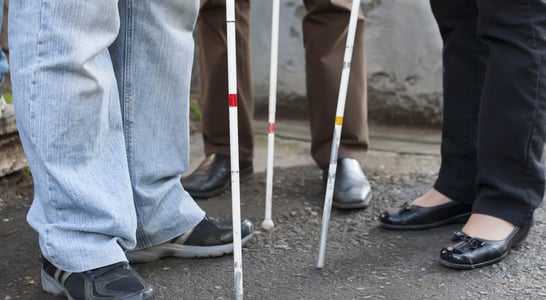
White Cane Safety Day
The blind and near-blind use a long white cane to feel objects, and to signal to others that they are visually impaired. Help raise safety awareness for them.
K.I.N.D. Day
Donate or volunteer to help parents and families provide essential goods like diapers for their little ones on Kids in Need Of Diapers, or K.I.N.D day.
Mouthguard Day
From sports to nighttime teeth grinding, get yourself an updated mouth guard and protect those pearly whites from damage due to impact, grinding, and more.

World Drug Day
Understanding the dangers and effects of substances is crucial for making informed choices and protecting your health.