
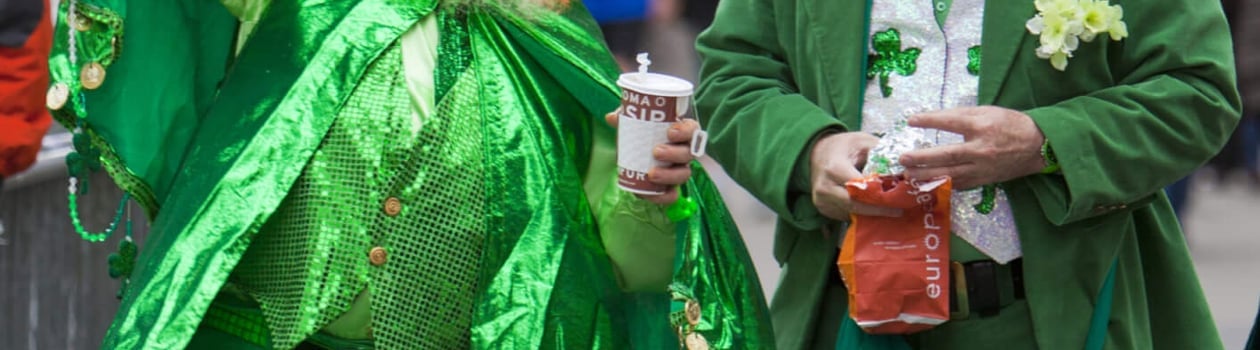
National Leprechaun Day invites everyone to lean into a pocket-sized world of Irish folklore, where clever shoemakers, secret stashes, and quick escapes feel almost plausible. It’s a playful excuse to swap the ordinary for the magical, even if only for a little while, and to appreciate how old stories keep finding new life.
On this day, people pay homage to the mischievous and iconic leprechauns, famous for their hidden pots of gold and magical antics! Behind the glitter and green, though, is a surprisingly rich tradition of storytelling that treats leprechauns less like cute mascots and more like tricky, independent characters with their own rules.
How to Celebrate National Leprechaun Day
Dress Like a Leprechaun
One could slip into a green suit with a buckled hat and pointy shoes. It’s all about embracing the whimsy of these mythical creatures. Parading around in such attire might just make one feel a bit more magical or mischievous!
To make it more than just “wear something green,” it helps to borrow details from folklore-inspired depictions. Leprechauns are often imagined with practical workwear because they’re famously linked to shoemaking.
Adding an apron, a small pouch of “tools,” or even a little pretend shoe last turns a costume into a character. For those who prefer subtlety, a green tie, socks with gold accents, or a small hat pin can still fit the theme without going full storybook.
A fun twist is to treat the costume like a role, not just an outfit. Someone dressed as a leprechaun can “bargain” for favors using silly coupons, speak in riddles for an hour, or leave tiny notes around the house. It keeps the celebration light and interactive, which matches the spirit of a creature that rarely does anything straightforward.
Go on a Treasure Hunt
Organizing a treasure hunt for golden chocolates and shiny coins can capture the essence of chasing leprechaun gold. Scatter clues throughout your home or yard, each leading to the next, until someone finds the treasure!
To give the hunt that folklore feel, make the clues a little trickier than a standard scavenger list. Leprechauns are known for being slippery and clever, so clues can include wordplay, mini-puzzles, or “choice points” where the wrong path sends seekers on a harmless detour. A simple example: a rhyme that points to a “place where shoes rest” might lead to the closet, but the real clue is hidden inside a boot.
For groups with mixed ages, it can help to create two layers: an easy clue that gets people moving and a harder, optional riddle that unlocks a bonus “coin stash.” The final treasure does not have to be expensive. A jar of gold-wrapped candies, chocolate coins, or even a handful of shiny tokens works perfectly. The point is the chase, not the payout, which is a lesson many leprechaun stories enjoy teaching.
Bake Fairy Treats
Why not whip up some green cupcakes or cookies? Dye them emerald with food coloring and sprinkle with gold dust for that extra sparkle. Sharing these with friends or family can double the joy of the occasion.
Baking fits Leprechaun Day because it turns the theme into something tangible, and it’s an easy way to bring people together. In addition to green-tinted treats, a “pot of gold” dessert is a crowd-pleaser: chocolate pudding in small cups topped with cookie crumbs and gold candies. Shortbread-style cookies can also fit the folklore vibe since they pair nicely with the idea of a cobbler taking a break from work.
For a more story-driven bake, shape cookies like tiny shoes, hats, or coins. Decorating becomes part of the activity, not just the finishing step. A little edible shimmer, golden sprinkles, or a swirl of green icing can make even a plain batch feel festive. If the goal is to keep it accessible, natural color options like matcha powder or spinach-based coloring can provide a green hue without relying entirely on dye.
Craft a Leprechaun Trap
Getting crafty with a homemade leprechaun trap is a delightful activity. Use empty boxes, colorful paper, and a sprinkle of creativity to build a charming snare. While catching a real leprechaun is unlikely, the fun is in the making!
The classic “trap” idea works especially well because it taps into a common folktale pattern: a human tries to outsmart a magical being, and the magical being nearly always has a clever response. A trap can be as simple as a shoebox with a propped-up lid, but it becomes more memorable when it includes a believable lure.
Leprechaun legends often center on treasure, so shiny objects, “gold” coins, or sparkly paper make sense. Another lure that matches the older tradition is the promise of comfort, like a tiny bench, a tiny shoe to repair, or a miniature “workshop.”
Adding a note from the “leprechaun” afterward can extend the fun. A small trail of green glitter, a tiny set of “footprints,” or a message that says, “Nice try” makes the story feel alive.
It’s also a chance to encourage creativity and engineering skills: ramps, pulleys made from string, and doors made from craft sticks give builders a reason to experiment. The end result is less about capturing anything and more about building a playful narrative together.
Share Irish Folktales
Gathering around to share stories of leprechauns and other Irish folklore can be a cozy way to celebrate. Whether reading from a book or recounting tales by memory, these narratives weave the magic of leprechauns.
Storytelling is the heart of Leprechaun Day, since leprechauns are primarily creatures of tale and tradition. A good way to do this is to pick a few short stories rather than one long reading.
The variety keeps attention high, and it mirrors how folklore often works: brief episodes told and retold, shaped by the storyteller. Some stories focus on bargains, others on hidden treasure, and many on the consequences of greed or carelessness.
To make the storytelling more interactive, listeners can be invited to guess the ending, add a sound effect when the leprechaun appears, or vote on what they would do in the character’s place.
Another option is to share “modern folktales” by inventing new leprechaun stories set in everyday life, like a leprechaun who fixes sneakers instead of old shoes, or one who hides treasure in a jar of loose change. This keeps the tradition lively while still respecting the idea that folklore adapts as it travels.
Why Celebrate National Leprechaun Day?
As tiny beings from Irish mythology, leprechauns have captured the imaginations of both young and old across the globe. This special day allows everyone to dive into a world of fantasy. It celebrates the culture and stories that have painted leprechauns as tricksters and treasures.
Leprechauns are fascinating because they sit at the intersection of humor and caution. They can be funny, petty, helpful, or downright exasperating, depending on the tale. That flexibility makes them excellent characters for imagination. They also represent a certain kind of folklore logic: if someone tries to get rich quickly, the universe might respond with a riddle, a trick, or a lesson disguised as luck.
The celebration of National Leprechaun Day is rooted in the rich tapestry of Irish legends. These small, supernatural creatures are not just central to Irish folklore but have also become symbols of Irish culture around the world.
In traditional stories, leprechauns are often solitary beings rather than members of a large fairy community. They’re associated with skilled work, especially the image of a tiny cobbler quietly tapping away at a shoe.
That detail gives them a grounded, almost practical quality. They’re magical, yes, but they’re also busy. The sound of a hammer on leather becomes a clue that a leprechaun is nearby, which is exactly the kind of everyday detail that makes folklore feel as if it could be true.
Leprechauns are traditionally known as cobblers to the fairy folk, hoarding away coins in a secret pot of gold. If caught by a human, they might grant three wishes in exchange for their freedom.
That “if caught” is doing a lot of work. In many versions of the folklore, capturing a leprechaun is less about strength and more about attention. A person must keep eyes on the leprechaun constantly, because the moment focus slips, the leprechaun vanishes. This theme shows up again and again: distraction is the enemy, greed makes people careless, and magical beings are very good at exploiting human impatience.
Why do we celebrate these mythical beings? National Leprechaun Day serves as a fun opportunity to explore and appreciate Irish cultural heritage. It aims to stir our imaginations and bring joy through the legends of the old.
It’s also a chance to look at how symbols evolve. Many people picture leprechauns as cheerful little figures dressed in green, surrounded by shamrocks and rainbow arches. Those images are common in modern decorations and entertainment, and they’re undeniably fun.
At the same time, older depictions can be more complex. Folklore leprechauns can be grumpy, private, and suspicious of humans. They don’t necessarily exist to grant wishes or spread good fortune. Celebrating Leprechaun Day can include both sides: the bright pop-culture version and the more nuanced character from traditional tales.
It’s a day that encourages us to revisit the stories and beliefs of another era, learn about the mystical aspects of different cultures, and indulge in the playful side of folklore. Whether it’s by wearing green, exploring leprechaun lore, or simply sharing tales of these little tricksters with friends and family, the day offers creativity and cultural reflection!
For a more thoughtful celebration, it helps to approach the theme with appreciation rather than parody. Leprechauns are part of a broader Irish storytelling tradition that includes fairies, heroes, and moral fables.
Keeping the focus on tales, crafts, and shared activities makes the day feel like a celebration of imagination and cultural storytelling, not just a costume prompt. And because the leprechaun is such a recognizable figure, it becomes an easy gateway into the larger world of folklore, where every region has its own small, mischievous characters and cautionary legends.
Leprechaun Day Timeline
First literary mention of leprechaun-type beings
An early Irish tale, “Echtra Fergusa maic Léti,” describes a small supernatural figure called a “luchorpán,” often cited as the earliest literary ancestor of the leprechaun in Irish tradition. [1]
Leprechauns appear in medieval Irish tales and glossaries
Medieval texts and glossaries, including works attributed to Cormac’s Glossary tradition, refer to “luchorpán” as a diminutive water sprite or small-bodied being, helping fix the creature within the wider world of Irish fairies.
“Leprechaun” enters English-language print
The word “leprechaun” (as “leprechawn”) appears in English in Thomas Dekker’s play “The Whore of Babylon,” one of the earliest printed uses of the term in English to describe an Irish fairy-like figure. [1]
Leprechauns are depicted as solitary shoemakers
Thomas Crofton Croker’s “Fairy Legends and Traditions of the South of Ireland” popularizes the leprechaun as a small, solitary cobbler with a hidden pot of gold, cementing many details of the now-familiar character.
Caricatured leprechauns in American political satire
The satirical magazine Puck publishes cartoons using leprechaun-like figures to represent Irish people, reflecting both the spread of leprechaun imagery abroad and its entanglement with 19th‑century ethnic stereotypes.
Disney’s “Darby O’Gill and the Little People” reshapes leprechaun imagery
Walt Disney’s film “Darby O’Gill and the Little People” presents a colorful, family-friendly King Brian and his leprechauns, strongly influencing mid‑20th‑century visual portrayals of these Irish fairies worldwide.
Lucky Charms cereal cements the modern green-clad mascot
General Mills introduces Lucky Charms with “Lucky the Leprechaun,” a cartoon figure in a green suit and hat, helping fix the leprechaun in global popular culture as a cheerful symbol of Irish luck and treasure.
History of National Leprechaun Day
National Leprechaun Day has been established informally, growing from a love of Irish culture and folklore, particularly the tales of leprechauns that originated as far back as the 8th century among the Celts.
While the modern “day” is a contemporary, informal observance, the character at its center is much older. Leprechauns belong to Ireland’s long tradition of oral storytelling, where tales were shared in homes and communities and shifted slightly with each retelling.
Over centuries, those stories were collected in writing, which helped standardize certain features while still allowing plenty of variation. That’s one reason leprechauns can feel both familiar and slippery: the folklore has never been just one official version.
These creatures were initially part of ancient Irish mythology and have evolved in public imagination over the centuries. Interestingly, while leprechauns are now primarily associated with the color green. Historically, though, they often wore red.
The shift in clothing color is a good example of how folklore adapts to symbolism. Green has become closely tied with popular images of Irish identity, landscapes, and celebrations, so modern leprechauns often wear green by default.
Older references and illustrations sometimes describe red clothing, which may have been linked to older ideas of fairy dress or simply the tastes of the era in which the stories were recorded. Either way, the color detail is less a rule and more a sign that leprechauns have been reimagined again and again.
Over time, as these stories spread and evolved, particularly with the commercialization of Irish symbols in places like the United States, the green color became more dominant.
As leprechauns traveled into broader popular culture, certain details became simplified and repeated: the pot of gold, the rainbow, the green suit, the cheerful grin. These are easy visual shortcuts, which is why they show up in advertising, costumes, and decorations.
At the same time, the older folklore themes never fully disappeared. Many modern stories and films still use leprechauns as tricksters, sometimes leaning comedic and sometimes leaning sinister, which reflects how flexible the character has always been.
The reason probably lies in its association with Ireland, known as the Emerald Isle. This change in the leprechauns’ portrayal reflects their adaptation into popular culture, where they have been used in everything from cereal mascots to characters in horror movies.
That range says a lot about the leprechaun’s core appeal: it is recognizable, compact, and loaded with story potential. A leprechaun can be a friendly guide to an imaginary treasure, a prankster who makes the rules, or a symbol of “be careful what you wish for.” In a way, the leprechaun is a storytelling tool as much as a character, a small figure that can carry big themes.
In folklore, leprechauns were known as solitary tricksters, cobblers by trade, who would protect their pots of gold at all costs.
Their shoemaking matters because it ties magic to craft. Unlike grand kings or distant gods, the leprechaun is a worker. The image suggests patience, detail, and skill, and it also explains why a leprechaun might have money: payment for work, carefully saved and fiercely guarded.
Many tales use that guarded treasure to explore human temptation. A character who tries to steal gold often ends up tricked, embarrassed, or taught a lesson about greed.
Their stories were rich in magic, mischief, and morals, often warning against the perils of greed. Today, National Leprechaun Day is a fun occasion that encourages people to engage with Irish folklore, celebrate Irish culture, and indulge in activities involving these mythical beings’ magic and whimsy.
National Leprechaun Day works best when it keeps one foot in fun and the other in story. Dressing up, hunting for “gold,” and building traps bring laughter, while folktales and traditional details add depth. Together, they honor a character that has wandered from fireside stories into global pop culture without losing its most important trait: the ability to make people wonder what might be hiding just out of sight.
Curious Facts About Leprechauns and Their Origins
Leprechauns are often seen as playful figures tied to Irish folklore, but their story goes much deeper than pots of gold and green outfits.
These fascinating facts explore how their image evolved over time, revealing surprising origins, changing appearances, and the rich traditions behind these iconic mythical beings.
Leprechauns Began as Water-Dwelling Fairies
One of the earliest surviving references to leprechauns appears in the Old Irish tale “Echtra Fergus mac Léti,” where three small water-dwelling beings called lúchorpáin drag King Fergus into the sea before he captures them and forces them to grant him wishes.
This story, preserved in medieval manuscripts, shows that leprechauns originally had an aquatic association and were part of a broader class of Irish fairy beings long before they became land‑roaming shoemakers with pots of gold.
From Red Coats to Green Suits
Historical descriptions in Irish folklore collections from the 19th century often show leprechauns wearing red, not green.
For example, the folklorist William Butler Yeats described them as little men in red coats with cocked hats.
The now‑familiar bright green outfit only became standard in the late 19th and 20th centuries, influenced by Ireland’s national color, tourism imagery, and popular illustrations that tied leprechauns more closely to Irish nationalism and St. Patrick’s Day iconography.
Solitary Shoemakers of the Fairy World
Traditional Irish belief classifies leprechauns as solitary fairies, distinct from larger fairy hosts. In many collected folktales, they are described as cobblers who constantly hammer at shoes, a sound that betrays their presence.
Folklorists have noted that the shoemaker role helped explain their association with money: a good cobbler in rural Ireland could accumulate coins over time, so a fairy who never stopped working at shoes made a believable guardian of hidden wealth.
Guardians of Fairy Treasure, Not Just “Luck”
In older Irish stories, leprechauns are less symbols of luck than guardians of buried fairy hoards.
Tales recorded in the 18th and 19th centuries often show them outwitting greedy humans who try to force them to reveal where gold is hidden.
The moral usually warns against avarice and shortcuts to riches, since the human nearly always loses the treasure through carelessness, distraction, or the leprechaun’s clever tricks.
Ties to Fairy Forts and the Aos Sí
Leprechauns are closely linked to the wider Irish fairy realm known as the Aos Sí, believed to inhabit ancient ringforts, burial mounds, and “fairy forts” scattered across the countryside.
Ethnographic surveys in Ireland into the 20th century found that many rural communities still avoided disturbing these sites for fear of offending the fairies, including leprechaun‑like beings, which shows how strongly supernatural folklore remained tied to the physical landscape.
A Symbol Reinvented by Tourism and Advertising
By the mid‑20th century, leprechauns had become a commercial emblem of Ireland in travel brochures, souvenirs, and global advertising.
Tourism authorities and businesses used the figure of the cheerful, green‑clad leprechaun to present Ireland as a whimsical, magical destination.
Scholars of Irish studies argue that this commercialization simplified complex folk traditions into a single, exportable image that both boosted tourism and, at times, reinforced stereotypes about Irishness.
A Protected “Native Species” in One Irish Town
In 2010, the town of Carlingford in County Louth secured a European Union Habitats Directive protection order for 236 “Leprechauns,” treating them as part of local intangible heritage linked to a nearby limestone cave and associated stories.
While tongue‑in‑cheek, the measure was recorded to highlight regional folklore and draw attention to the conservation of the natural landscape associated with these tales, showing how mythology can intersect with modern heritage policy.
Leprechaun Day FAQs
What role do leprechauns play in Irish storytelling?
Leprechauns are central to Ireland’s oral traditions. They often appear as mischievous loners who guard hidden treasures.
Their stories were told around fires to explain strange occurrences or missing items, adding a magical touch to everyday life.
Are leprechauns connected to the Irish countryside?
Yes, leprechauns are often associated with rural Ireland. Legends place them near ancient stone circles, fairy forts, or hidden groves.
These settings align with their secretive nature and emphasize their deep ties to the natural world.
How did leprechauns inspire modern treasure hunts?
Leprechauns’ hidden pots of gold inspired scavenger hunts worldwide. Communities host playful events where participants search for “gold” coins or leprechaun-themed clues, combining folklore with fun.
Why are leprechauns often shown with pipes?
The image of leprechauns smoking pipes reflects traditional Irish rural life. Farmers and laborers smoked clay pipes, and this detail was added to leprechauns to make them relatable to everyday people.
Do leprechauns have enemies in folklore?
In some tales, leprechauns outwit greedy humans or mischievous fairies. However, they mostly avoid conflict, preferring to use clever tricks or vanish when threatened.
How do leprechauns influence modern St. Patrick’s Day parades?
Leprechaun costumes, floats, and decorations are now parade staples. These cheerful interpretations celebrate Irish heritage, blending ancient myths with modern festivities.
Are leprechauns connected to Irish luck?
While leprechauns are now symbols of luck, early tales portray them as tricky rather than lucky. The modern association comes from their hidden gold, representing good fortune to those who find it.
Do leprechauns exist in other mythologies?
Irish leprechauns resemble figures like Scandinavian nisse or German kobolds. These small, mischievous beings protect treasures and homes, showcasing shared themes in European folklore.
What do traditional Irish songs say about leprechauns?
Many Irish folk songs reference leprechauns, often humorously. One popular tune, “The Leprechaun,” describes their cunning ways and their ability to trick unsuspecting humans.
Have leprechauns ever been used in protests or activism?
Yes, leprechauns have occasionally appeared in Irish protests. Their image has been used on banners or costumes to symbolically highlight issues related to Irish culture or heritage.



You may also like

Spring Fairy Fun Day
Spring Fairy Fun Day is a playful celebration of spring’s fresh-start energy, with a dash of glitter and a wink at folklore. It invites people to notice the small wonders that pop up when the season shifts, like new buds on branches, longer afternoons, and that unmistakable feeling that the...
- Australia
- Canada
- International
- and 2 more

International Irish Whiskey Day
Savoring that smooth, amber-hued spirit with a rich heritage, evoking the warmth of tradition and the charm of Irish culture.
- Canada
- Ireland
- United Kingdom
- and 1 more

International Fairy Day
Join a festival or celebration that honors the mythical fairie, or settle in to read or watch a fairie tale featuring these remarkable, captivating creatures.

National Irish Coffee Day
Warm, invigorating, and with a kick, this delicious beverage is the perfect pick-me-up on a cold winter's day. Sláinte!
National days and holidays on May 13

Cannes Film Festival
The Cannes Film Festival is one of the most glamorous and important events in the film industry. Held annually in the beautiful city of Cannes on the French Riviera, this festival draws the biggest names in cinema, from directors to actors. The red carpet is a dazzling display of style...

World Cocktail Day
Celebrate World Cocktail Day by exploring mixology history, classic and creative recipes, home bar ideas, and fun ways to shake up social gatherings.
- Australia
- Canada
- United Kingdom
- and 1 more

National Fruit Cocktail Day
Celebrate National Fruit Cocktail Day by enjoying colorful fruit blends, creative desserts, mocktails, and picnics that highlight this sweet, versatile treat.

Cough Drop Day
Discover the history, health benefits, and fun ways to celebrate Cough Drop Day, honoring the soothing lozenges that comfort sore throats and coughs.
Seize Every Day
Join free for personalised recommendations, email reminders and exclusive guides. Never miss a day.