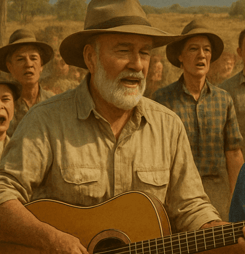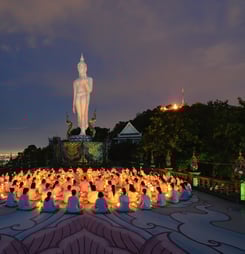
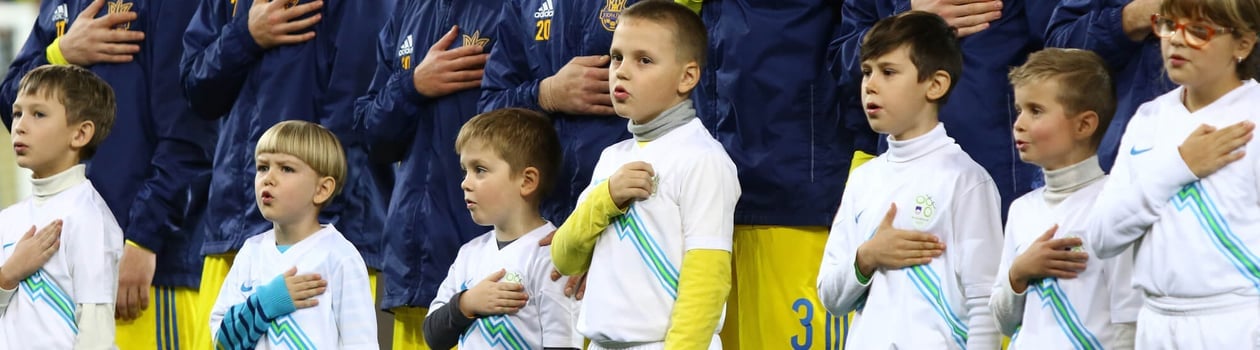
No matter what nation you hail from, there’s a song that everyone knows, and that touches the heart of every member of your country from young to old. That song is your National Anthem, and it speaks of culture and history, and often the very identity of your nation.
In many nations the song is song every morning by school children, and in places like America it is actually sung to open certain sporting events, especially American Football.
National Anthem Day is here to celebrate the National Anthems of the world, from the obscure and forgotten to the ones that ring out every day.
National Anthem Day Timeline
“God Save the King” gains prominence
The song “God Save the King” is first published and rapidly becomes associated with the British monarchy, later serving de facto as the national anthem of the United Kingdom and inspiring other royal and national anthems.
“Marcha Real” recognized in Spain
Spain’s royal march, known today as “Marcha Real,” is officially regulated as the ceremonial march for the monarchy, making it one of the earliest melodies to function in practice as a national anthem.
“Chant de guerre pour l’Armée du Rhin” adopted as “La Marseillaise”
France officially adopts “La Marseillaise” as its national anthem during the French Revolution, establishing one of the first modern, explicitly national anthems tied to popular sovereignty and citizen-soldiers.
“Defence of Fort M’Henry” written
Francis Scott Key composes the poem “Defence of Fort M’Henry” after witnessing the British bombardment of Fort McHenry in the War of 1812; set to a popular tune, it gradually becomes a prominent patriotic song in the United States.
“Kimigayo” lyrics first used in Japan
The poem that forms the lyrics of Japan’s “Kimigayo” is set to music for ceremonial use in 1863, marking an early move toward an official song representing the Japanese state and its emperor.
Olympic Hymn debuts in Athens
At the first modern Olympic Games in Athens, the “Olympic Hymn” with lyrics by Kostis Palamas and music by Spyridon Samaras is performed, helping cement the idea of playing anthems and ceremonial songs at international sporting events.
National anthems standardized at the Olympics
From the 1924 Olympic Games, the practice of raising the winner’s flag and playing the gold medalist’s national anthem becomes standard, reinforcing national anthems as key symbols in global sports ceremonies.
How to Celebrate National Anthem Day
National Anthem Day is by far one of the easiest, and potentially the most fun, holidays to celebrate.
Learn About the National Anthem
It all starts at home, do the research to determine what your nation’s National Anthem is, and then take the time to learn all about it and its history.
Sing the National Anthem
Find out how it’s sung and when, if there are any hidden verses that you may not know about (It’s customary in use for only the first one or two verses to be used, but both “God Save The Queen” and The American National Anthem contain verses not often sung.)
Listen to Different Versions
Hop online to YouTube, Spotify or some other platform where a quick search will offer up a number of different versions of the song. Then listen to identify which is your favorite!
National Anthem day is your opportunity to learn a little bit more about your nation’s history, and perhaps to exhibit a little bit of pride in its history.
History of National Anthem Day
The origin of National Anthem Day is actually in the United States, where Francis Scott Key wrote the anthem for that fledgling nation while Fort McHenry was under assault by British forces. He himself was in the bay on a military vessel, and saw the entire assault happen.
It is from these events that some of the key imagery in the song originated, the ‘bombs bursting in air’. Of course, his time as a military man lent more to the tune itself, which was an old tavern song popular in the day.
Some nations, such as England, don’t actually have an official national anthem. Strange as this may seem, the people of the nation have adopted a song as their anthem.
In the places where most national anthems would stand in, the song “God Save The Queen” is used, and that’s why you’ll hear it sung during sporting events and official events. Of course the UK is tricky in this case, given that it actually comprises not one but three Kingdoms, and each has its own anthem of preference!
But, typically, you can tell what song a country considered to be their national anthem when one of their athletes wins a gold in the Olympics because it is played in their honor!
Facts About National Anthem Day
Early National Anthems Grew Out Of Royal And Military Songs
The idea of a “national anthem” is relatively modern, but many early anthems grew out of royal hymns and military marches adopted by custom.
“God Save the King,” often cited as the first modern national anthem, appeared in the mid‑18th century as a patriotic song in support of the British monarch, while other European states used similar court or battle songs that were only later formalized as national symbols.
Many Countries Have Replaced Or Radically Revised Their Anthems
National anthems are not fixed forever and often change when political systems do.
After World War II, West Germany officially restricted its anthem to the third stanza of the “Deutschlandlied” because the first stanza had been associated with the Nazi regime, while post‑apartheid South Africa merged the anti‑apartheid hymn “Nkosi Sikelel’ iAfrika” with parts of the old “Die Stem van Suid‑Afrika” to create a new, inclusive anthem in 1997.
Some Anthems Are Intentionally Multilingual To Reflect Diversity
A few countries embed their linguistic diversity directly into their national anthem.
South Africa’s anthem is sung in five languages (Xhosa, Zulu, Sesotho, Afrikaans, and English) in a single performance, and Switzerland’s “Swiss Psalm” exists in four official versions in German, French, Italian, and Romansh, reflecting the way both states use music to acknowledge multiple language communities in one symbol.
Legal Rules Around Anthems Range From Guidelines To Jail Time
Countries vary widely in how strictly they regulate behavior during the national anthem. In the United States, federal law describes recommended etiquette but courts have treated standing or saluting as a matter of free speech.
By contrast, China’s 2017 National Anthem Law bans using the anthem in advertisements or as background music and allows up to 15 days’ detention for “insulting” it, while India and several Southeast Asian countries have laws that can punish deliberate disrespect with fines or imprisonment.
Emotional “Fingerprint” Of Anthems Varies By Region And Culture
Large‑scale musical analyses show that national anthems carry distinct emotional profiles linked to geography and culture.
A 2025 study using computational modeling of 176 anthems found that pieces from countries near the equator tend to be more energetic, while those from northern regions are often slower and sadder, and that anthems from the Americas show higher levels of perceived fear and tension than those from Oceania, which scored highest on happiness.
Musical Features Of Anthems Correlate With Social Indicators
Researchers have found intriguing correlations between how anthems sound and what societies are like.
An analysis of musical traits such as pitch, tempo, and note duration across national anthems reported statistically significant links between those features and measures like a country’s suicide rate, happiness score, and peace index, suggesting that the style of a state’s anthem may mirror aspects of its broader psychological and social climate.
Anthems Powerfully Shape National Identity From Childhood
Psychological studies indicate that national anthems are among the most potent state symbols for fostering belonging.
Survey and experimental work has found that most people report strong emotions and memories of historic events when hearing their anthem, and that children’s understanding of the anthem’s meaning becomes similar to adults’ by around age eleven, helping integrate shared values and narratives into their developing sense of national identity.
National Anthem Day FAQs