
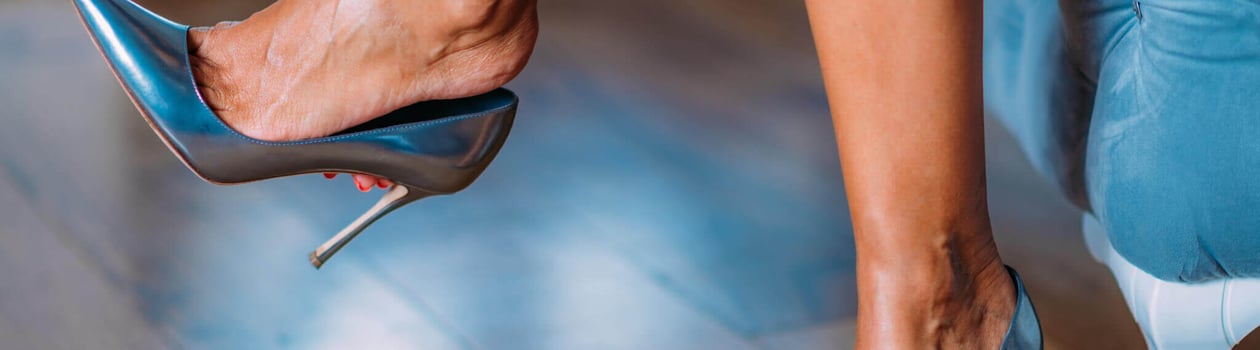
High heels are more than shoes. They are design, engineering, attitude, and a tiny bit of theater wrapped into something that fits in a box. National High Heel Day shines a light on this bold fashion icon and the many ways it has been worn, loved, debated, and reinvented.
From glossy pumps to strappy stilettos, heels bring drama, style, and a little magic to every step. They can look sleek and minimal or wildly sculptural, and they show up everywhere: on runways, at weddings, in offices, at performances, and sometimes just because someone felt like it. Whether spotted on red carpets or sidewalks, they often speak louder than words.
It’s not just about looking taller. Heels can change posture, alter the way fabric falls, and shift the rhythm of a walk. For some people, that shift feels empowering or playful. For others, it is purely aesthetic, like choosing a red lip or a sharp jacket. And for many, it is a mix: a personal style choice that can feel like stepping into a character who is a little braver or bolder.
This day celebrates the beauty, art, and edge that high heels bring into our lives. They can turn an ordinary outfit into something unforgettable, not because they are loud, but because they are intentional. A simple black pump can be the punctuation mark at the end of a look, while a neon platform can be the whole headline.
High heels also carry plenty of symbolism. They can represent boldness, fun, glamour, professionalism, self-expression, and creativity. People wear them for different reasons: to stand out, to feel elegant, to match a certain silhouette, to complement a favorite outfit, or simply because the pair makes them happy. Wherever they go, heels leave a mark, sometimes literally, always fashionably. On this day, the spotlight is theirs, and every step tells a story.
How to Celebrate National High Heel Day
Show Off Your Favorite Pair
Bring out your boldest heels and let them do the talking. That might be a classic pointed-toe pump that makes everything feel polished, a pair of strappy sandals that belongs in a fancy photo, or an unapologetic platform that turns walking into a main character moment.
A great celebration starts with a little care. Wipe down leather or patent finishes, brush suede gently, and check the heel tips to make sure they are not worn unevenly. A quick shine can make an older pair look brand-new, and it is oddly satisfying to see them gleam again.
Wear them wherever the day takes you, in whatever way fits the moment. Some people go all-in with a full outfit built around the shoes. Others keep it simple with jeans and a statement heel. If actually wearing heels all day sounds like a bad plan, the celebration can still happen: style them for a photo, display them like art, or pack them for a short “strut session” and change into comfortable shoes afterward. The point is the joy of the choice, not the number of steps taken.
Snap a fun photo and share it with friends. Choose a backdrop that makes the colors pop, like a simple wall, a clean floor, or a bright outdoor setting. A close-up shot highlights details like buckles, stitching, or a unique heel shape. A full outfit shot shows how heels change proportions and posture. Give those heels the attention they deserve, and let the outfit match the energy of the shoes.
Host a High Heel-Themed Party
Gather friends and plan something stylish, silly, or a bit of both. Ask everyone to wear their most daring heels, or set a theme like “classic black,” “sparkle,” “vintage,” or “unexpected color.” If guests do not wear heels, encourage them to participate with any footwear they love, including boots with a heel, wedges, or bold flats. A celebration of style works best when everyone can join comfortably.
Add a runway-style walk just for laughs. It does not need to be serious. In fact, a “runway” made from a hallway or a taped-off section of floor can be perfect. Play music that makes people strut, and take turns narrating like it is a fashion show. Keep it light and kind, and make sure the walking surface is safe. Heels and slick floors are not a great duo.
Decorate the space with glitter, lights, and color, or lean into a chic, minimalist vibe that feels like a boutique. A photo corner with good lighting can turn the party into an instant memory machine. For snacks, lean into finger foods so nobody has to juggle a plate while balancing on stilettos.
Share stories behind each pair for extra fun. Many heels come with history: a “first job interview” pair, a “wedding guest” pair, a “finally bought them” splurge, or something inherited and treasured. Talking about why a shoe matters is a surprisingly easy way to turn fashion into personal storytelling.
Support a Local Shoe Designer
High heels can be tiny masterpieces of design. Even a clean, simple silhouette requires planning: the arch support, the balance point, the slope, the heel placement, the construction that keeps the foot stable. Supporting independent designers and small shops is a way to celebrate that craft.
Visit a boutique or shop online for unique high heels. Look for details that show intention: quality stitching, thoughtfully placed straps, comfortable lining, and materials that will age well. If someone loves the look of heels but struggles with fit, a small designer or specialty store can be more helpful than a generic shelf. They may offer different widths, smarter strap placement, or better balance.
Pick something different from what is usually worn. That could mean a new heel height, a bolder color, or a style that is more architectural than expected. If buying a new pair is not in the budget, support can still happen through sharing work, leaving a thoughtful review, or recommending a shop to someone who is searching for the perfect pair. Style meets purpose in the best way when it also supports creators.
Create Art Inspired by Heels
High heels are built for inspiration. The lines are dramatic, the shapes are sculptural, and the materials can be luxurious. Artists, photographers, and designers have used heels as symbols for decades, and National High Heel Day is a perfect excuse to join in.
Paint, sketch, or photograph a favorite pair. A simple still life can look surprisingly striking when the light hits a glossy surface or a metallic strap. For photography, try playing with shadows and reflections. Place the shoes near a window for soft light, or use a lamp to create a crisp outline. A dramatic angle can make the heel look like a piece of modern architecture.
Craft something using old heels and give them new life. Worn-out pairs can become décor, props, or art objects. A pair can be turned into a quirky planter, a bookend, or a display piece. Some people decorate a retired pair with beads, paint, or fabric scraps, creating something that is more “gallery” than “closet.”
Share the creation with friends or on social media. Even better, invite others to make their own versions. Fashion has always been part of creativity, and this day is a reminder that style does not stop at the wardrobe door.
Learn About Foot Health and Comfort
High heels can be fun, but they also change how the body carries weight. Taking a moment to understand comfort and fit makes the celebration more sustainable and more enjoyable. A shoe can be beautiful and still be a problem if it pinches, slides, or forces the foot into an unstable position.
Start with fit. A heel that is too big makes the foot grip, leading to fatigue and blisters. A heel that is too small can compress toes and create hot spots. Look for a secure heel cup, enough room in the toe box, and straps that hold the foot without cutting in. People with different foot shapes may prefer certain styles: a thicker heel for stability, an ankle strap for security, or a platform to reduce the steepness of the slope.
Explore tools that make heels easier to wear. Cushion inserts, gel pads for the ball of the foot, heel grips to prevent slipping, and blister-prevention tape can change the experience dramatically. Rotating shoes instead of wearing the same pair repeatedly also helps, since different shapes stress different areas.
After wearing heels, simple recovery helps. Calf stretches, rolling the sole of the foot over a ball, and gently stretching toes can reduce tightness. Some people find that switching to supportive shoes afterward, even for a short time, makes a difference. Comfort does not have to fight style. The best-looking pair is often the one that can be worn with confidence.
National High Heel Day Timeline
Early Elevated Footwear in Ancient Egypt
Ancient Egyptian butchers and priests are depicted wearing shoes with raised heels to keep their feet clear of blood and hot sand, an early functional ancestor to later high heels.
Persian Horsemen Use Heeled Boots
Mounted Persian warriors wear heeled boots to secure their feet in stirrups, a military technology that later inspires European adoption of heels as both practical and fashionable footwear.
Catherine de Medici Popularizes Heels at the French Court
When Catherine de Medici marries Henry, Duke of Orléans, she reportedly wears specially made high-heeled shoes to increase her height, helping to introduce heeled footwear as a symbol of elite European fashion.
Louis XIV and the Red Heels
French King Louis XIV issues sumptuary rules reserving high, red-heeled shoes for the aristocracy, cementing heels as a marker of status and political power rather than gender.
Dior and the Modern Stiletto Era
Christian Dior’s postwar designs, paired with ultra-thin steel-reinforced stiletto heels created with designer Roger Vivier, help launch the modern high heel silhouette that becomes a global symbol of femininity and glamour.
Second-Wave Feminism Questions High Heels
As second-wave feminists challenge restrictive beauty standards, high heels become a focus of debate, seen by some as instruments of oppression and by others as tools of sexual and personal empowerment.
First U.K. Parliamentary Debate on High Heel Dress Codes
Prompted by a high-profile petition against a company dress code requiring women to wear high heels, the U.K. Parliament debates and condemns such rules, highlighting growing concern over comfort, equality, and workplace rights.
History of National High Heel Day
National High Heel Day began in 2021, created by Kimberly Lorenz, a Supreme Court mediator, with support from Judge Gisela Laurent. The day was established to recognize high heels as more than a fashion accessory, highlighting their cultural impact and the way they can contribute to confidence and self-expression.
To understand why a day like this resonates, it helps to look at high heels as a design story that has traveled through centuries and across styles. Heels have not always meant the same thing, and they have not always belonged to the same groups of people. Over time, they have shifted from practical function to status symbol to fashion statement, and then splintered into countless interpretations.
Historically, raised heels served practical purposes in some contexts, helping with stability in stirrups and protecting feet from rough terrain. As styles evolved, heels became tied to social signals, including wealth and power. Eventually, they grew into a major element of fashion, especially as shoemaking techniques improved and designers began treating footwear as a centerpiece rather than an afterthought. The modern high heel, with its range of shapes and heel heights, is a product of both craftsmanship and cultural meaning.
In contemporary style, high heels can communicate many things at once: formality, celebration, elegance, rebellion, drama, professionalism, or playful glamour. A pair of understated pumps can read as sharp and traditional. A sculptural heel can feel like wearable art. A tall stiletto can be sleek and striking, while a block heel can offer height with more stability. Wedges and platforms offer their own mix of comfort and impact. The variety is part of the appeal, and it is why “high heel” is less a single item and more a whole category of design language.
National High Heel Day also recognizes that the relationship people have with heels is personal. For many, heels symbolize confidence, individuality, and fearless self-expression. For others, they are occasional fun rather than a daily choice. Some admire the artistry without wanting to wear them at all. The day encourages celebration without insisting on one “right” way to participate.
Since its beginning, the day has grown in visibility through shared photos, themed gatherings, and stories about favorite pairs. It has also intersected with a broader conversation about clothing and confidence. Professional attire can affect how a person feels entering a room, and for some, heels are part of that mental shift, like a tailored jacket or a signature accessory. In that sense, the day is less about a specific item and more about what it represents: stepping into a version of oneself that feels capable, expressive, and seen.
At the same time, modern style culture increasingly values choice. National High Heel Day fits that mood best when it celebrates heels as an option, not an obligation. A person can appreciate the craft, the history, and the visual power of heels while also prioritizing comfort, practicality, or personal preference. That balance makes the day more inclusive and more honest.
National High Heel Day ultimately spotlights the idea that fashion can be both fun and meaningful. High heels sit at the intersection of art and utility, tradition and trend, confidence and creativity. Whether someone is wearing a treasured pair, learning how to choose a better fit, supporting a designer, or simply admiring a beautiful silhouette, the message stays the same: style is a form of storytelling, and sometimes it starts at the feet.
Facts About National High Heel Day
Heels Began as Practical Footwear for Soldiers and Horsemen
High-heeled shoes started as functional gear rather than fashion accessories. In 10th‑century Persia, horse‑riding soldiers wore heels to secure their feet in stirrups for better stability while shooting arrows, a style later adopted by European aristocrats as a symbol of military alliance and elite status.
Early European Heels Were a Unisex Symbol of Power
In 16th- and 17th-century Europe, heels were worn by both men and women as markers of wealth and authority.
Figures such as France’s King Louis XIV favored tall, red-heeled shoes that visually emphasized rank and privilege, and these styles filtered down through court culture long before they became primarily associated with women.
The Stiletto Heel Emerged With Postwar Technology
The ultra-thin stiletto heel only became possible in the mid-20th century when metal rods could be embedded into narrow heels for strength.
Designers in the 1950s used steel shanks and new manufacturing techniques to create taller, slimmer heels that would have been structurally impossible with earlier wood or leather constructions.
High Heels Change Gait and Increase Joint Loading
Biomechanical studies show that high heels shift a wearer’s center of gravity forward and increase knee flexion, which can significantly raise pressure on the knee joint compared with flat shoes.
Research published in medical journals links frequent high-heel use to altered gait patterns, higher loads on the forefoot, and a greater risk of issues such as knee osteoarthritis and foot pain.
Heel Height Affects Balance and Muscle Activation
Even moderate heels can change how lower‑leg muscles function. Laboratory tests with motion capture have found that higher heels increase activation in the calf muscles and shorten the Achilles tendon over time, which can impair balance and make walking on uneven surfaces more unstable, particularly for older or inexperienced wearers.
High Heels Have Been Used to Signal Professional Authority
In the late 20th century, high heels became closely tied to “power dressing” in many corporate environments.
Sociologists and fashion historians note that pairing structured suits with heeled pumps was used by some women as a way to navigate male-dominated workplaces, combining traditionally masculine tailoring with a distinctly feminine shoe to project authority and competence.
Men’s High Heels Continue to Reappear in Fashion Cycles
Although often viewed today as women’s footwear, high heels regularly resurface in menswear, especially in subcultures and runway fashion.
From glam rock performers in the 1970s to contemporary gender-fluid collections, designers have used heeled boots and platforms on male-presenting models to challenge conventional ideas about masculinity and dress.
National High Heel Day FAQs



You may also like

National Shoe the World Day
National Shoe The World Day is a special day celebrated on March 15 every year. It's a day dedicated to raising awareness about the importance of having good-quality shoes. For many of us, choosing what shoes to wear is a simple part of our daily routine. However, for countless individuals...
- India
- International
- United Kingdom
- and 1 more

One Day Without Shoes Day
Reconnect with the Earth (literally) and go one day without shoes, dig up old shoes to donate, or donate to foundations that give shoes to children in need.
- United States

National Go Barefoot Day
Celebrate National Go Barefoot Day by kicking off your shoes, enjoying health benefits, and supporting Soles4Souls in providing footwear to people in need.
- United States

National Sock Monkey Day
These soft, colorful, cuddly companions are a fun way to add some personality to any room — perfect for both kids and adults alike!
- Canada
- United Kingdom
- United States
National days and holidays on May 20

World Bee Day
Discover World Bee Day, a global celebration raising awareness of vital pollinators, their role in ecosystems and food crops, and simple ways to protect them.
- International

Cannes Film Festival
The Cannes Film Festival is one of the most glamorous and important events in the film industry. Held annually in the beautiful city of Cannes on the French Riviera, this festival draws the biggest names in cinema, from directors to actors. The red carpet is a dazzling display of style...
- France

National Streaming Day
Celebrate National Streaming Day by exploring new platforms, free library services, and the evolving world of on-demand video that’s reshaping entertainment.
- Canada
- United Kingdom
- United States

International Clinical Trials Day
Discover the history and impact of International Clinical Trials Day, honoring medical research, volunteers, and breakthroughs that improve patient care worldwide.
- Australia
- Canada
- United Kingdom
- and 1 more
Seize Every Day
Join free for personalised recommendations, email reminders and exclusive guides. Never miss a day.