Plimsoll Day
The man who made sure ships stayed afloat, revolutionizing safety at sea with his ingenious mark, ensuring journeys were safer for all.
Plimsoll Day is dedicated to the man who made commercial sailing safer: Samuel Plimsoll, a persistent reformer whose name ended up painted on ship hulls around the world. It’s a day for appreciating the hidden engineering and hard-won rules that help crews, cargo, and vessels arrive in one piece.
So, look to the waterways, my friends, and give thanks for all the awesome items in your house that made it safely to shore and into your home.
Behind everyday goods sits an entire system of maritime checks and balances, including one of the simplest-looking safety devices ever adopted: a few lines and letters that say, in effect, “That’s enough.”
There was a time in England when many commercial vessels traveled so overloaded and poorly maintained that accidents abounded. Shipowners could be tempted to cram in more cargo to increase profits, even when doing so pushed a vessel too low in the water.
The result was a grim era of so-called “coffin ships,” unseaworthy vessels that put crews in constant jeopardy.
With the laws that Mr. Plimsoll championed, a ship’s safe loading limit became visible and enforceable. Today, Plimsoll lines, also called load lines, can be found painted on ships across the globe.
They’re not decoration. They’re a public promise that a vessel is sitting high enough in the water to handle weather, waves, and the basic unpredictability of the sea.
How to Celebrate Plimsoll Day
What to do to celebrate Plimsoll Day? There are several ideas you could start with, such as these:
Learn About Samuel Plimsoll
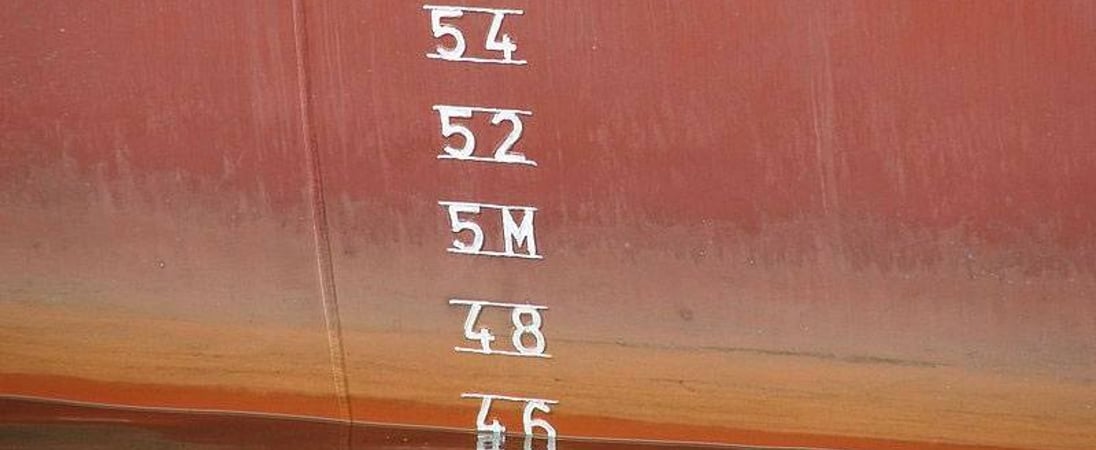
Start by learning what a Plimsoll line is and why it matters. On many cargo ships, it appears as a circle crossed by a horizontal line, painted mid-hull.
Nearby, a short ladder of marks and letters shows how deeply the ship is allowed to sit in the water under different conditions. It may look small, but this symbol does a huge job: it protects a vessel’s freeboard—the height of the deck above the water—so waves don’t constantly wash over the ship, and water can’t pour into openings.
A simple way to understand it is to focus on three key questions.
What problem was it solving?
Before load lines existed, ships were often dangerously overloaded. When a vessel sits too low in the water, even moderate seas can force waves onto the deck, strain the hull, and greatly increase the risk of flooding or capsizing. The Plimsoll line created a visible, enforceable limit to stop owners from pushing ships beyond what was safe.
Why are there multiple lines?
Not all water and weather are the same. Saltwater is denser than freshwater, so a ship floats slightly higher in the ocean than in a river. Seasonal and regional sea conditions also matter: winter seas are rougher, while tropical waters are usually calmer. The different marks account for these changes, adjusting how much cargo a ship can safely carry.
Who decides where the line goes?
Modern load lines are set under international maritime rules and verified through inspections by classification societies. In other words, the mark is not just a suggestion—it is backed by law and independent oversight.
Once you know what to look for, you can spot Plimsoll marks almost anywhere ships pass. A walk along a harbor, a visit to a maritime museum, or even browsing ship-spotting photos online can turn into a kind of scavenger hunt, revealing how each vessel is “tuned” for the waters it sails.
To read the markings, here are the most common letters you’ll see:
- S – Summer (the standard reference in seawater)
- W – Winter (a stricter limit for rougher seas)
- T – Tropical (more loading allowed)
- F – Fresh water
- TF – Tropical fresh water
- WNA – Winter North Atlantic, the toughest limit of all
Letters beside the circle usually identify the authority or classification society that approved the mark.
You don’t have to memorize every code to get the point. The real lesson is this: the ocean never offers one-size-fits-all safety—and the Plimsoll line is how ships adapt to that reality.
Shop for Shipped Items
Another way that you could celebrate the day is to support shipping by buying goods that travel through waterways. Yep, you heard that right: go shopping.
Of course, most modern shopping already depends on shipping. That’s what makes this idea fun. Celebrating Plimsoll Day can mean noticing the supply chain that normally stays invisible. Consider choosing an item that likely arrived by sea, and take a moment to think through the steps:
– A manufacturer packs and pallets it.
– A container is loaded, weighed, documented, and sealed.
– A vessel carries it across open water where weather and waves do not negotiate.
– A port crew unloads it and moves it onward by rail or truck.
This day doesn’t need anyone to buy more stuff than they want. The spirit is awareness. It’s realizing that international trade is not magic, it’s planning plus labor plus rules, and that some of those rules exist because people fought to stop preventable deaths.
If celebrating with purchases, choosing durable, useful items is a surprisingly Plimsoll-friendly move. The same mindset that says “don’t overload the ship” also says “don’t overload the closet.”
Share With Others
Let friends and family know and make it a group activity. While out there learning and having fun, it’s worth sharing the small, satisfying story behind a big safety improvement: a single reformer pushed until a safety mark became standard.
Sharing can be low-key and still meaningful:
– Point out a load line mark the next time someone is near a working waterfront.
– Tell the story of “coffin ships” and why public outrage mattered.
– Discuss how consumer safety and worker safety often improve through the same mechanism: clear standards plus enforcement.
And yes, a silent thank you to Samuel Plimsoll is entirely appropriate, especially if it’s paired with respect for modern crews who still do demanding, technical work in tough conditions.
Plimsoll Day Timeline
1894
Load Line Position Fixed in British Law
Further British legislation fixes by law the exact position of the load line on ships, transforming the earlier requirement to carry a mark into a fully enforceable technical standard that limits overloading.[2]
1906
Load Line Rules Extended to Foreign Ships in British Ports
British regulations are extended so that foreign ships visiting UK ports must also carry a load line, exporting the Plimsoll-style safety regime to much of the international merchant fleet using British harbors.[3]
1930
First International Convention on Load Lines Adopted
Maritime nations agreed on the first International Convention on Load Lines, establishing a standardized global framework for determining freeboard and marking load lines on seagoing ships, which built upon national systems pioneered in Britain.[4]
5 April 1966
International Convention on Load Lines, 1966
The International Maritime Organization adopts the revised International Convention on Load Lines in London, modernizing global rules for assigning freeboard and codifying the familiar load line mark derived from the Plimsoll concept.[5]
21 July 1968
1966 Load Line Convention Enters into Force
The 1966 International Convention on Load Lines came into force worldwide, making its technical annexes and load line marking requirements legally binding for ships engaged in international voyages.[6]
11 November 1988
1988 Protocol Harmonizes Load Line Surveys
States adopt the 1988 Protocol to the 1966 Load Line Convention to harmonize survey and certification requirements with SOLAS and MARPOL, ensuring that enforcement of load line rules keeps pace with broader maritime safety regimes.[7]
History of Plimsoll Day
Samuel Plimsoll was instrumental in making shipping safer in England at a time when commercial sailing could be brutally hazardous. In the 1800s, merchant ships were sometimes loaded with too much cargo or sent to sea in poor condition. When owners prioritized profit over seaworthiness, crews paid the price.
Accidents on the water and around docks during loading and unloading were common, but the most feared danger was a vessel that never should have left port.
The nickname “coffin ships” captured the public’s alarm: these were ships so overloaded or unfit that a voyage could look less like a job and more like a gamble with loaded dice.
Over-insurance could also warp incentives, turning wrecks into financial advantage for owners while sailors and their families carried the real risk.
Plimsoll’s path into reform was not purely academic or political. In 1853, he attempted to become a coal merchant in London. He was not successful and lost nearly everything, living for months in a common lodging house.
That experience shaped him. When his circumstances improved, he committed himself to serving those with fewer protections and fewer options, the people most likely to be treated as replaceable.
As a Member of Parliament, Plimsoll began investigating maritime conditions and discovered how widespread and systemic the problem was. His campaigning combined research, moral pressure, and a talent for focusing the public’s attention on a clear, practical fix.
A key part of that effort was his book *Our Seamen*, which brought the dangers of unseaworthy ships into sharper view for readers who did not spend their lives near docks.
His advocacy helped push the issue from grumbling acceptance into active scrutiny. Official investigations and intense parliamentary debate followed. Shipping reform was not an easy sell, particularly when lawmakers had business ties to shipowning interests.
Plimsoll’s determination sometimes burst through the usual politeness expected in legislative halls, a sign of how personally he took the stakes. The public response, however, often favored him. Many people understood the basic fairness at issue: a worker should not be forced to risk death because an owner wanted a few more tons of cargo.
Plimsoll’s achievements include being the driving force behind England’s Merchant Shipping Act of 1876. The Act strengthened the ability of authorities to detain and inspect ships judged unseaworthy and, crucially, supported the practice of marking a safe loading limit on the hull. That visible mark became widely associated with Plimsoll’s name.
This is where the Plimsoll line enters everyday maritime life. The line indicates how deeply a ship may be loaded, which is another way of saying how much freeboard must remain. That freeboard is not about keeping decks prettier.
It gives the ship reserve buoyancy and a buffer against heavy seas, shifting cargo, and the slow accumulation of water that can happen in bad weather. Overload the vessel, and that safety margin disappears.
Over time, load-line systems became more standardized and internationally recognized. Modern shipping uses load lines as part of a broader safety culture that includes hull standards, stability rules, inspections, crew training, and emergency procedures.
But the genius of the Plimsoll mark remains its simplicity: it makes a safety limit visible to everyone. It is hard to argue with a painted line when the water is already kissing it.
Plimsoll Day is celebrated annually in honor of Samuel Plimsoll’s birth on February 10, recognizing not just a man, but a shift in thinking: that commerce does not have to be careless, and that practical regulations can transform a dangerous industry into a safer one.
Facts About the Plimsoll Line and Ship Safety
The Plimsoll line may look like a simple symbol painted on a ship’s hull, but it represents one of the most important safety breakthroughs in maritime history. Before these marks were required by law, many cargo ships were loaded far beyond safe limits, putting crews, cargo, and entire vessels at risk. The small circle and horizontal line became a powerful tool for preventing that danger by making a ship’s maximum safe depth visible to everyone—from dockworkers to port authorities.
The following facts trace how this single marking evolved from a 19th-century reform into an international standard that governs global shipping today, showing how science, law, and hard-won experience came together to protect lives at sea.
-
Hidden Mathematics of the Plimsoll Line
The Plimsoll line is not just a painted mark: it is the visible result of complex naval-architecture calculations balancing a ship’s displacement, freeboard, and stability in different water densities and seasons, so that even small changes in draft can be tied to known reserve buoyancy and righting moments for the hull.
-
Different Marks for Different Seas and Seasons
Modern load line marks show a cluster of letters and horizontal lines—TF, F, T, S, W, and WNA—indicating maximum legal loading in tropical freshwater, freshwater, tropical sea water, summer, winter, and winter North Atlantic, reflecting how colder, rougher, or less dense waters change a ship’s safe draft.
-
“Coffin Ships” and Insurance Profits
In 19th‑century Britain, some shipowners notoriously sent out elderly or overloaded vessels nicknamed “coffin ships,” because if they sank, the owners could claim insurance while the loss of poorly paid seamen carried no comparable financial penalty, creating a lethal incentive structure that safety reformers fought to overturn.
-
An 1871 Snapshot of Maritime Risk
A British Board of Trade investigation into wrecks around 1871 found 856 ships lost within ten miles of the UK coast in conditions described as no worse than a “strong breeze,” leading officials and later historians to conclude that overloading and unseaworthiness, rather than exceptional storms, were responsible for hundreds of deaths each year.
-
From National Reform to Global Treaty Law
The national idea of a compulsory load line introduced in Britain in the late 19th century eventually evolved into the International Convention on Load Lines of 1966, administered by the International Maritime Organization, which standardizes how ships worldwide are assigned freeboard and marked with load lines for international voyages.
-
Merchant Shipping Acts and Foreign Vessels
British reforms did not stop at regulating domestic ships; by the early 20th century, changes consolidated in the Merchant Shipping Act 1894 and later measures meant that foreign vessels entering British ports also had to carry a recognized load line, using port-state control to push safer loading practices onto international shipping.
-
A Social-Reform Bestseller That Changed Shipping
Samuel Plimsoll’s 1873 book “Our Seamen” combined statistics, eyewitness accounts, and emotional appeals about widows and orphans of drowned sailors, and it sold widely enough to stir public outrage, helping to force Parliament to act on unseaworthy ships and paving the way for load line legislation.
Plimsoll Day FAQs
How does a Plimsoll line actually help keep a ship from sinking?
A Plimsoll line (or load line) is a mark painted on a ship’s hull that shows the maximum draught the vessel may safely reach under specific conditions. By ensuring the water never rises above the appropriate mark, the ship maintains enough freeboard and reserve buoyancy to cope with waves, wind, and minor flooding without being swamped or capsizing. [1]
Why are there different Plimsoll marks for summer, winter, and different oceans?
Water density and expected sea conditions vary by region and season, so international load line rules utilize multiple marks—such as those for tropical, summer, and winter zones, as well as for salt versus freshwater. Denser water and calmer conditions allow a ship to sit slightly deeper, while colder, rougher seas demand a higher freeboard, so each mark reflects a different safety margin for the same ship. [2]
Is a ship safe as long as it floats below its Plimsoll line at the dock?
Not necessarily. The Plimsoll line limits overall immersion, but safety also depends on hull condition, watertight integrity, and how weight is distributed on board. A vessel can technically sit below its load line and still be unseaworthy if, for example, cargo is poorly stowed, structures are weakened, or stability has been compromised by modifications or damage. [3]
Did ship overloading really cause many wrecks in the 19th century?
Historical records from the British Board of Trade show that overloading and unseaworthiness were major causes of ship losses. In 1871 alone, 856 ships sank within 10 miles of the British coast in no more than a strong breeze, with hundreds of seamen drowning each year—evidence that unsafe loading practices were a systemic problem rather than rare accidents. [4]
How did the Plimsoll line lead to modern international ship safety rules?
The compulsory load line introduced in British law in 1876 became a model for other countries, and by 1906, foreign ships entering British ports also had to carry a load line. This national practice fed into the 1930 International Load Line Convention, where dozens of maritime nations agreed on common standards for freeboard and load lines, forming a core part of today’s global ship safety regime. [5]
Were load marks on ships entirely new in Samuel Plimsoll’s time?
No. Some maritime states had used hull marks centuries earlier—for example, Venetian ships reportedly bore cross-shaped marks from the 12th century—but these were not part of a universal, enforceable load line system. Plimsoll’s contribution was to turn the idea of a safe loading mark into a compulsory, legally defined standard that could be widely enforced and later harmonized internationally. [6]
Does the Plimsoll line eliminate the risk of “coffin ships” today?
A properly applied load line greatly reduces the risk of deliberate overloading, but it does not remove all danger. Modern “coffin ship” concerns can still arise from factors such as poor maintenance, falsified inspections, or unsafe cargo practices; the Plimsoll line works best when combined with robust surveys, crew training, and enforcement of broader seaworthiness standards. [7]
Also on ...
View all holidays
National Umbrella Day
Be prepared for any weather with this must-have accessory! It's lightweight, colorful, and functional. Say goodbye to getting soaked and hello to style.

World Pulses Day
These plant-based protein sources offer nutrition, sustainability, and versatility, enriching meals and promoting health and wellness.