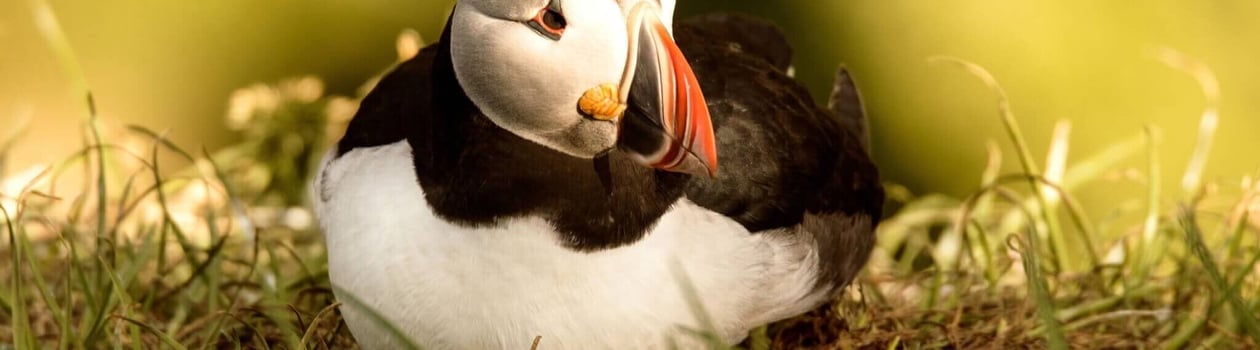
Puffin Day is a celebration of one of the world’s most charismatic seabirds, the puffin. It highlights the birds’ unique charm and importance, and they are known for their colorful beaks and quirky behaviors.
Puffin Day isn’t just a fun event for bird enthusiasts; it emphasizes the ecological significance of puffins and the need to protect their habitats.
The day draws attention to the puffin’s role in marine ecosystems and the growing threats they face due to environmental changes.
How to Celebrate Puffin Day
Go Puffin Spotting
Head to a nearby coastline where puffins live. Spend the day spotting these colorful birds in their natural habitat. A pair of binoculars can bring them closer, so don’t forget to pack those.
Puffins are known for their bright beaks and quirky behaviors, making them a joy to watch.
Host a Puffin-Themed Party
Invite friends over for a puffin-themed bash! Decorate with puffin images, serve fish-shaped snacks, and watch puffin documentaries together. It’s a fun way to celebrate while learning more about these charming birds.
Adopt a Puffin
Support puffin conservation by adopting one through a wildlife organization. The adoption usually comes with updates about your puffin, and it’s a great way to contribute to their protection.
Plus, who wouldn’t want their very own puffin, even if it’s just symbolic?
Create Puffin Art
Gather some art supplies and get creative! Paint or draw puffins, or make puffin crafts with the kids. Sharing your creations on social media can help spread the word about Puffin Day and inspire others to join the celebration.
Learn and Share Puffin Facts
Spend some time researching interesting facts about puffins, then share them with friends and family. You could even create a puffin quiz to test everyone’s knowledge!
The more people know about these birds, the more likely they are to help protect them.
Reasons for Celebrating Puffin Day
Puffin Day is celebrated to raise awareness about the declining puffin populations, particularly in areas like Iceland and the British Isles.
Puffins are struggling due to changes in their environment, including food shortages and habitat loss. By dedicating a day to these birds, conservationists hope to inspire action to protect them.
This day also honors the cultural significance of puffins in local communities, where they are cherished symbols of the natural world. Celebrating Puffin Day helps ensure that future generations can enjoy these fascinating birds.
Puffin Day Timeline
First printed use of the word “puffin.”
The Oxford English Dictionary records “puffin” in English from the mid‑16th century, originally applied to the cured meat of a fatty seabird, with the name later becoming attached specifically to the Atlantic puffin.
Atlantic puffin, formally described as Fratercula arctica
Carl Linnaeus includes the Atlantic puffin in the 10th edition of Systema Naturae, giving it the scientific name Alca arctica, a key step in placing puffins within the formal system of biological classification.
Puffin hunting traditions are documented in Iceland
The Danish‑Norwegian scientist Eggert Ólafsson’s accounts of Icelandic life describe cliff‑netting and other methods used by islanders to harvest puffins and their eggs, showing how central the birds were to subsistence and culture.
Maine begins regulating seabird hunting
The state of Maine passed one of its early bird protection laws limiting the taking of seabirds on coastal islands, a first move toward protecting Atlantic puffins and other alcids from unregulated hunting in New England.
Project Puffin launches in the Gulf of Maine
Biologist Stephen Kress and the National Audubon Society begin transplanting puffin chicks from Newfoundland to Eastern Egg Rock, pioneering seabird restoration techniques that would eventually re‑establish breeding puffins in Maine.
Atlantic puffin gains protection under the EU Birds Directive
The European Community adopts the Birds Directive, listing the Atlantic puffin among species whose habitats require special conservation measures, strengthening legal protection across much of its European range.
IUCN uplists Atlantic puffin to Vulnerable
The International Union for Conservation of Nature reassesses the Atlantic puffin’s status, moving it from Least Concern to Vulnerable because of rapid declines linked to climate‑driven changes in prey and other threats.
History of Puffin Day
Puffin Day began in Iceland, where these delightful seabirds are a significant part of the culture and environment. The main idea was to draw attention to the challenges puffins face due to changing environments and to inspire action to protect them.
Communities and conservationists worked together to establish this day, recognizing the need for awareness and support to ensure puffins continue to thrive.
Over time, the celebration spread beyond Iceland to other regions with puffin populations, including the UK and the US, where similar efforts aim to protect these charming birds.
The exact start date of Puffin Day isn’t widely documented, but it likely emerged alongside growing conservation efforts in the late 20th or early 21st century.
The inspiration came because of the increasing threats to puffins, such as habitat loss and food shortages, prompting a dedicated effort to safeguard their future. The day now serves as both a celebration and a call to action, highlighting the importance of conservation in protecting puffins for generations to come.
Fascinating Facts About Puffins
Puffins may look like cheerful little birds with colorful beaks and waddling walks, but their lives are full of surprising abilities and remarkable adaptations.
From spending most of their time far out at sea to diving deep underwater and even using tools, these seabirds are far more complex than they first appear.
The following facts reveal some of the most impressive and unexpected traits that make puffins one of the most fascinating birds of the North Atlantic.
Puffins Spend Most of Their Lives at Sea
Atlantic puffins are superbly adapted for life on the open ocean, spending roughly two-thirds of the year far from land and only returning to shore to breed.
Outside the breeding season they sleep, feed, and even rest on the waves, using their waterproof plumage and dense feathers for insulation in cold North Atlantic waters.
Masters of Multi‑Fish Carrying
Puffins can carry impressive numbers of fish at once because their bills and tongues work together like a conveyor system.
Tiny spines on the roof of the mouth and a rough tongue allow them to clamp earlier catches in place while they continue hunting, with one study documenting a puffin delivering more than 60 small fish in a single load to its chick.
Surprisingly Deep Divers for Such Small Birds
Although puffins look stocky and comical on land, they are powerful underwater “flight” specialists that can routinely dive 60 to 100 feet in search of prey and have been recorded reaching depths of over 200 feet.
They propel themselves with rapid wingbeats beneath the surface, steering with their feet to chase agile fish like sand eels.
A Seabird That Uses Tools
In 2019, researchers reported Atlantic puffins using sticks to scratch their bodies, one of the first documented cases of tool use in a wild seabird.
The behavior, recorded by remote cameras in Wales and Iceland, suggests more complex cognitive abilities in puffins than previously assumed and expands scientists’ understanding of tool use beyond primates and large land animals.
Puffins as Climate Sentinels
Puffin breeding success has declined in several North Atlantic colonies as warming seas disrupt populations of cold-water fish such as sand eels, their main chick food.
Long‑term monitoring on islands in Iceland, Scotland, and the Gulf of Maine shows that poor food availability leads to starving chicks and failed nests, making puffins valuable indicators of broader changes in marine ecosystems.
A Burrow‑Nesting Seabird That Digs Like a Rabbit
Instead of nesting on open cliffs like many seabirds, puffins typically excavate underground burrows that can reach several feet in length, often in turf or deep soil on grassy slopes.
Both members of a pair help dig and maintain the tunnel, which protects a single egg and chick from harsh weather and many predators but also makes colonies vulnerable to erosion and trampling.
Puffins Hold a Unique Place in Icelandic Culture
In parts of Iceland, especially the Westman Islands, puffins have long been both an important traditional food and a cultural symbol that now anchors local tourism.
Children’s “puffling” rescue patrols, puffin imagery in festivals, and strict hunting quotas reflect a shift from viewing puffins mainly as a resource to seeing them as icons whose survival is closely tied to community identity and coastal heritage.