
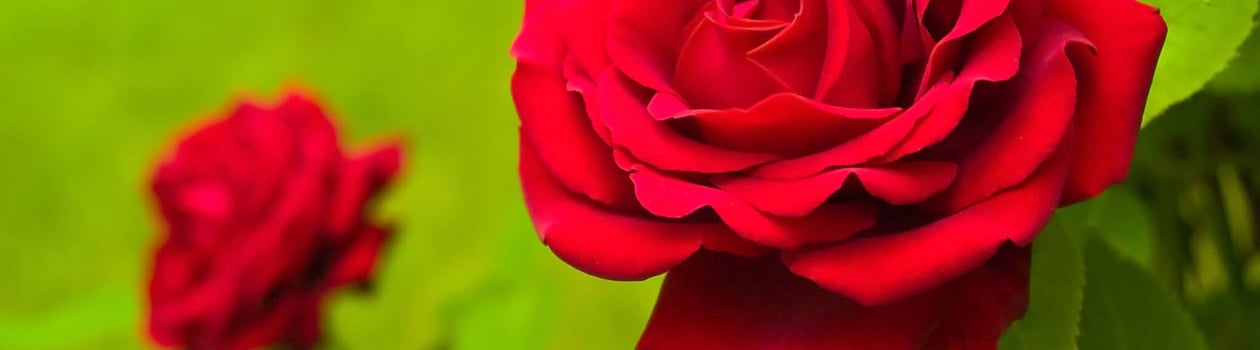
A well-known symbol of love in addition to being a beautiful and fragrant flower, it’s no wonder that National Red Rose Day is such a popular occasion.
Celebrating the many facets of the rose, National Red Rose Day is a time for gardeners, florists, and romantics to come together and enjoy the rose in all its splendor.
National Red Rose Day gives fans a chance to see roses at their best, blooming in glorious abundance at the height of the season.
How to Celebrate National Red Rose Day
There are numerous ways to celebrate National Red Rose Day, so why not take some time to enjoy this special occasion?
Visit a Rose Garden
Some people visit a rose garden where exotic species are showcased wonderfully.
Others prefer to spend some time in their own garden, perhaps preparing a special meal to relish al fresco whilst enjoying the fragrance of their own red rose blossoms. National Red Rose Day is a great reason for a celebration!
Share a Red Rose
On the other hand, you may even like to think outside the box and treat this as another day to show somebody just how much you care.
Whether it’s a special somebody or a family member, showing somebody that you care about them is never a bad thing.
To help make the day special you could arrive home with a single red rose before giving your loved one a wonderful evening, or you could simply leave a rose before you head off to work, whatever you do, the gesture will go a long way.
Start a Tradition
When it comes to celebrations of passion and love, we can never have too many. So, if you haven’t celebrated National Red Rose Day before now, then perhaps this year should be the one where you start.
After all, National Red Rose Day is becoming more and more popular with each passing year; you wouldn’t want to be the one in the dog house for not doing something special, would you?
Why Celebrate National Red Rose Day
When it comes to roses, the choices are plenty, but with all of this choice comes great responsibility. If you are thinking of treating a lady or gentleman that happens to have botanical interests, you need to be mindful of the roses you choose!
Of course, when it comes to shopping for actual roses, you still need to be mindful. Roses are one of the international symbols of passion and love, but there are some roses, such as the Rosa violet Carson, which is often associated with death and getting closer to heaven.
Now, while you may approach the situation with the best intent, should you pass one of these beautiful rose hybrids to somebody with a little botanical knowledge, this situation is tantamount to visiting your parents with retirement home catalogs.
When it comes to the one flower that can place you into the embrace of another, the rose really is that flower. The question most people seem to have at this point is about how a flower can have so much power, so let’s find out!
Why the Rose Is So Powerful
It seems that from all of the universal constants that have been discovered over many centuries, the one that seems to have lasted longest and been most prominent is that men are useless when it comes to conveying their emotions.
Roses seemed to become somewhat a communication device for men to say something wonderful without ever having to say a word. In essence, it seems that the rose is, in fact, the earliest form of Snapchat.
On a more serious note, though, roses really are an international symbol of love. It matters not where in the world you may be if you present a loved one with a rose, you are certain to be passing over a message of love.
Having something like Red Rose day in the modern world is magical; the world is full of trials and tribulations, and it’s nice to think that an emotion as deep and complicated as love can be expressed with the giving of a single flower.
National Red Rose Day Timeline
Early Garden Roses in Asia
Archaeological and textual evidence suggests garden cultivation of roses began in Asia around 5,000 years ago, likely in China and neighboring regions. [1]
Roses in the Chinese Imperial Gardens
During the Zhou (Chou) dynasty, roses were grown in imperial gardens and described by Confucius, indicating their value as ornamental and cultural plants. [1]
Chinese Roses Flourish in the Han Dynasty
Scholarly horticultural research notes that Chinese roses were widely cultivated during the Han dynasty, laying groundwork for many modern garden varieties. [1]
Roman Middle Eastern Rose Cultivation
During the Roman period, roses were grown extensively in the Middle East, used for perfume, medicine, and decoration in banquets and public life. [1]
Red Rose as a Dynastic Emblem in England
In the Wars of the Roses, the red rose symbolized the House of Lancaster, fixing the flower in European political and heraldic history. [1]
China Roses Reach Europe
China roses (Rosa chinensis), famed for repeat flowering, were introduced from China to Europe, transforming Western rose breeding. [1]
Victorian Language of Flowers Elevates the Red Rose
In Victorian floriography, the red rose became firmly codified as the emblem of passionate love, shaping modern romantic gifting traditions. [1]
History of National Red Rose Day
When it comes to when Red Rose day began, well, that information is a little skewed, and in truth, we don’t even know who started the whole thing off; the one thing we do know though, is why it began.
Believe it or not, Red Rose day used to be a part of the celebrations of Valentine’s week, but for some unknown reason became separated at some point over the last ten years. The history behind the red rose, and why we give it though, well, that is far more rich and full.
The earliest records we can see in regards to the cultivation of roses dates back almost 5000 years, and like most things, it starts in the far east. Rose cultivation started in China but soon found its way to Rome and Greece.
It is thought that roses were seen as a luxury muse and distributed among the rich who would then give them to artists to inspire them. It seems that, like most botanical pickings of this time, roses also found their way in the medicine of the time, and this was all before a single person had used one as an apology.
If we fast forward a little, we soon see that roses went from symbols of hope, peace, and love to become a symbol of war. In England, during the 15th century, there was a well-known war that saw two parties, both using the symbol of a rose to represent their army.
While now the rose is something that represents love, still to this day, we know this great 15th century battle as the war of the roses.
So, as you can see, even something as perfect as a rose can come with some bad blood in its history, the joy is that it’s most notable trait has carried through time, and it seems that it will continue to do so for many more years to come.
It seems that while the world is becoming infatuated with automation, technology, and doing everything online, days that celebrate romance will always hold a special place in the hearts of all.
Whether it’s Valentine’s Day or National Red Rose Day, you should try to make things as special and wonderful as you can for the person that you love. Nowadays, it can be hard to convey a message of love, especially with all the convenience of modern life that surrounds us.
Facts About National Red Rose Day
Ancient Myths Tie Red Roses To Love And Blood
In Greek and Roman mythology, red roses were bound to love goddesses, with one widespread legend saying the flower turned red when Aphrodite’s tears mixed with the blood of her dying lover Adonis, transforming a white rose into a crimson emblem of passionate, tragic love.
The Red Rose Was A Political Emblem Before A Romantic One
Long before it filled bouquets, the red rose served as a battlefield emblem in 15th‑century England, where it represented the House of Lancaster in the Wars of the Roses, a dynastic civil conflict against the white rose of York that permanently linked the flower to questions of power and identity as well as affection.
Modern Red Roses Are Mostly Human-Made Hybrids
What most people recognize as a classic red rose is rarely a wild species; instead, it is usually a complex hybrid that breeders have refined over the last two centuries to intensify color, increase petal count, extend vase life, and, in some cases, restore fragrance that earlier breeding had inadvertently reduced.
The Famous Red Color Comes From Anthocyanin Pigments
The deep red of many modern roses is created by plant pigments called anthocyanins, particularly cyanidin derivatives, whose concentration and chemical environment in the petals determine whether a bloom appears bright scarlet, velvety crimson, or near‑black in low light.
Roses Have A Surprisingly Complex Perfume Chemistry
Classic “rose scent” is not a single smell at all but a blend of dozens of volatile compounds, including citronellol, geraniol, nerol, and the molecule β‑damascenone, which is so potent that trace amounts dramatically shape the perceived richness and depth of a red rose’s fragrance.
Red Roses Anchor A Global Cut-Flower Industry
Cut roses are among the most traded flowers in the world, with countries such as Kenya, Colombia, and Ecuador exporting billions of stems annually to markets in Europe and North America, and red varieties consistently ranking among the highest‑demand colors for holidays centered on romance.
China Has Cultivated Red Roses For Millennia
Archaeological and historical evidence suggests roses were cultivated in China more than 2,000 years ago, and traditional Chinese symbolism associates red blossoms with prosperity and good fortune as well as affection, which helped the color gain favor both in gardens and in ceremonial use.
National Red Rose Day FAQs
What is the difference between a red rose’s meaning in Western culture and in older religious or mythological traditions?
In contemporary Western culture, a red rose is strongly associated with romantic love, passion, and desire, which is why it is commonly exchanged between partners. Historically, though, red roses carried a wider range of meanings.
In ancient Greece and Rome they were linked with deities of love such as Aphrodite and Venus, but also with Dionysus and ideas of ecstasy and transience. In Christian symbolism the red rose became associated with the Virgin Mary and with Christ’s suffering, so its red color could stand for sacrifice as much as for passion.
Over time, the romantic aspect became dominant, but those older religious and mythological layers still influence how the flower appears in art and literature.
Do different numbers of red roses really convey different messages?
Many modern florists and gifting guides assign specific meanings to the number of red roses in a bouquet, such as a single rose for “love at first sight” or 12 roses for “be mine.”
These numeric “codes” are a relatively recent convention that grew out of Victorian floriography and later marketing rather than any ancient rule, but people often recognize them today.
Because interpretations vary by culture and by florist, the number should be seen as an added nuance, not a strict universal language, and the relationship and context usually matter more than the exact count.
Are red roses always the right choice to express love, or can the color send the wrong signal?
Red roses are widely recognized as a symbol of romantic love, but color can send unintended signals in some situations.
For example, darker red or burgundy roses are often marketed as symbols of commitment or deep, long‑term love, while bright scarlet or orange‑red roses can suggest excitement or desire more than tenderness. In contrast, pink roses are frequently associated with admiration and gratitude, and white roses with purity or remembrance.
Because color meanings are partly shaped by culture and commercial usage, it is sensible to consider the recipient’s background and expectations instead of assuming that every red rose will be interpreted the same way.
Why have red roses become so closely tied to romance compared with other flowers?
Red roses combine a few features that made them especially suited to symbolizing romance.
Botanically, many red rose cultivars have a strong fragrance and a classic, layered petal form that artists and poets have long used as a metaphor for beauty and sensuality.
Historically, roses were cultivated and prized in ancient China, Persia, Greece, and Rome, and stories and myths from those cultures tied them to love and desire.
When Victorian floriography popularized “the language of flowers,” those centuries of association, plus the availability of red rose varieties that could be bred and shipped, helped lock the red rose in as the default emblem of romantic love in Europe and North America, more so than other blooms. [1]
What environmental impacts are linked with buying red roses, especially around popular romantic dates?
Most commercially sold red roses are grown in large-scale operations that can have notable environmental impacts. Studies of the floriculture industry describe high water use, heavy reliance on fertilizers and pesticides, and significant energy consumption when greenhouses are heated in cooler climates.
Many roses are also flown long distances from major producing countries, which adds to their carbon footprint. Analyses of Valentine’s season roses have shown that, depending on the production method, a single rose can carry substantial greenhouse gas emissions, and plastic sleeves and packaging contribute additional waste. These impacts vary by region and production system, but they are an important part of the modern red rose supply chain. [1]
How can someone choose red roses in a more sustainable or ethical way?
Consumers who want red roses with a lower environmental impact can look for options that reduce transport and resource use. Sustainability researchers and botanical organizations often recommend buying locally grown, seasonal flowers where possible, which avoids long‑haul air freight and can reduce energy inputs for heating.
Asking florists about the country of origin and cultivation method, requesting minimal or plastic‑free packaging, and considering growers that are certified under environmental or fair‑trade schemes can also help. When local red roses are out of season, some experts suggest choosing alternative seasonal blooms with similar colors instead of insisting on imported roses.[1]
What should people know about the care and lifespan of red roses as cut flowers?
Red roses used as cut flowers are varieties of the genus Rosa selected for stem length, bud shape, and vase life. Horticultural guidance from botanical gardens and extensions explains that they last longest when stems are freshly cut at an angle, placed immediately in clean water, and kept away from heat sources and direct sunlight.
Changing the water regularly and using a preservative can slow bacterial growth and help the blooms stay fresh. Under typical home conditions, quality red roses often look their best for several days, though actual lifespan depends on the cultivar, how they were grown and shipped, and how well they are cared for after purchase.[1]


You may also like


Bring Flowers To Someone Day
Celebrate Bring Flowers to Someone Day by learning the language of flowers and surprising someone (or yourself) with a meaningful bouquet that shows you care.

Flower Day
Flower Day shines like a burst of sunshine, brightening the world with petals and perfume. Streets, shops, and homes seem to bloom all at once. It’s not just about admiring flowers. It’s about what they make us feel—lighter, happier, more awake. One whiff of a lily or glance at a daisy...

National Plant a Flower Day
Brighten up your garden with a kaleidoscope of colors and sweet fragrances. Put your green thumb to the test and bring nature to life!
National days and holidays on June 12

Vivid Sydney
Vivid Sydney is a dazzling celebration that transforms the city into a vibrant playground of lights, music, and creativity. For weeks, iconic landmarks and urban spaces glow with stunning light installations and 3D projections, captivating both locals and tourists. This festival draws millions of visitors each year, offering an enchanting...

Peruvian Hairless Dog Day
Celebrate Peruvian Hairless Dog Day by honoring Peru’s native hairless breed, a national treasure symbolizing heritage, loyalty, and a deep human–canine bond.

National Great Dane Day
Discover the gentle, loyal nature of Great Danes on National Great Dane Day, celebrating these towering companions and promoting their care, adoption, and respect.

Russia Day
Discover Russia Day, a national holiday honoring Russia’s declaration of sovereignty with parades, concerts, fireworks, and reflections on modern identity.
- Canada
- Russia
- United Kingdom
- and 1 more
Seize Every Day
Sign up to get reminders, recommendations and guides.