National Something On a Stick Day
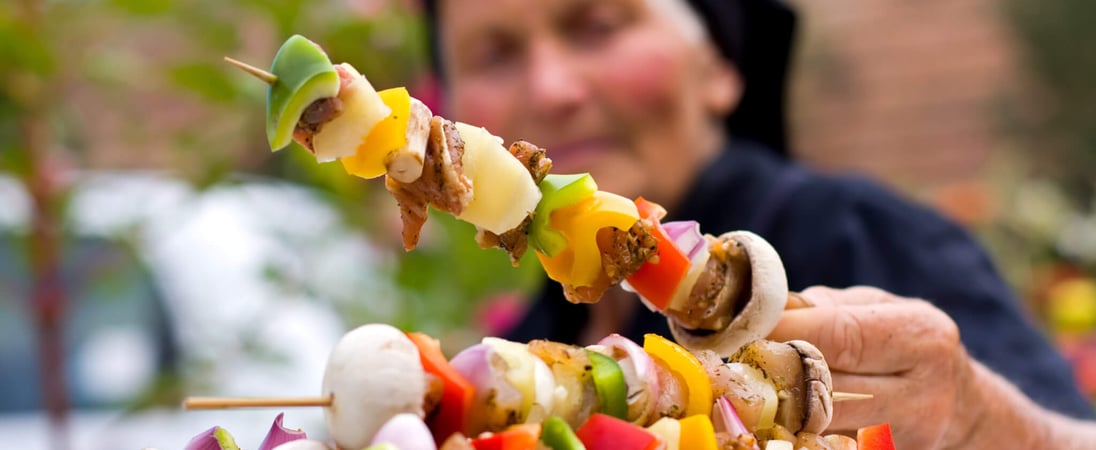
Skewer your cravings with delicious foods impaled on a stick! From corn dogs to kebabs, it's a portable and fun way to snack and dine.
No, this day is not talking about mops or brooms (although it’s certainly good to be very thankful for them, of course!) but National Something On a Stick Day is all about celebrating foods that people love to eat – and this amazing food just happens to come on a stick!
Because, who doesn’t love relaxed finger food that can be picked up by the stick and eaten?
Whether it’s a toffee apple, camp-fire sausage, cheese cubes on a toothpick, an ice cream bar, lollipop or other lovely treats, feel free to indulge in them in celebration of National Something on a Stick Day!
Or why not try the favorite American food on a stick if it’s possible – the famous corn dog?
National Something On a Stick Day Timeline
c. 1700 BCE
Earliest Written Recipes for Meat on Sticks
Cuneiform tablets from the ancient Mesopotamian city of Mari record recipes for skewered, roasted meat, showing that cooking food on sticks was part of early Near Eastern cuisine.
c. 500 BCE
Persian Traditions of Skewered Meat
Classical sources and later culinary histories trace kebab‑style dishes to ancient Persia, where small pieces of meat were threaded onto skewers and grilled over open fires.
Middle Ages (c. 11th–15th centuries)
Shish Kebab in the Medieval Middle East
Travelers’ accounts and food historians describe soldiers in the medieval Middle East grilling pieces of meat on their swords, an early form of shish kebab that popularized skewered food across the region.
19th Century
Street Food on Sticks Spreads in Europe
With the rise of urban street vending in the 1800s, European hawkers increasingly sold skewered sausages and meats, making portable foods on sticks a common feature of working‑class diets.
1905
Accidental Invention of the Popsicle
In San Francisco, 11‑year‑old Frank Epperson accidentally created a frozen sweet on a stick by leaving a flavored soda mixture with a stirring stick outside overnight, later commercialized as the Popsicle.
1923–1924
Ice Cream Bars on a Stick Go Mainstream
After earlier experiments with coated ice cream, frozen confections on wooden sticks were patented and marketed in the United States in the early 1920s, helping to standardize ice cream bars as a popular treat.
1942
Corn Dogs Popularized at the State Fair of Texas
Vendors at the State Fair of Texas in Dallas began selling hot dogs dipped in cornmeal batter and fried on sticks, a fairground innovation that helped turn the corn dog into a classic American food on a stick.
How to Celebrate National Something on a Stick Day
Take advantage of National Something on a Stick Day to round up all sorts of food options to see how well they fit on a stick! Consider some of these ideas for observing the day:
Host a National Something on a Stick Day Party
What about planning an entire meal that includes an appetizer, main course and dessert, all of which are served on sticks?
This concept for hosting a dinner party couldn’t be more easy, informal, and fun. And an added bonus is that there is very little cleaning up to do afterwards! What a great theme for a dinner party to have on National Something on a Stick Day!
Although it is certainly fun to revolve the day around the food, there are also some games that might be fun to try out during the party.
Adults and kids of all ages can participate by playing games that include “something” on a stick, like pick-up sticks, kick the stick, or three sticks (aka capture the flag).
Get Creative with Food on a Stick
Take the opportunity to celebrate National Something on a Stick Day by thinking outside the box. Sure, it’s possible to serve corn dogs and shish kebabs.
But what about some more interesting foods that can be eaten on a stick? Try out some of these ideas:
- Fruit Kebabs. Great when served as an appetizer, side dish or dessert, fruit kebabs can be made by stacking strawberries, grapes, watermelon chunks, pineapple pieces and many other varieties of delicious fruit onto a stick.
- Waffle Pops. Eating waffles just got a little more fun! Make waffles ahead of time in a round waffle maker, with a stick baked into each quarter. Drizzle with melted chocolate and top with sprinkles.
- Chocolate Bacon Skewers. The sweet and savory blend of bacon with chocolate is an amazing combination!
- Prosecco Pops. While popsicles are a delicious treat, making them for the adults-only crowd is even more delightful. These are especially tasty when paired with slices of fruit.
History of National Something on a Stick Day
For thousands of years, people have been using skewers and sticks as a useful tool for cooking food, before forks were even thought of. In fact, single sticks were used in Ancient China as a predecessor to the use of chopsticks.
The concept of being able to use a stick to hold food over a fire is a clever one, resulting in the ability to cook without the need for pots and pans.
From skewers for making kebabs to rotisseries that would slow roast meat on a spit over a fire, sticks have been an important part of food delivery for many years.
In modern times, the idea of not only cooking but also eating food that is presented on a stick is more about convenience. It’s just a simple and easy way to serve something without the need for a plate or utensils.
So forget the fork, because National Something on a Stick Day offers the perfect opportunity to serve and eat foods that work naturally on a stick!
Facts About National Something on a Stick Day
Ancient Evidence of Meat Cooked on Sticks
Archaeologists have found Bronze Age stone supports in Santorini, Greece, with parallel grooves that appear to have been designed to hold skewers over hot coals, suggesting that people in the Aegean region were grilling meat on sticks at least 3,700 years ago, long before the word “kebab” appeared.
Satay Turned Skewers into a Southeast Asian Street-Food Icon
Satay, typically small strips of marinated meat grilled on thin bamboo sticks and served with peanut sauce, emerged in Java and spread rapidly through Indonesia, Malaysia, Singapore, and Thailand, becoming one of the earliest standardized street foods on a stick across Southeast Asia.
Japanese Yakitori Developed as a Way to Use Every Part of the Chicken
Yakitori, meaning “grilled bird,” evolved in Japan in the late 19th and early 20th centuries as urban grill stalls began skewering not only chicken breast and thigh but also skin, liver, gizzards, and cartilage, using bamboo sticks to portion and sell inexpensive bite-size pieces to city workers.
Corn Dogs Grew Out of Fairground Experiments in the 1940s
The corn dog, a hot dog coated in cornmeal batter and deep fried on a stick, took off in the United States around the early 1940s, with vendors at fairs such as the Texas State Fair and the Minnesota State Fair independently claiming to have popularized the concept as a portable, utensil-free meal.
Popsicles Began with a Frozen Stirring Stick in 1905
In 1905, 11‑year‑old Frank Epperson in Oakland, California, accidentally left a cup of powdered soda and water with a stirring stick on his porch overnight, and it froze, inspiring the later “Epsicle” patent and the modern popsicle on a wooden stick that turned frozen drinks into handheld treats.
Twin Popsicles Were a Great Depression Innovation to Stretch a Treat
During the Great Depression, popsicle makers introduced “twin” bars with two sticks so that one frozen treat could be snapped in half and shared, a marketing and design tweak that helped cash-strapped families feel they were getting more value from a single stick-based dessert.
Food on a Stick Is a Fixture of Global Street Markets
From Turkish döner kebab sliced onto skewers, to Mexican paletas and elotes on sticks, to Korean “hot dogs” coated in batter and fries, handheld skewered foods have become a defining feature of street markets worldwide because they are easy to assemble in small spaces and let customers eat while walking.
National Something On a Stick Day FAQs
Is food on a stick actually safer or riskier than other ways of serving food?
Food on a stick is not inherently safer or riskier than other foods, but it is often eaten outdoors or at events where people mingle, which can increase food safety risks if basic rules are ignored.
Public health agencies advise the same core steps for all foods: keep raw and ready‑to‑eat items separate, cook meats to a safe internal temperature using a food thermometer, keep hot foods at 140°F or above and cold foods at 40°F or below, and refrigerate leftovers within 2 hours (1 hour if it is above 90°F outside).
These practices apply whether the food is on a plate, in a bowl, or on a stick.
What are the safest ways to cook meat and vegetables on skewers at home?
Food safety experts recommend threading foods that have similar cooking times (such as all chicken pieces or all firm vegetables) onto the same skewer so everything reaches a safe internal temperature at the same time.
Raw meat, poultry, and seafood should be kept separate from vegetables and fruits during prep, using different cutting boards and utensils.
The U.S. Food and Drug Administration advises using a food thermometer instead of relying on color, and keeping cooked skewers hot at 140°F or above until serving, especially at picnics or barbecues.
Are wooden or bamboo skewers environmentally friendly?
Wooden and bamboo skewers are made from renewable plant materials and are generally biodegradable, especially if they are plain and uncoated.
Their environmental impact depends on how the wood or bamboo is sourced and how the used skewers are disposed of.
Forestry and environmental agencies encourage choosing products from responsibly managed forests, reducing single‑use items when possible, and favoring composting or proper waste management to limit landfill impact.
Reusable metal skewers can further reduce waste if they are used many times and cared for properly.
Why do so many street foods around the world come on a stick?
Anthropologists and food historians point out that skewering food has ancient roots in many cultures because it makes cooking over an open flame practical and eating on the move easier.
In parts of the Middle East, Central Asia, and the Mediterranean, kebab traditions developed from soldiers and travelers grilling meat on spears over campfires.
In East Asia, small grilled skewers and hawker‑stall snacks remain common street food because they cook quickly, are portioned for individual sale, and can be eaten without plates or cutlery, which suits busy urban environments.
Is it safe to reuse wooden skewers or sticks for food?
Food safety guidance does not recommend reusing disposable wooden or bamboo skewers for raw or cooked foods, because porous materials can absorb juices and harbor bacteria even after rinsing.
If skewers have contacted raw meat, poultry, or seafood, they should be discarded after one use.
Government food safety agencies suggest using washable, nonporous utensils or metal skewers when reuse is desired, since these can be thoroughly cleaned and sanitized between uses.
What is the best way to avoid cross‑contamination when preparing party foods on sticks?
To avoid cross‑contamination, public health authorities recommend organizing the work area so that raw foods and ready‑to‑eat items never touch the same surfaces or utensils.
Separate cutting boards and knives should be used for raw meats and for fruits, cheeses, or desserts that will go on sticks. Trays that held raw kebabs should not be reused for cooked ones unless they are washed in hot, soapy water first.
At gatherings or potlucks, extension services advise keeping serving utensils with each platter and reminding guests not to mix raw and cooked items on the same skewer.
How long can skewered foods safely sit out at a picnic or fair?
Food safety agencies in the United States advise that perishable foods, including meat, dairy, cut fruit, and cooked skewers, should not sit at room or outdoor temperature for more than 2 hours in total.
If the temperature is above 90°F, the limit drops to 1 hour because bacteria multiply more quickly in the “danger zone” between 40°F and 140°F.
After that time, foods on sticks should be thrown away rather than refrigerated, since cooling them later will not make them safe to eat.
Also on ...
View all holidays
International Women in Music Day
Talented and trailblazing, these artists harmonize their voices and instruments, leaving an indelible mark on the music landscape.

Earth Hour
Taking a stand for our planet by flicking the switch and embracing the beauty of a starry night, one bulb at a time.