You can’t buy happiness, but you can buy sushi, which is kinda the same thing!
In the last two decades, it’s become a bit of a sensation, the traditional Japanese meal known as sushi.
Often considered to be simply raw fish (In Mexico We Have a Word For Sushi: Bait), and thus snubbed by many people, the truth behind what sushi is is more complex, and it can be a delicious repast for those so inclined.
International Sushi Day celebrates this potentially delicious meal and seeks to raise awareness about the truths and fictions surrounding it.
How to Celebrate International Sushi Day
“But wait!” we hear you say, “You said that not all sushi contains raw fish!” That’s right, not all sushi does! Sushi can contain any number of ingredients, and often includes cooked portions, such as in the case of crab sushi.
Sometimes sushi contains no meat proteins at all but instead consists of a purely vegetable mixture. International Sushi Day is your opportunity to explore this cuisine and all it has to offer, and maybe find out that you have a new favorite comfort food!
Here are some super fun ways in which you and your buddies can celebrate this fishy (or not so fishy, in the case of some sushi!) day:
Head Out for Sushi
This is the simplest way to enjoy International Sushi Day. Head to your local specialist sushi restaurant and enjoy the delicacies lovingly prepared by a professional sushi chef. When we tell you that some chefs live and breathe sushi – we mean it.
It is more than a simple foodstuff to them. Becoming what is known as an itamea of sushi in Japan requires many years of intense training and apprenticeship.
After around five years of working with a master itamae, an apprentice sushi chef is given their first important task: preparing the sushi rice.
The entire process can take as long as twenty years, so you are pretty much guaranteed excellent food if you go to a sushi bar. How many other professions train for that long?
Introduce a Friend to Sushi
Many people turn their nose up and screech ‘ewwwww’ at the thought of eating what they (wrongly!) perceive as a slimy raw fish dish, but as we have tried to debunk that particular myth above, why not try taking your bestie along to a restaurant and see if you can sway their thinking a little?
You might want to persuade them to try a simple miso soup (umami, soy-based soup) or the beginner-friendly Philadaphia roll, made up of Salmon, avocado, and cream cheese.
It is probably a good idea to leave the more acquired taste of the uni (sea urchin) or the complex and rare Wasabi tobiko (wasabi tobiko with quail egg has the raw egg yolk sitting in a bed of caviar, which is wrapped in a sheet of seaweed) until they have got their taste buds and preconceptions sorted.
Make your Own Sushi
Ok, so it is not going to taste anywhere near the standard of a proper sushi chef, but it is always fun to have a go, right?
There are plenty of easy-to-follow recipes online for some of the more basic sushi dishes, and the ingredients and the equipment that you will need to create that oh-so-perfect roll are readily available these days.
Why not throw a sushi-making competition with your friends? You never know, one of you might be a super chef in the making!
Why Celebrate International Sushi Day?
The fact that it celebrates one of the most unique cuisines in the world should be enough of a reason, but if you need more, here are some:
Taste: The possibilities are endless. Create your own combos of seafood, veggies, seasoning, and sauces to have a mind-blowing dish.
Healthiness: You would be hard-pressed to find a dish healthier than fish and vegetables. Protein and vitamins right there and chuck in some rice for a carb hit, and you have a healthy winner.
Coolness: When it comes to cool food, sushi is the king of cool. It epitomizes a combination of tradition and modern, making it the hippest fishy dish around.
History of International Sushi Day
International Sushi Day got its start in 2009 when it was founded by Chris DeMay. But the background of the star of this day goes back much further! Tracing sushi’s origins leads us on an interesting journey, taking us back to SE Asia and a method of storing and preserving fish for later consumption.
Known as Narezushi, fish was stored by being wrapped in salted and fermented rice where it would remain good for months at a time thanks to the fermentation of the rice. Originally the rice was thrown away when it was ready to eat, and only the fish was consumed.
The next stage in the development of sushi would be far more familiar to the modern palate, known as namanare it was made from partly raw fish that was wrapped in fish and consumed before the flavor changed.
Sushi had changed from a way to preserve fish to a new form of cuisine. But this wasn’t the last stage in the foods evolution.It was in the Edo Period, between 1600 and 1800AD in Japan, that the traditional form of sushi we know today came to exist.
At this point it was unique to Japanese culture and consisted of fish and vegetables wrapped in rice, the rice was mixed with vinegar. This form of sushi had regional variations, but the basic idea is still one of the most popular forms of sushi today.
Facts About International Sushi Day
Narezushi Was Once So Fermented The Rice Was Thrown Away
The earliest known sushi, called narezushi, was a preservation method in which gutted fish was packed tightly in salted, cooked rice and left to ferment for months; by the time it was ready, people ate only the intensely flavored fish and discarded the sour, over‑fermented rice, which is the opposite of how sushi is enjoyed today.
Nigiri Began As Edo-Era Street Fast Food
Modern hand-pressed nigiri sushi emerged in Edo (now Tokyo) in the 1820s and 1830s as a kind of fast food sold from street stalls, with pieces much larger than today and toppings often marinated, boiled, or grilled to keep them safe before refrigeration was available.
Traditional Sushi Etiquette Favors Hands Over Chopsticks
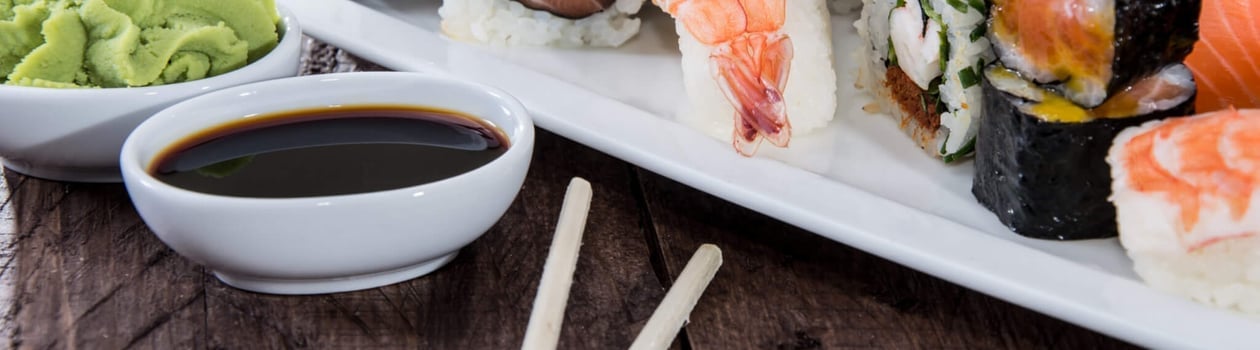
In Japan it is entirely proper, and historically normal, to eat nigiri with the hands, reserving chopsticks mainly for sashimi and other dishes; this contrasts with many Western countries where diners often assume chopsticks are required for all types of sushi.
Dipping The Fish, Not The Rice, Protects The Chef’s Work
Japanese etiquette guides advise turning nigiri sideways and lightly dipping only the fish into soy sauce, rather than the rice, because rice absorbs too much liquid and falls apart and heavy saucing is considered to drown out the carefully balanced seasoning the itamae has already applied.
Pickled Ginger Is A Palate Cleanser, Not A Topping
Gari, the thin slices of pickled ginger served with sushi, is traditionally eaten between pieces to cleanse the palate, and placing it on top of the sushi itself is usually discouraged in Japan, even though this habit has become common in more casual restaurants abroad.
Most “Wasabi” With Sushi Is Actually Dyed Horseradish
Authentic wasabi comes from the grated rhizome of Eutrema japonicum and is so difficult and costly to grow that, outside specialized restaurants, the green paste served with sushi is usually a mixture of horseradish, mustard, and food coloring that imitates the flavor without using the real plant.
Freezing Rules Quietly Shape What Raw Fish Can Be Sushi
Behind the scenes, public health rules in countries like the United States require fish intended to be eaten raw to be frozen to specific time–temperature combinations, such as −4°F (−20°C) for 7 days or −31°F (−35°C) for 15 hours, to kill parasites like Anisakis, which means most sushi-grade fish has been frozen even when it is served as “raw.”