Take a lap, literally. Swim a Lap Day is a cheerful nudge to grab goggles, find a safe place to swim, and let water do what it does best: make movement feel lighter, smoother, and a little more fun. One lap can be a full workout or a simple starting line, especially for anyone who wants an activity that is gentle on joints but still challenges the heart, lungs, and muscles.
How to celebrate Swim a Lap Day
Celebrating Swim a Lap Day can be as simple as swimming one steady lap and calling it a win. It can also be a chance to learn better technique, build a small routine, or introduce someone to water in a safe, supportive way. The key is to keep it doable and enjoyable, because the best workout is the one a person actually wants to repeat.
A good place to start is choosing the right setting. Many people celebrate at a public pool, community aquatic center, school pool, or fitness club. These places usually provide clear water, marked depth, lifeguards, and predictable conditions. Open water can be wonderful too, but it adds variables like currents, temperature changes, boat traffic, limited visibility, and harder-to-judge distances. For a lap-focused day, a pool is the simplest option.
Before getting in, it helps to do a quick “poolside warm-up.” Swimming feels gentle, but it is still real exercise. A few arm circles, shoulder rolls, ankle rotations, and light leg swings can prepare joints and reduce the chance of cramps. Once in the water, an easy warm-up length, even using a relaxed kick while holding the wall every few feet, can help the body settle into the temperature and the breathing rhythm.
Make one lap work for any ability level
One reason Swim a Lap Day has staying power is that “a lap” can be adapted without losing the spirit of the challenge:
- Brand-new swimmers can do a lap with frequent pauses, holding the wall when needed, or using a kickboard. The goal is forward progress, not perfection.
- Casual swimmers can swim a lap at a comfortable pace and focus on steady breathing and a long body position.
- Regular lap swimmers can treat the day like a mini benchmark: one smooth lap focusing on form, then add a few more with a consistent pace.
- People with limited mobility can celebrate with water walking in the shallow end, gentle flutter kicks while holding the wall, or a short assisted lap in a designated lane. Water supports body weight, which often makes movement possible that feels difficult on land.
Swimming is frequently recommended as a low-impact form of aerobic activity because the water’s buoyancy reduces stress on joints. That can make it appealing for people managing arthritis, recovering from injuries, or dealing with chronic pain. The resistance of the water still provides muscular work, but without the pounding that comes with many land-based workouts.
Turn a lap into a simple workout
For swimmers who want a bit more structure, a “one lap” celebration can easily turn into a short session that still feels approachable. A simple pool workout might look like this:
- Warm up with easy swimming or gentle kicking.
- Swim 1 lap smoothly, focusing on relaxed exhale into the water.
- Rest briefly.
- Swim another lap slightly faster or with cleaner technique.
- Cool down with easy backstroke or a slow walk in the water.
This kind of mini-set builds endurance without demanding a huge time commitment. It also highlights one of swimming’s most useful training features: intensity can be adjusted quickly with pace, rest, or stroke choice.
Pick a stroke that matches the goal
Swim a Lap Day does not require any particular stroke, and that is part of the fun. Different strokes emphasize different muscle groups and can change how demanding one lap feels:
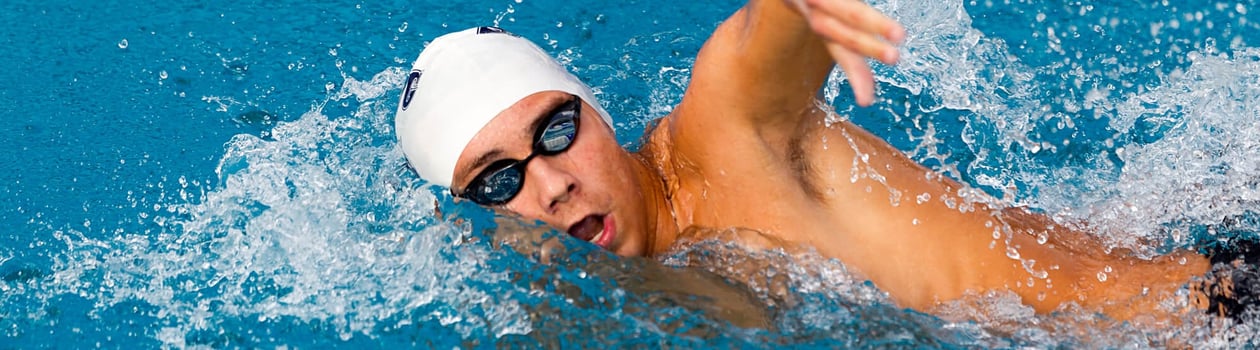
- Freestyle (front crawl) is common for lap swimming because it is efficient and great for cardiovascular conditioning.
- Backstroke is helpful for opening the chest and changing the breathing pattern since the face stays out of the water.
- Breaststroke is often chosen by recreational swimmers because it feels controlled, though it can stress knees if technique is off.
- Sidestroke and elementary backstroke can be comfortable options for people who want a calmer pace and easier breathing.
Even mixing strokes within one lap keeps things interesting and can reduce fatigue in any one muscle group.
Use gear wisely, not as a crutch
Gear can make Swim a Lap Day more comfortable, especially for beginners, but it works best when it supports safe technique.
- Goggles help with visibility and confidence. A proper seal prevents constant leaking, which can turn a joyful swim into a squinty battle.
- Swim caps keep hair out of the face and reduce drag, though they are optional in many pools.
- Kickboards can help isolate leg work and provide support while practicing breathing.
- Pull buoys can help swimmers focus on arm stroke and body position, particularly during technique practice.
- Fins add propulsion and can make a lap feel easier, but they also increase intensity for the legs and can lead to cramps if overused.
Inflatable toys and casual floaties are not the same as safety equipment. For weak swimmers and children, a properly fitted life jacket is the safer choice, along with active adult supervision.
Celebrate the “flying” feeling, but respect the work
People often describe swimming as feeling like flying, and there is something to that. The body is supported, the environment is quiet, and the senses focus on bubbles, rhythm, and the glide phase of each stroke. At the same time, swimming is deceptively demanding. Water is about eight hundred times denser than air, so each movement pushes against resistance. That is why even a single lap can elevate heart rate and breathing.
This full-body engagement is a major reason swimming is associated with improvements in aerobic fitness. Arms and legs work together, the core stabilizes the body, and breathing becomes intentional. Many swimmers also find the rhythm calming, which can support stress management and mood.
Make it social without turning it chaotic
Swim a Lap Day can involve the whole family, but pools work best when everyone understands the difference between play space and lap lanes. A practical way to celebrate with mixed ages is to split the session:
- Start with a lap challenge for those who want it.
- Move to open swim for games and relaxed floating.
- End with a gentle cool-down or water walking together.
Friends can also celebrate with a “lane buddy” plan: each person swims one lap, cheers the other on, and then swaps. This keeps the goal approachable and adds accountability without pressuring anyone to race.
Consider lessons as part of the celebration
One of the most meaningful ways to honor Swim a Lap Day is to treat it as a reminder that swimming is a skill, not just an activity. Formal lessons can improve comfort in the water, teach safer floating and breathing habits, and build endurance. Lessons are not a guarantee of safety, but they can significantly improve confidence and competence, especially when paired with consistent supervision for children and inexperienced swimmers.
Adults who missed out on lessons as kids can also benefit from beginner classes. Learning later in life is common, and a supportive instructor can help remove the fear factor that keeps many people on the pool deck.
Keep safety at the center
Because Swim a Lap Day encourages people to get in the water, it pairs naturally with water-safety basics. Lap swimming can feel controlled, but accidents still happen, and fatigue can arrive quickly.
A few evergreen safety practices make the day safer for everyone:
- Do not swim alone. A buddy system matters in pools and matters even more in open water.
- Choose lifeguarded areas when possible. Lifeguards add a layer of protection, but they do not replace common sense.
- Supervise children closely and continuously. “Within arm’s reach” supervision is a good standard for young or weak swimmers.
- Avoid alcohol or impairment. Water demands coordination and judgment, even for strong swimmers.
- Know personal limits. Taking breaks is normal. A lap does not have to be continuous to count as participation.
- Start slow if returning after time away. Swimming uses muscles in unique ways; a gentle first session can prevent soreness and shoulder irritation.
People with health conditions, especially heart or respiratory issues, may want to check with a healthcare professional before starting a new swim routine. Swimming can be a smart exercise choice, but it is still exercise.
Bring a little technique into the celebration
For anyone who wants a practical “upgrade” beyond simply completing a lap, focusing on one technique cue can make the swim feel smoother:
- Exhale underwater instead of holding the breath. This reduces panic-breathing and helps create a steady rhythm.
- Look down, not forward in freestyle to keep the hips from dropping.
- Stretch long from fingertips to toes to reduce drag.
- Relax the neck and shoulders to prevent tension, especially when breathing to the side.
- Glide briefly after each push off the wall to enjoy the most effortless part of the lap.
These tiny adjustments often make swimming feel less like wrestling water and more like working with it.
Swim a Lap Day ultimately celebrates momentum. One lap can be the entire event or the first page of a longer chapter. Either way, it is a reminder that movement does not have to be loud, punishing, or complicated to be worthwhile. A single trip around the pool can deliver a full-body challenge, a mental reset, and a surprisingly satisfying sense of “Yep, did that.”
Swim a Lap Day Timeline
Great Bath at Mohenjo-daro
Archaeologists identify the large, brick-lined Great Bath at Mohenjo-daro as one of the earliest known monumental water tanks, a precursor to later artificial pools used for immersion and swimming.
Swimming Becomes a Competitive Sport
In Europe and North America, swimming clubs and national associations organize regular races in indoor and outdoor pools, helping turn swimming from a basic skill into a structured sport based on timed lengths.
Swimming at the First Modern Olympic Games
Swimming contests are included at the Athens 1896 Olympics, encouraging international standardization of race distances and pool courses that underpin modern lap-based training.
FINA Is Founded to Govern International Swimming
National federations create Fédération Internationale de Natation (now World Aquatics), which begins issuing technical rules that gradually define standard pool sizes, lanes, and distances used for lap swimming.
Standard Pool Lengths Become Widespread
As competitive swimming expands, 50-meter long-course pools and 25-meter or 25-yard short-course pools are adopted as standard formats, giving swimmers consistent lengths for counting laps and planning workouts.
History of Swim a Lap Day
Swim a Lap Day is a modern observance built around an old idea: swimming is one of the most practical ways to move the body, and it is also one of the most enjoyable. The “lap” part keeps the goal friendly and measurable. A single lap is concrete enough for beginners and still meaningful for experienced swimmers who might turn one lap into a full set of drills.
Long before pools had painted lane lines and pace clocks, humans were swimming for survival, exploration, work, and recreation. Archaeological evidence and ancient art show swimmers in motion thousands of years ago, which tracks with how natural it is for people living near water to learn basic swimming and floating skills. Over time, swimming became formalized in different ways, including military training, lifesaving practice, and organized sport.
As swimming grew into a structured athletic activity, the concept of the “lap” became a convenient unit of measurement. A lap usually means one length down the pool and back, though some pools and programs define it as a single length. Either way, laps make swimming easier to plan and easier to repeat, which is part of why lap swimming is such a common choice for fitness. It turns a wide-open environment into something countable, trackable, and oddly satisfying.
Swim a Lap Day fits neatly into that tradition. It borrows the language of training but keeps the invitation open to everyone, not just competitive swimmers. It is as much about showing up and moving as it is about speed, technique, or medals.
Facts About Swim a Lap Day
Ancient Swimming Manuals Were Part of Military Training
By the 16th and 17th centuries in Europe, swimming was considered important enough for warfare and survival that authors produced full “how‑to” manuals, complete with woodcut diagrams of strokes.
German professor Nikolaus Wynmann’s 1538 book, often cited as the first printed swimming manual, described floating and breaststroke partly to help people escape drowning and move efficiently during river crossings and battles.
Lap Swimming Helped Define Modern Competitive Strokes
When organized competitions spread in 19th‑century Britain, races were typically held in pools or straight stretches of water where swimmers repeatedly covered set distances, similar to today’s laps.
Early champions mostly used a variation of breaststroke, but as lap racing intensified, faster techniques like the front crawl and a separated “butterfly” stroke evolved and were standardized by governing bodies in the early 20th century.
Regular Swimming Is Linked to Lower Risk of Early Death
An analysis of more than 40,000 U.S. men followed for decades found that those who swam regularly had substantially lower all‑cause mortality than men who were sedentary, and even lower than many walkers and runners, after adjusting for age, smoking, and other factors.
While observational and not proof of causation, the study suggested that consistent lap‑style swimming may be one of the more protective aerobic activities.
Water’s Buoyancy Makes Lap Swimming Unusually Joint‑Friendly
Because water supports up to 90 percent of body weight, lap swimmers place far less load on hips, knees, and spine than walkers or runners do at comparable effort levels.
Medical centers like the Cleveland Clinic and government health services note that this buoyancy, combined with constant gentle resistance, lets people with arthritis, obesity, or past injuries complete vigorous cardiovascular workouts while reducing impact‑related pain.
Swimming Laps Can Train the Heart and Lungs in a Unique Way
Sustained lap swimming forces the body to coordinate breathing with stroke cycles, which can improve how efficiently the heart and lungs use oxygen.
Harvard Health reports that regular swimmers often show lower resting heart rates and better exercise tolerance, reflecting cardiovascular adaptations similar to running but achieved with less skeletal stress thanks to the supporting effect of water.
Formal Swim Lessons Greatly Cut Drowning Risk in Toddlers
A landmark U.S. case‑control study of children ages 1 to 4 found that those who had taken formal swimming lessons had an estimated 88 percent lower risk of drowning than similar children who had not, even after accounting for factors like income and education.
Pediatric experts emphasize that lessons do not “drown‑proof” a child but are a powerful protective layer alongside barriers, lifejackets, and close supervision.
Drowning Remains a Top Global Killer of Young People
Despite the popularity of recreational and lap swimming, drowning still causes about 236,000 deaths worldwide each year, according to the World Health Organization, and ranks among the top 10 causes of death for people ages 1 to 24.
More than 90 percent of these deaths occur in low‑ and middle‑income countries, where access to safe swimming instruction, supervised pools, and barriers around open water is often limited.