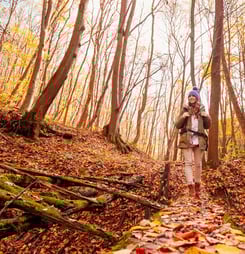

Take a Walk in the Park Day invites everyone outside! It’s a day to enjoy the simple pleasures of nature, clear your mind, and embrace the peace parks offer.
By stepping into a park, you give yourself a break from the buzz of daily life. Parks serve as an oasis, offering a green escape to refresh our spirits and boost our well-being.
How to CelebrateTake a Walk in the Park Day
Bring a Furry Friend
First things first: If you have a furry companion, they’re your VIP for the day. Walking with your dog doubles the fun and showers you with health perks. Try a sniff walk, where your pup’s nose guides the way, transforming your stroll into a treasure hunt of smells.
Buddy Up
Why walk alone when you can invite your human friends too? A walk in the park becomes an adventure when shared. Convince a friend to join by promising them an experience filled with laughter, potential squirrel sightings, and the unwavering joy of stepping on crunchy leaves.
Unleash the Explorer Within
Ditch the same old paths and unleash your inner explorer. Take a different route every time, perhaps one that leads you to the mysterious, unexplored parts of the park.
Who knows what epic tales await among the ancient trees and hidden trails? Each step could be a story waiting to unfold.
Snap and Share
Capture the whimsy of your park adventure with photos. Whether it’s a selfie with a duck, a snapshot of a hidden grove, or a candid of your friend mid-laugh, these memories are gold. Share your expedition online to inspire others to embark on their own.
Learn and Grow
Turn your park visit into a pop-up classroom. From identifying different types of trees to understanding the art of perfecting a bird call, every walk can be a learning journey. Who says you can’t mix fun with a bit of brain exercise?
Pack a Surprise Picnic
Lastly, surprise your walking companions with a spontaneous picnic. A backpack filled with snacks and a blanket can transform a regular break into a delightful picnic. Imagine the joy of feasting on sandwiches while lounging on the grass, basking in the glory of nature.
So, this Take a Walk in the Park Day, let these ideas inspire you to make the most out of your outdoor jaunts. Remember, it’s not just about walking; it’s about creating moments of joy, wonder, and connection with the world around you.
Why Celebrate Take a Walk in the Park Day?
Walking in parks can calm you down, spark creativity, and provide a fun way to stay active without hitting the gym. It’s a chance to explore, discover local wildlife, and make new friends. Plus, it’s good for your heart and helps shake off stress. Just a half-hour walk can make a big difference in how you feel physically and mentally.
On Take a Walk in the Park Day, you don’t need much to get started—just comfortable shoes and a desire to explore.
Whether you prefer a solitary stroll or a lively chat with a friend, parks are the perfect backdrop. They’re a reminder of nature’s beauty, right in our neighborhoods, waiting to be appreciated.
History of Take a Walk in the Park Day
Take a Walk in the Park Day holds a significant purpose. It encourages people to step outside, enjoy the natural beauty of parks, and reap the numerous benefits that come from walking in such peaceful settings.
Celebrated annually, this day serves as a gentle reminder for everyone to embrace the outdoors. Walking in parks is not just about physical health; it’s also a fantastic way to clear your mind, reduce stress, and enhance your mood. The simplicity of walking in a park is its greatest appeal—no special equipment is needed, just a pair of comfortable shoes and, if you wish, some good company.
The tradition underscores the importance of staying active for our overall well-being. Regular walks can keep our joints healthy, muscles limber, and hearts happy. Every step taken is a step towards a healthier physical and mental lifestyle.
The idea is to enjoy the calming effects of nature, boost creativity through a change of scenery, and foster a sense of connection with the world around us.
Take a Walk in the Park Day is a perfect day for everyone to step back from their busy lives, explore local parks, and enjoy the simple pleasure of a walk amidst nature.
Why a Walk in the Park Does More Than Clear Your Head
Spending time in green spaces is not just relaxing—it can change how the brain works, sharpen attention, and support long-term mental health.
Research shows that even short visits to parks can calm negative thought patterns, improve focus, and lower the risk of depression, making nature one of the simplest tools for feeling better, faster.
Parks Calm the Brain in Ways City Streets Do Not
Neuroscience research suggests that walking in natural settings like parks reduces activity in brain regions linked with rumination, a pattern of repetitive negative thinking associated with depression.
In an experiment comparing 90-minute walks, participants who walked in a natural area showed decreased activity in the subgenual prefrontal cortex, while those who walked along a busy urban street did not, indicating that green spaces may uniquely soothe the brain.
Urban Green Spaces Can Improve Attention in Just 20 Minutes
Studies summarized by the National Recreation and Park Association show that even brief exposure to parks can sharpen attention, particularly in children.
One frequently cited experiment found that a 20-minute walk in a green setting improved concentration in children with attention-deficit/hyperactivity disorder more than a walk through a residential or downtown area of similar length.
Park Time Is Tied to Lower Rates of Depression
Analyses of large urban populations have found that people living in neighborhoods with the least green space are substantially more likely to experience depression.
One study highlighted by the National Recreation and Park Association reported that physician-diagnosed depression was about one-third higher in areas with the lowest access to green spaces compared with those surrounded by the most greenery.
City Parks Quiet the Air and Cool Neighborhoods
Urban parks are more than pretty backdrops; they function as natural infrastructure that filters air and moderates local temperatures.
Peer‑reviewed research on parks in Bangkok found that trees and vegetation in city parks can remove fine particulate matter from the air, store carbon, and reduce stormwater runoff, helping cities manage pollution, flooding, and heat at the same time.
One Urban Park Survey Counted Nearly 300 Species
A study of urban parks documented by NOAA found that a single city’s park system supported 288 different species, including birds, amphibians, mammals, and a wide variety of plants and invertebrates.
This kind of biodiversity shows that even relatively small green patches inside cities can act as important refuges for wildlife and as stepping-stones that connect larger natural areas.
Well-Designed Parks Can Be Planned Around Ecosystem Services
Landscape researchers have begun to design and evaluate parks based on the “ecosystem services” they deliver, from recreation and social gathering space to microclimate cooling and habitat for native species.
One planning tool developed by urban ecologists explicitly scores parks on recreation value, social and civic benefits, cooling potential, and biodiversity protection so that new green spaces are built to serve both people and nature.
Green Space Access Is Also a Question of Equity
Academic work on urban ecosystem services notes that the benefits of parks are not distributed evenly: low‑income and minority neighborhoods are often hotter, more polluted, and have less access to quality green space.
Research from the University of Connecticut highlights how integrating biodiversity and ecosystem services into city planning can support social equity by deliberately placing and improving parks in underserved communities.