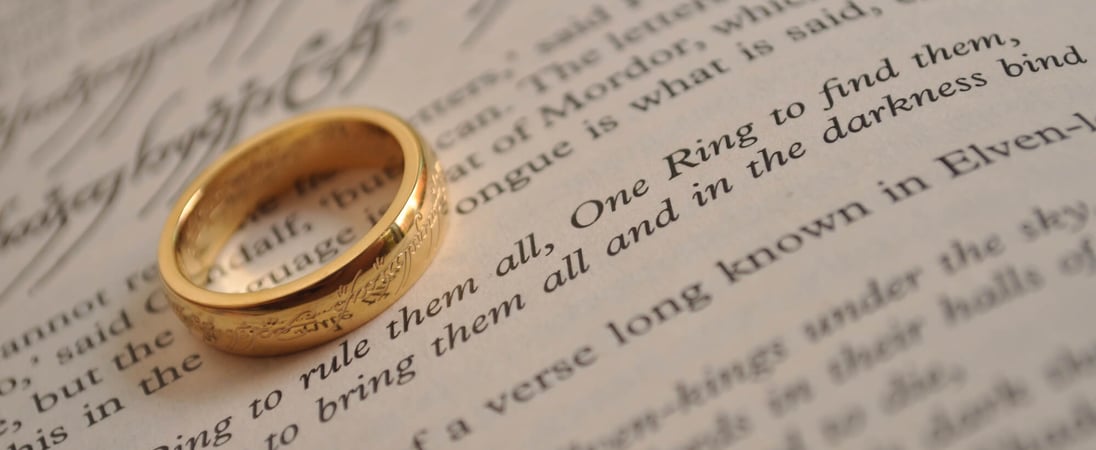
Tolkien Reading Day
Take a journey through a magical world filled with brave heroes, fierce battles, and unforgettable adventures in a beloved classic series.
One of the most well-known fantasy writers of the modern era, J.R.R. Tolkien conjured up an entire magical universe that was not only filled with suspense and action, but also with heart, soul, and emotional strength.
Tolkien Reading Day was created to encourage people to read this brilliant author’s works.
Tolkien Reading Day Timeline
1892
Birth of J.R.R. Tolkien
John Ronald Reuel Tolkien is born in Bloemfontein, in the Orange Free State, a British-descended child whose early move to rural England later shapes the pastoral feel of the Shire.
1916–1918
War Service and the Seeds of Middle‑earth
Serving as a signals officer and surviving the Somme, Tolkien witnesses the devastation of World War I, experiences that later inform the darkness, camaraderie, and landscapes of his legendarium.
1937
Publication of The Hobbit
George Allen & Unwin publishes The Hobbit, or There and Back Again, introducing readers to Bilbo Baggins and Middle‑earth and achieving immediate success as a children’s fantasy classic.
1954–1955
The Lord of the Rings Appears in Three Volumes
The Fellowship of the Ring, The Two Towers, and The Return of the King are published, expanding Middle‑earth into an epic saga that becomes a cornerstone of modern fantasy literature.
1969–1973
Academic Retirement and Final Years
Tolkien retires from his Oxford professorship in 1959 and later moves to Bournemouth in 1969, enjoying growing literary fame before his death in 1973, which prompts a surge of scholarly and fan interest.
1977
Posthumous Publication of The Silmarillion
Edited by his son Christopher, The Silmarillion is released four years after Tolkien’s death, revealing the deep mythic backstory of Middle‑earth and cementing Tolkien’s status as a world‑builder of rare scope.
2001–2003
Peter Jackson’s Film Trilogy Transforms Tolkien’s Reach
The release of The Lord of the Rings film trilogy brings Middle‑earth to a vast global audience, reigniting book sales and inspiring a new wave of Tolkien scholarship, fandom, and themed events.
How to Celebrate Tolkien Reading Day
Celebrating Tolkien Reading Day can be as simple as the name implies–pick up a book, story, or poem by the author and simply get to reading!
Consider these other ideas for making the day into something special:
Read a Tolkien Story
Head over to the library and check out the various offerings of books written by (or about) Tolkien.
While some of the longer novels certainly won’t be able to be read in one day, Tolkien Reading Day is a great day to at least make a start!
In addition to the more famous The Lord of the Rings and The Hobbit books, some shorter offerings by the author may be found in collections of poems and short stories, such as:
- The Adventures of Tom Bombadil. A collection of poetry published by the author in 1962, based on a character who Frodo Baggins encountered in The Lord of the Rings.
- The Fall of Arthur. Lying unfinished at his death, this epic poem tells the story of the legendary King Arthur’s last days. The existence of this Old English alliterative metered poem became widely known not long after Tolkien’s death in 1973, but it was not published until 40 years later, in 2013.
- Farmer Giles of Ham. Originally written as an essay, this lighthearted, comedic medieval fable was written in the late 1930s and published in 1947. It is set in the Dark Ages and includes various mythical creatures, including a dragon named Chrysophylax. It can be found with other works by the author in The Tolkien Reader or Tales from the Perilous Realm.
Attend a Tolkien Reading Day Event
Check out a local library, school, literary society, or reading room to find out if they will be hosting events related to this day.
Typical activities might consist of readings and discussions, but some groups even go so far as to re-enact scenes from The Lord of the Rings books, similar to acting out a scene from a play.
In recent years, The Tolkien Society has provided information packs, bookmarks and posters for schools taking part in this event.
They have also provided free posters for events held by libraries and the general public, which can happen on the 25th or simply at some time near it.
Those who don’t have an event happening in their local area should consider hosting one, using resources from The Tolkien Society.
Watch Tolkien Films
While this suggestion might not be well-received by some die-hard reading fans, for those who are not avid readers (for whatever reason) it’s still possible to get exposure to Tolkien’s works by watching films. It should be noted that the films take quite a few liberties from the books.
Maybe they are not the best way to get to know his work, but they could be a good way to introduce someone who has otherwise never been exposed to the professor.
Consider watching one of these Hollywood films on Tolkien Day:
- The Lord of the Rings: The Fellowship of the Ring (2001)
- The Lord of the Rings: The Two Towers (2002)
- The Lord of the Rings: The Return of the King (2003)
- The Hobbit: An Unexpected Journey (2012)
- The Hobbit: The Desolation of Smaug (2013)
- The Hobbit: The Battle of the Five Armies (2014)
- Tolkien (2019), a biographical drama adaptation about the orphaned author’s early life
Start a Tolkien Book Club
People who are particularly interested in the writings of this favorite author may want to gather together some friends, family members, or coworkers and get a book club started. As long as everyone has a copy of the book, the club is easy.
Simply agree to read certain chapters ahead of time, then get together every week (or two weeks or even every month for those who are super busy).
Have a conversation around themed discussion questions related to the book. It’s a great way to learn about literature and get to know people in a new way!
History of Tolkien Reading Day
John Ronald Reuel Tolkien was an English writer, poet, translator, and Oxford professor during the 20th century.
He is now most famous for his books that were eventually turned into films, The Lord of the Rings and The Hobbit. In addition to these more popular works, he also wrote poems, children’s stories, and academic papers. Some of his lesser-known, unpublished stories were released by his son after his death.
With the impact of the Lord of The Rings film trilogy firmly influencing the popularity of the books, Tolkien Reading Day was set up by The Tolkien Society with the hope of getting even more people to read and discover that there is much more to Tolkien than just The Lord Of the Rings.
Although originally decided upon in 2002, the First Tolkien Reading Day did not actually take place until March 25th, 2003.
This is because a journalist from New York enquired as to whether or not there was such an event for Tolkien in January 2002 and the society liked the idea so much they adopted it.
However, there was no time to prepare anything for that year, so they postponed its public appearance until the following year.
The Tolkien Society chose an important date from Tolkien’s book, The Lord of the Rings, to celebrate the reading day: March 25th symbolizes the Downfall of Sauron, ruler of Mordor and a generally, all-around evil character.
Facts About Tolkien Reading Day
Tolkien’s Training as a Philologist Shaped Middle‑earth’s Languages
J.R.R. Tolkien spent much of his academic career as a philologist at Oxford, specializing in the history and structure of Germanic languages.
His scholarly work on Old and Middle English, Gothic, and related tongues informed the sound patterns, grammar, and internal histories of Elvish languages such as Quenya and Sindarin, which he treated as if they were real historical languages evolving over time.
Old Norse Poetry Helped Inspire Gandalf and the Dwarves
Tolkien drew heavily from Old Norse sources when creating Middle‑earth.
The image of Gandalf as a gray‑cloaked wanderer is influenced by Odin’s traveler guise in the Norse myths, and many dwarf names in The Hobbit and The Lord of the Rings, including Thorin, Dwalin, and Balin, are taken almost directly from the dwarf list in the Old Norse poem “Völuspá.”
A Finnish Epic Helped Tolkien Imagine Elvish and The Silmarillion
Tolkien was deeply inspired by the Finnish national epic, the Kalevala, which he first encountered as a student.
He admired the sound of Finnish so much that it became a key model for Quenya, one of his main Elvish languages, and he drew on Kalevala stories when developing the tragic tale of Túrin Turambar and other elements of The Silmarillion.
World War I Trenches Echo in Tolkien’s Battlefields
Tolkien served as a signals officer in the British Army during World War I and fought in the Battle of the Somme, where many of his closest friends were killed.
Scholars have noted that the blasted landscapes of Mordor and the pervasive sense of loss and survivor’s guilt in The Lord of the Rings reflect his first‑hand experience of industrialized trench warfare.
An English Mill Village Helped Inspire the Shire
As a boy, Tolkien lived near Sarehole Mill on the outskirts of Birmingham, an area that was still semi‑rural at the time.
He later recalled its fields, streams, and mill as an ideal landscape, and biographers argue that this countryside strongly influenced his conception of the Shire, while the encroaching factories and smokestacks of nearby Birmingham informed his depiction of industrialized, despoiled lands like Isengard and Mordor.
Tolkien’s Beowulf Lecture Reframed Medieval Studies
In 1936 Tolkien delivered the landmark lecture “Beowulf: The Monsters and the Critics,” arguing that the Old English poem should be read as a work of art rather than merely as a historical or linguistic source.
This talk transformed academic attitudes toward Beowulf, helped legitimize the study of fantasy elements in serious literature, and indirectly paved the way for modern fantasy as a respected field.
Invented Languages Came Before the Stories
For Tolkien, story and setting often grew out of language rather than the other way around.
He began inventing tongues such as Quenya and Sindarin in his teens and twenties, complete with sound changes and internal histories, and later created Middle‑earth in part as a “world for the languages,” so that his invented linguistics would have peoples, myths, and geography to belong to.
Tolkien Reading Day FAQs
What inspired Tolkien’s use of March 25 in his stories?
March 25 was significant in medieval Christian tradition, marking both the Annunciation and the supposed date of Creation and Redemption.
Tolkien, a devout Catholic, likely chose this date for the fall of Sauron to reflect renewal and hope.
What Tolkien work is rarely read but fits the day’s themes?
“Leaf by Niggle,” a short story, delves into themes of creativity, sacrifice, and redemption, complementing the holiday’s spirit.
What unique events occur at Tolkien-themed conventions?
Some conventions hold immersive role-playing games set in Middle-earth, where participants embody elves, dwarves, and hobbits while solving fictional quests.
Are there any lesser-known languages in Tolkien’s world worth exploring?
While Elvish languages like Sindarin are popular, Adûnaic, the language of Númenor, offers fascinating insights into Tolkien’s linguistic depth.
What do Tolkien fans in New Zealand do for the day?
In New Zealand, home to Peter Jackson’s films, fans visit iconic filming locations like Hobbiton for special tours and reenactments.
How do Tolkien’s works influence modern fantasy board games?
Games like “The One Ring RPG” and “War of the Ring” take direct inspiration from Tolkien’s lore, allowing players to shape Middle-earth’s fate.
What’s the connection between Tolkien and Norse mythology?
Tolkien drew heavily from Norse myths. Gandalf’s appearance and character were inspired by Odin’s wanderer guise, while dwarves’ names came from the “Völuspá.”
What unusual Middle-earth culinary events take place?
Fans often recreate Hobbit meals, including the seven daily meals referenced in “The Fellowship of the Ring,” complete with seed cakes and ale.
How does Tolkien Reading Day incorporate fan art?
Many celebrate by creating or showcasing fan art inspired by Tolkien’s characters, landscapes, and creatures, often sharing works on social media.
What surprising facts about Tolkien’s early life relate to his writing?
Tolkien’s childhood near the Sarehole Mill in Birmingham inspired The Shire’s pastoral beauty. The nearby industrialization influenced Mordor’s grim landscapes.
Also on ...
View all holidays
International Waffle Day
Start your day off right with a warm and crispy breakfast treat topped with your favorite fruits, syrups, and whipped cream.


American Red Cross Giving Day
The American Red Cross has given healthcare to those in need for generations, from volunteer blood drives to mobile vaccination sites. Volunteer to help!

We think you may also like...

Towel Day
No matter what you do on Towel Day, the number one thing to remember is: DON’T PANIC. Honor the legacy of Douglas Adams by carrying a towel with you.

Roald Dahl Day
Donate to Roald Dahl’s Marvelous Children’s Charity and revisit some of your favorite childhood books like “James and the Giant Peach” and “Matilda”.

World Dracula Day
Host a Gothic party, or watch any of the great adaptations of Bram Stoker’s absolutely iconic piece of Gothic literature, the eponymous Dracula.
JRR Tolkien Day
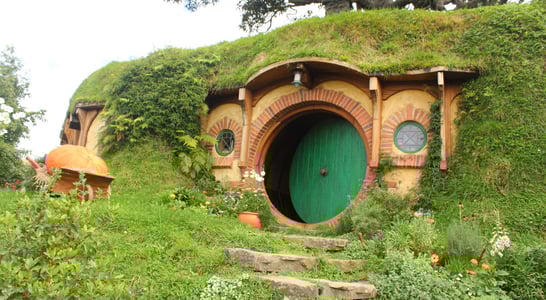
Crafting intricate fantasy realms and epic adventures, this renowned author redefined storytelling, and captivated readers young and old.