
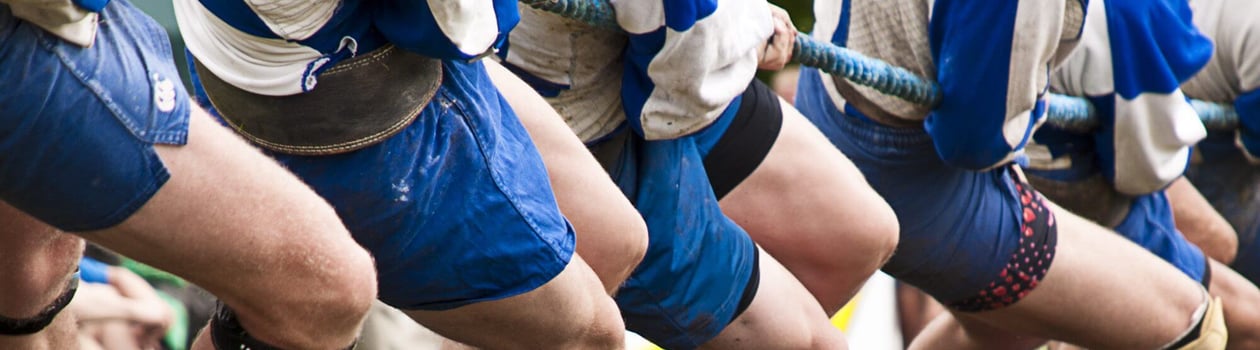
Tug of war is a competitive sport that takes place around the world and has a long and ancient history. Some historical researchers think that the game dates back as far as 2500 BC when it was used by military commanders.
Since that time, different cultures and people groups have played various versions of the game, whether just for fun or for more serious purposes like settling a property dispute.
National Tug of War Day is here to show appreciation for this simple but exciting game with a long history that is certainly worth celebrating!
History of National Tug of War Day
Tug of War is a fairly simple game that can be played almost anywhere, without much equipment to speak of, other than just a long and heavy rope. To play the game, two teams hold each end of the large rope and attempt to pull the other team towards them, over some sort of a line or boundary, in order to win.
In modern times, the game of Tug of War has been shown as a display of strength at various outdoor camps, sports competitions, community festivals, family reunions or other events. The game seems to be the most fun when the teams are evenly matched in strength and size.
To make a match even more interesting, Tug of War contests often take place over bodies of water or muddy areas so that the losing team suffers the indignity of falling in.
And although this may seem harsh, it is likely preferable to the Viking version of tug-of-war when teams competed over a pit of fire. Now that’s a game with some serious consequences!
The number of people taking part in a game of Tug of War can vary from just a few to a large crowd. In fact, the world record for a single tug-of-war stands at 1,574 participants. It is certainly not surprising that such a popular outdoor event has its own annual day, which is National Tug of War Day.
Cries of ‘heave’ are heard around the country on this day when numerous Tug of War matches are sure to take place, giving a chance for just about anyone, young and old, to take part or cheer on this timeless team game.
Those who are looking to celebrate the game of Tug of War on a larger and grander scale may be interested to find out that International Tug of War Day takes place in February.
How to Celebrate National Tug of War Day
Get into the groove of celebrating National Tug of War Day with some of these delightful ideas:
Play Tug of War
Obviously, the most basic but fun way to observe National Tug of War Day is to grab a rope and a few people, and organize a competition. Whether it’s a group of seriously buff people from the gym or just a family affair, playing Tug of War on this day is compulsory!
Learn Fun Facts About Tug of War
One of the most delightful ways to celebrate National Tug of War Day and raise awareness for it might be to learn and share some interesting facts about the game. Get started with some of these delightful bits of trivia:
For twenty years, Tug of War was an official sport that was played during the Olympic Games. From 1900 to 1920, this game was played using either five or six team members on each end of the rope.
By 1960 the Tug of War International Federation was founded, offering the game an official standing. The organization was popular and very quickly had members from at least seventy countries around the world.
In the 1908 Olympics, the British team accused the US team of cheating by using boot studs.
The use of the term “tug of war” in English was first recorded in 1677 where it referred to a military battle.
National Tug of War Day FAQs
Why did Vikings sometimes play Tug of War over pits of fire?
Vikings added a dramatic twist to their Tug of War matches by playing over pits of fire or water.
They used animal pelts as ropes, adding an element of danger to test their endurance and bravery.
This intense version of the game was more than entertainment—it displayed strength and courage, vital traits for their warriors.
How did ancient Chinese Tug of War games differ from modern ones?
During China’s Tang dynasty, Tug of War games used enormous ropes, sometimes over 500 feet long.
Thousands of people participated, making these events both grand and symbolic. The games trained soldiers for war and reinforced unity among the military ranks.
Why is Tug of War part of ceremonies in Myanmar?
In Myanmar, Tug of War isn’t just a game—it’s deeply tied to spiritual traditions.
During ceremonies like funerals for Buddhist monks, the game symbolizes the cosmic struggle between good and evil. It’s also linked to rain rituals, believed to influence weather and agricultural cycles.
What makes South Korea’s “Juldarigi” different from regular Tug of War?
South Korea’s version, “Juldarigi,” uses massive straw ropes, sometimes thicker than a human torso.
The game, played during harvest festivals, symbolizes a tug between fertility and abundance. Villagers view winning as a predictor of a good harvest, connecting the game to their agrarian culture.
How did Tug of War end up in the Guinness World Records?
In 1997, Taiwan set a record for the largest Tug of War event. Over 10,000 people participated in Changhua County, showcasing teamwork on a massive scale.
This event demonstrated how the game transcends sport, uniting communities for celebration and history-making feats.
What are the myths about Tug of War’s origins?
Some legends trace Tug of War to celestial conflicts, like gods pulling on the sun to create night and day.
Others say early games were battles over valuable resources like food or water. While origins vary by culture, the game consistently symbolizes conflict and cooperation.
How is Tug of War used as a teaching tool in schools?
Schools use Tug of War to teach teamwork, strategy, and physics. Students learn about force, friction, and tension while playing. It’s also a fun way to build communication skills and foster collaboration in group activities.
Why is Tug of War played during Japan’s New Year celebrations?
In Japan, Tug of War, or “Tsunahiki,” appears in New Year rituals to ensure prosperity.
Towns compete with massive ropes to represent struggles for a successful year. Some regions believe the game can drive away evil spirits and protect the community.
How do modern Tug of War competitions ensure fairness?
Professional Tug of War events have strict rules to ensure fairness.
Teams wear specific shoes to prevent slipping, and ropes are standardized for length and grip. Judges closely monitor teams for illegal moves like jerking or sudden releases, keeping the sport safe and competitive.
Are there unusual versions of Tug of War around the world?
In parts of Indonesia, players use bamboo poles instead of ropes, making the game harder.
Meanwhile, in Africa, some tribes incorporate singing and dancing to energize participants. These unique variations highlight the creativity of cultures in adapting the game to their traditions.

You may also like

International Tug of War Day
Two teams fiercely pull a rope in opposite directions in this exciting competition that has been around for centuries.
- International
- Ireland
- United Kingdom
- and 1 more

National Skipping Day
National Skipping Day is a bright, bouncy reminder that fitness does not have to come with a whistle and a clipboard. It invites kids and grown-ups alike to grab a rope, clear a little space, and rediscover a classic playground skill that still holds up as an honest-to-goodness workout. At its...

Jump Over Things Day
Did you know that every year on April 6th, people everywhere look for amusing and imaginative objects to leap over? This day is called Jump Over Things Day, a playful occasion that invites everyone to move their bodies and add a little bounce to everyday life. Jump Over Things Day is...

National Jump Out Day
National Jump Out Day, celebrated annually, sparks a wave of fun and excitement as people come together to jump and enjoy this physical activity. This special day encourages everyone to step outside and engage in various jumping exercises. It's not just about jumping high or far but enjoying the process...
National days and holidays on August 27

National Burger Day
A juicy, flavorful patty nestled between soft, toasted buns, adorned with melted cheese, crispy bacon, and a tangy sauce.
Crayfish Party
Crayfish Party is a lively and festive occasion celebrated with friends and family. This event marks the end of summer, bringing people together for a joyful feast. Tables are often set with bright decorations, and the air is filled with laughter. The menu features cooked and seasoned crayfish. The atmosphere...

Hungry Ghost Festival
Have you ever heard of the Hungry Ghost Festival? It's a lively and important event in many Asian cultures. On this day, people believe spirits of the dead roam the earth, seeking comfort and offerings from the living. Families prepare food, burn incense, and offer items to keep these spirits...
- China
- Hong Kong SAR China
- Indonesia
- and 4 more

National Fishing Month
Relaxing, meditative, and practical, fishing is an ideal hobby for many. Get out on the water with some bait and a fishing line, and catch yourself dinner.
Seize Every Day
Join free for personalised recommendations, email reminders and exclusive guides. Never miss a day.