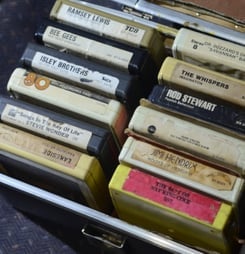

They were the hallmark of movie watching in our youth, carrying films home from our local Blockbuster for a night of family fun and entertainment.
Together we’d gather around the huge cathode ray tube TV’s in our living room, not even thinking to complain about the static lines that occasionally would run across the screen from a movie that had been worn with love from rewatching.
How To Celebrate National VCR Day
Watch Some VCR Tapes
Well celebrating VCR day is simple, you just need to dig up your old VHS recorder and a few of your favorite movies.
We know you have them stashed away in the attic somewhere, planning on transferring them to DVD ‘eventually’. Instead take the time to dust them off, microwave up some popcorn and gather together with friends and family to take a stroll down memory lane.
Take a Walk Down Memory Lane
By the end of the night no doubt you’ll have experienced a powerful trip of nostalgia, while simultaneously gaining a strong appreciation for the advancements of technology.
Never fear, no amount of HD TV is going to be able to replace these relics of yesteryear, and they’ll appear just as amazing and grainy as always. Though you might need an adapter, they didn’t come in HDMI.
Enjoy Some Classics
Make this day an excuse to remember the good old days, don’t let those memories be easily forgotten and use it as an excuse to find old photos, look at old shows that have been long forgotten or perhaps old songs that need to be resurrected and put on CD for the car.
It really does spark an endless line of happiness and nostalgia that goes far beyond the traditional VCR set; so why not make the most of it this year! Happy National VCR Day!
Why Celebrate National VCR Day
National VCR Day comes each year to remind us to take some time to appreciate the nostalgia of the tech of yesteryear.
It was really the 90s kids who really had the full scope of the VCR evolution and were the first ones to really grasp the concept of taping, recording, rewinding and we all have stacks somewhere of our old VCR tapes that housed all our favorite 90s shows.
National VCR Day Timeline
First Commercial Videocassette Recorder Debuts
Ampex introduces the VRX-1000 (later called the Mark IV), the first commercially successful videotape recorder, allowing broadcasters to record and play back television programs on 2-inch tape.
Sony Launches U-matic Cassette System
Sony unveils the U-matic video cassette format, the first to house videotape in a cassette for professional and institutional use, setting the stage for later consumer videocassette systems.
Betamax Brings Home Video Recording to Consumers
Sony releases the Betamax home videocassette recorder in Japan and the United States, giving households the ability to time-shift television programs for the first time.
VHS Format Introduced by JVC
JVC launches the Video Home System (VHS), a competing consumer videocassette format that offers longer recording times and soon becomes a major rival to Betamax.
Blockbuster Opens and Home Video Rental Booms
The first Blockbuster Video store opens in Dallas, Texas, symbolizing the explosive growth of video rental chains driven by the widespread adoption of VCRs in the home.
Movie Studios Embrace the Home Video Market
Home video revenue for major film studios surpasses box office receipts for the first time, showing how VCR ownership and tape rentals transform the economics of the movie industry.
Major Manufacturers End Standalone VCR Production
Funai Electric, the last known company making standalone videocassette recorders, ceases production, marking the end of the VCR as a mass-manufactured consumer device.
History of National VCR Day
The VCR actually came along a lot earlier than most people think, first being developed in 1956 and sent into the world. It was until 1970 that this technology actually became readily available for the home user. As anyone who lived through that era knows, the technology absolutely boomed at that time and soon it was part of the world we lived in.
Cassette tapes appeared in every home, and people began collecting all their favorite movies in the latest format.But that wasn’t all, as the technology improved hand held recorders became available, and family events began being taken down for posterity.
From family holidays to weddings and funerals, everything was being recorded in the VHS format. Even events on TV were being recorded, and what was once a case of ‘miss your show, wait for the rerun’ became a case of ‘I have no idea how to program this VHS recorder to record what I watch’.
So ubiquitous was this that it actually became a measuring stick for people’s intelligence “Oh your father will never be able to do that, he can’t even program the VCR!”
Nowadays, it’s a redundant feature and really has no place in our homes, but really, even now our VCR tapes can be made digital.
Yes that’s right, send off your old tapes and you can have them returned as DVDs, which are perfect for when you want to whip one out and embarrass the kids with home movies in front of their friends, or perhaps rewatch your wedding tape, with either fond memories or utter regret (it won’t be the latter of course!) 😉
Why Is the VCR So Nostalgic?
The VCR stirs up plenty of emotions for us and it is a feature that has sadly died a death in recent years, when video killed the radio star and digital killed the video star.
Either way, it will remind most of us, from the millennials and back, of the happy memories we had of our past, which is what makes this such a great day to remember and celebrate.
Arguments over who gets to record their favorite show and have the VCR recorder on a Saturday night and who wanted to rewatch their VCR tapes.
A never ending battle, then of course when it came to switching back the clocks for daylight saving times, well that was a huge feat. Dad down on one knee trying to rewind the clock to make sure nothing recorded an hour too early or an hour too late!
Oh the digital era has certainly made life a lot easier for us, but the VCR still holds a special place in our memories.
They paved the way for a digital future, the ability to record and rewatch is not dissimilar to what we do now when we record onto TiVo or when we pause or rewind live TV, the concept is surely the same. Except now it’s done in a fraction of the time.
Is there a need for VCR still though? Well it’s certainly a backup option and most of us probably still have a VCR stashed in a box somewhere buried deep within the attic, or maybe stuffed in a box in the garage, but most televisions would not be compatible with some of the leads and adapters of yesteryear but there are ways.
Early VCRs Were Room-Sized Machines
The first practical videocassette recorder for broadcasters, the Ampex VRX-1000, introduced in 1956, was about the size of a large refrigerator, weighed more than 1,000 pounds, and cost around $50,000 at the time.
It used 2-inch-wide magnetic tape on open reels and was intended for television studios, not homes, which is why consumer VCRs did not appear until smaller, cheaper cassette-based systems were developed in the 1970s.
VHS Won the Format War by Recording a Full Movie
Although Sony’s Betamax format offered higher picture quality, JVC’s VHS standard allowed longer recording times, which turned out to be crucial.
By the late 1970s, VHS could record up to two hours on a single cassette, enough for a feature film, and later extended-play modes stretched this even further.
Combined with more flexible licensing that let many manufacturers produce VHS machines, this made VHS more attractive to both consumers and video rental stores.
Time-Shifting TV Was Once Legally Controversial
The idea of using a home VCR to record television programs for later viewing led to a major U.S. Supreme Court case, Sony Corp. of America v. Universal City Studios (1984). Movie studios argued that home taping was copyright infringement, but the Court ruled 5–4 that “time-shifting” broadcasts for personal use was a fair use, a decision that effectively legitimized VCRs and paved the way for later recording technologies like DVRs.
Video Rental Stores Reshaped the Film Business
The rise of consumer VCRs in the late 1970s and 1980s created a huge new market for video rentals, which quickly became a major revenue stream for Hollywood.
By the mid‑1980s, income from VHS rentals and sales rivaled and in some cases surpassed box-office receipts, encouraging studios to produce and market films specifically with the home video audience in mind.
VCRs Helped Create Modern “Cult” Movies
Home video gave low-budget or initially unsuccessful films a second life on tape, allowing audiences to discover and rewatch them repeatedly.
Movies like “The Evil Dead” and “The Rocky Horror Picture Show” built dedicated followings through VHS circulation and home screenings, helping establish the idea of “cult classics” that thrived outside of traditional theatrical runs.
VHS Opened New Doors for Education and Training
Once VCRs became affordable, schools, libraries, and workplaces began relying on videocassettes for instruction, from language learning to safety training.
Educational publishers produced large catalogs of VHS titles, and teachers could pause, rewind, and replay segments as needed, which fundamentally changed classroom pacing and made visual materials far easier to integrate into lessons.
Magnetic Tape Has a Surprisingly Long Archival Life
Despite their reputation for wear and tear, properly stored VHS tapes can remain playable for decades.
Archivists note that magnetic tape can last 10 to 30 years or more in stable, cool, and dry conditions, although factors like tape quality, playback equipment, and usage greatly affect longevity.
This is one reason many television archives and private collectors rushed to digitize VHS collections before physical degradation made the content unrecoverable.