
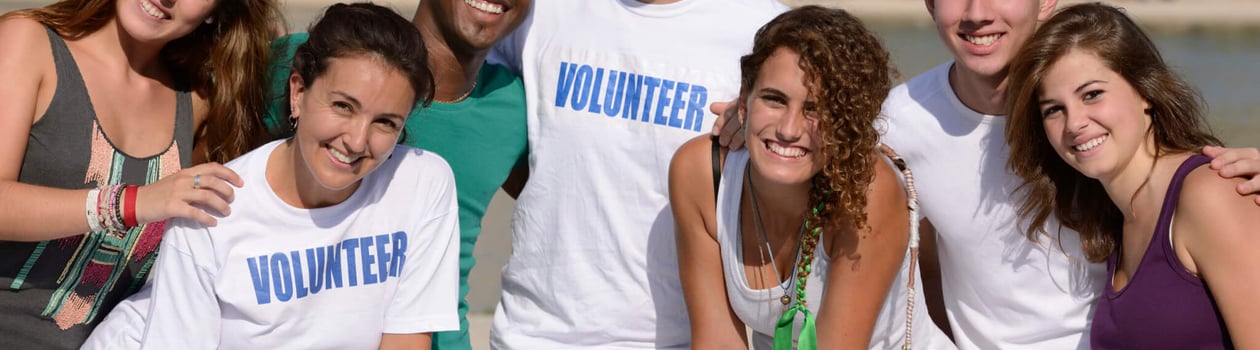
Volunteers come in all shapes and sizes, but they are all the real-life saints and superheroes of this world.
And although they don’t ask to be paid for all of their selfless work, they definitely deserve our utmost respect and appreciation, which is exactly what Volunteer Recognition Day is all about!
Volunteer Recognition Day Timeline
Battle of Solferino Inspires Organized Humanitarian Volunteering
Swiss businessman Henry Dunant’s shock at the suffering after the Battle of Solferino and the spontaneous help by local civilians leads him to propose neutral relief societies, laying foundations for modern organized volunteer humanitarian aid.
Recognition of Volunteer Relief Societies in the Geneva Convention
The Geneva Committee (later the ICRC) forms in 1863 and, in 1864, governments adopt the First Geneva Convention, formally recognizing voluntary relief societies as auxiliaries to military medical services in caring for wounded soldiers.
Growth of Organized Volunteering in Welfare States
In the decades after World War II, as welfare states and nongovernmental organizations expand, structured volunteering grows through community chests, charitable federations, and local service groups that mobilize citizens for social welfare activities.
Creation of the United States Peace Corps
U.S. President John F. Kennedy signs Executive Order 10924 establishing the Peace Corps, sending trained American volunteers abroad to work in education, health, and community development and increasing public awareness of volunteer service.
Founding of United Nations Volunteers
The United Nations General Assembly creates the United Nations Volunteers program to support peace and development efforts by deploying volunteers, bringing greater international structure and visibility to volunteer contributions worldwide.
How to Celebrate Volunteer Recognition Day
There are many ways you can celebrate this day in such a way so as to honor those who have dedicated large parts of their lives to helping the needy the world had forgotten about.
Volunteer to Help
The best one is to find a way you can help someone—of course, this does not mean you should drop everything and move to a third-world country.
No matter where you live, there are people all around you who have been dealt a bad hand in life, and who need things that most of us take for granted, like a roof over their heads, clothing, a hot meal, or just a little bit of love and attention.
Help Some Animals
This doesn’t just go for people, either—animal shelters are always bursting at the seams with lonely animals who just need someone to cuddle up to.
Choose a Worthy Cause
So choose a cause that is especially close to your heart, and spend this day helping someone else. Chances are, you’ll find the experience more rewarding than any salary could ever be.
Why Celebrate Volunteer Recognition Day?
There are cynics out there who will say that true altruism is a myth, that it doesn’t exist, and that nobody is capable of doing anything unless they are motivated by their own self-interest in the end.
But even the most embittered cynics would be hard-pressed to explain why anyone in their right mind would make the choice to travel to the poorest parts of the world, where hunger, sickness and war ravage the population and death is as commonplace as life, to help care for orphaned children.
Or why a comfortable middle-class citizen would choose to spend his or her afternoons teaching neglected teenagers how to read in the dirtiest, most gang-ridden part of town. Or why any nurse would risk his or her life to care for wounded soldiers on the very front.
It’s because they want to help others and make the world a better place. And they deserve to be recognized for this!
History of Volunteer Recognition Day
People who have risked their own safety in order to help others expecting nothing in return have existed for hundreds and thousands of years.
Ben Franklin, one of the Founding Fathers of the United States of America, was also the creator of the very first volunteer fire department that helped put out many Philadelphia fires.
Florence Nightingale, often called the mother of modern nursing, was just as much a hero as any of the soldiers fighting in the Crimean War when she cared for the wounded.
Acclaimed whodunit authoress Agatha Christie volunteered as a nurse in the Voluntary Aid Detachment of the Red Cross Hospital in Torquay from 1914 to 1917 when her husband Archie was fighting in World War I.
Mother Theresa of Calcutta, a Catholic nun, spent most of her life in India caring for the those suffering from HIV/AIDS, leprosy and tuberculosis.
More recently, many Hollywood celebrities such as Angelina Jolie have made numerous trips to various impoverished parts of the world in an attempt to understand the problems of those living there and find ways to help them.
All of these people and many, many more, have changed the world for the better forever.
Facts About Volunteer Recognition Day
Hidden Economic Power of Volunteers
International labor researchers estimate that volunteers contribute billions of hours of unpaid work each year, with the International Labour Organization finding that if global volunteer labor were paid at typical wage rates, it would represent several percentage points of GDP in many countries.
This “hidden” workforce often rivals or exceeds employment in major industries such as manufacturing or transportation, especially in sectors like social services, disaster response, and community health.
Volunteering Can Extend Life Expectancy
Long-term studies in the United States and Europe have found that older adults who volunteer regularly tend to have lower mortality rates than non-volunteers, even after accounting for baseline health, income, and social factors.
Research published in journals such as Psychology and Aging and Health Psychology links volunteering to reduced inflammation, better functional health, and a stronger sense of purpose, all of which are associated with living longer.
Youth Volunteers Often Become Lifelong Civic Participants
Research on youth service-learning programs has shown that teenagers and college students who engage in structured volunteering are more likely to vote, join community organizations, and volunteer as adults.
Longitudinal work cited by the Corporation for National and Community Service and academic studies suggests that early experiences of helping others help shape civic identity and social responsibility that persist well into midlife.
Disaster Response Relies Heavily on Trained Volunteers
Emergency management systems in many countries are built around a core of trained volunteers who supplement professional responders.
In the United States, for example, the American Red Cross reports that more than 90% of its disaster workforce is made up of volunteers who deploy to hurricanes, wildfires, and home fires, providing shelter, food, and medical support, while similar models operate through volunteer fire brigades and community emergency response teams worldwide.
Virtual Volunteering Has Become a Distinct Field
With the spread of the internet, volunteering has increasingly moved online, creating what researchers call “virtual volunteering,” where people contribute skills remotely through tasks like mentoring, translation, data entry, and open-source software development.
Organizations such as the United Nations Volunteers program and VolunteerMatch now list thousands of remote roles, and studies show that digital volunteering can broaden participation by including people with disabilities, caregivers at home, or those living far from traditional nonprofits.
Open-Source Software Communities Run Largely on Volunteer Labor
Much of the infrastructure of the modern internet, including prominent operating systems and programming languages, is built and maintained by volunteer contributors collaborating in open-source communities.
Projects like the Linux kernel, Mozilla Firefox, and the Apache HTTP Server depend on unpaid coders, testers, and documenters, and economic analyses have estimated that replacing this volunteer labor with paid development would cost tens of billions of dollars globally.
Volunteers Fill Critical Gaps in Global Health and Education
Across low- and middle-income countries, volunteers often serve as frontline health workers and educators in places where formal services are scarce.
The World Health Organization and UNICEF have documented how community health volunteers deliver vaccines, monitor child growth, and provide health education, while education-focused volunteers support literacy classes, tutoring, and early childhood programs, helping extend basic services to remote or marginalized populations.
Volunteer Recognition Day FAQs
How does volunteering benefit a person’s mental and physical health?
Research links volunteering with improved mental health, lower stress, and even longer life expectancy.
Studies from large cohort populations have found that adults who volunteer regularly report lower rates of depression, greater life satisfaction, and stronger social networks.
Some research also suggests an association between volunteering and reduced mortality risk, possibly because volunteers tend to be more physically active, socially engaged, and feel a stronger sense of purpose and control over their lives.
What kinds of skills can people realistically develop through volunteer work?
Volunteering can build both “soft” and “hard” skills that transfer to paid work and everyday life.
Soft skills commonly developed include communication, teamwork, problem solving, leadership, and cross‑cultural understanding.
Depending on the role, volunteers may also gain concrete abilities such as basic project management, data entry, fundraising, teaching, language proficiency, or health promotion skills.
Many employers and universities recognize substantial volunteer experience as evidence of initiative, reliability, and the ability to work with diverse groups.
How common is volunteering around the world, and where do people tend to volunteer most?
Global estimates suggest that more than 860 million people volunteer worldwide, and that the economic value of their unpaid work is significant.
The International Labour Organization reports that volunteers are especially active in social and health services, education, and community development, but they also contribute to culture, sports, emergency services, and environmental protection.
Formal volunteering through organizations is more common in higher‑income countries, while informal volunteering, such as helping neighbors or organizing community activities, is widespread in low‑ and middle‑income countries.
Is it true that volunteers are mostly older retirees with lots of free time?
Evidence shows that people of all ages volunteer, and young adults often volunteer at high rates, especially through schools, universities, and community groups.
In some countries, mid‑career adults volunteer heavily through their children’s schools, religious organizations, or professional associations.
While retirees may have more flexible time and often provide many volunteer hours, global data indicate that volunteering is spread across age groups and includes students, full‑time workers, parents, and older adults.
What are some common mistakes organizations make when trying to recognize volunteers?
Common pitfalls include only thanking volunteers once a year, focusing recognition on a small “star” group while overlooking behind‑the‑scenes contributors, and offering generic praise that does not reflect what each person actually did.
Some organizations rely solely on material rewards instead of listening to volunteers, involving them in decisions, or giving meaningful feedback.
Research on volunteer management suggests that consistent appreciation, clear roles, training, inclusion in the team, and opportunities for growth are usually more important for retention than one‑time ceremonies or gifts.
How can busy people contribute meaningfully if they do not have time for regular volunteering?
People with limited time can still make a real difference by choosing short, focused roles and being clear about their availability.
Examples include micro‑volunteering tasks done online, one‑off events such as clean‑ups or food drives, pro bono professional work, or serving on an advisory panel for a specific project.
Many organizations are learning to “unbundle” roles so that volunteers can take on small but important tasks, such as translating a document, mentoring for a few sessions, or helping design a survey, without committing to a weekly schedule.
What protections and ethical standards should volunteers expect when they offer their time?
Responsible organizations are expected to provide volunteers with clear role descriptions, basic training, appropriate supervision, and a safe working environment.
Ethical guidelines emphasize informed consent, respect for local communities, and avoiding roles where volunteers are asked to perform tasks that require professional qualifications they do not have.
In humanitarian and international settings, agencies such as the International Federation of Red Cross and Red Crescent Societies stress that volunteers should be supported emotionally, protected from exploitation and discrimination, and given channels to report concerns or misconduct.


You may also like
National Student Volunteer Day
National Student Volunteer Day celebrates the spirit of giving back among students. This special day acknowledges the efforts of young volunteers who work hard to improve their communities. From organizing charity events to helping in local shelters, students show their dedication and make a significant difference through various activities! How to...
- Australia
- Canada
- New Zealand
- and 1 more

Teach Your Daughter to Volunteer Day
Teach Your Daughter to Volunteer Day encourages families to invite girls into real-world kindness, not as a one-time good deed, but as a skill that grows with practice. It spotlights the simple idea that service is something people learn by doing, and that kids absorb values best when they see...

International Microvolunteering Day
Not everyone has the time to volunteer regularly, or perform large acts of service. But microvolunteering allows you to give back anyway.
- Australia
- Canada
- International
- and 2 more
Peace Corps Day
Peace Corps Day is a special occasion that honors the dedication and hard work of Peace Corps volunteers. These individuals commit to serving in various countries and helping communities with projects in education, health, agriculture, and more. Their service significantly impacts the communities they assist and enriches their home communities...
National days and holidays on April 20 2027
National Pediatric Transplant Week
Each year, thousands of children across the world benefit from the life-saving medical intervention that comes through organ donation. But the list of those in need of organ donors is long and these younger patients often have to wait for a great deal of time for matches because of complex...

Money Smart Week
Being smart with money isn't just about saving; it's also about making informed decisions and enjoying the process. Money Smart Week offers the perfect opportunity to dive into financial literacy and reconsider financial habits. In its essence, Money Smart Week is a lively event held annually to boost financial literacy...

National Bunion Day
Feet are something that people often take for granted – until something goes wrong with them! With approximately 65 millions Americans impacted by the pain and discomfort caused by bunions, it just makes sense that there would be a day to promote and raise awareness about this foot condition. Join in...

Coin Week
Begin or grow your coin collection, learn about how countries’ mints reflect their history, or join a coin club or even local competition during Coin Week.
Seize Every Day
Join free for personalised recommendations, email reminders and exclusive guides. Never miss a day.