Think of your favorite dessert. Maybe it’s ice cream, or brownies, or candy, or cookies, or even better– pie. When we think of pie, most of us think of a classic apple pie, but the sweet-tart cherry pie deserves a place next to its brother on the dessert tray. Pies come in all types.
The pumpkin pie for Thanksgiving, the blueberry pies in the summertime, pecan pies at Christmas. So, do you like your pie sharp and tart, or do you prefer a more sweet and smooth pie? Today’s one of the best days to have a pie!
How to Celebrate National Cherry Pie Day
Thankfully, there are plenty of fun ways to celebrate this day! Check out a few of them here:
Bake a Cherry Pie
If you enjoy cooking and being in the kitchen, consider baking a cherry pie today to celebrate. Then, invite over friends or family to sit down and have a slice of the warm, tart pie you just baked.
If you’re looking for a bit more creativity, consider making a variant of the traditional cherry pie. Some of these hybrid recipes include cherry pie with mix-ins like cinnamon, orange, blueberry, pecans, and chocolate chips.
Pick Up a Cherry Pie
Want to use this day as an excuse to get out of the house? Consider stopping by your favorite bakery or pie shop and order a slice of cherry pie.
Invite a friend with you for company, and post a picture of your slice of pie on social media!
Enjoy Cherry Scented Items
If you’re less into baking and eating sweets, consider an alternative method to pie eating. Instead, try enjoying a cherry pie scented product to pay tribute to the cherished dessert.
Stores like Bath and Body Works and other body companies sell a variety of cherry pie scented lotions, soaps, perfumes, and sanitizers, some with the names of “Sugared Cherry Crisp” and “Classic Cherry Pie.”
Try Cherry Pie Wine
If you want to take it a step further, relax at home with a tall glass of Stanly’s Cherry Pie Pinot Noir wine or a different cherry pie inspired wine.
Consider also purchasing a pie (specifically cherry pie) scented candle to burn while you enjoy a slice of pie or a glass of pie wine!
Whether you’re a passionate baker or not, there are plenty of ways for you to celebrate this dessert– whether its by drink, food, or body product! So, spend today celebrating a classically refreshing and tart dessert that has a history as rich as the pie itself!
National Cherry Pie Day Timeline
Cherry pies at the Tudor court
English sources and later food historians report that one of the earliest recorded cherry pies was served to Queen Elizabeth I, helping establish cherries as a favored fruit for enclosed pastry desserts in England.
Cherries arrive with English colonists in Massachusetts
Governor John Endecott and other settlers planted some of the earliest recorded European cherry trees in Massachusetts Bay, beginning the adaptation of Old World cherries that would later be used in American pies.
Cherry pie becomes part of early American cookery
By the late colonial era, American cooks are baking fruit pies with locally grown cherries, drawing on English pie traditions while using New World ingredients and wood‑fired ovens common in early settlements.
Montmorency sour cherries take root in Michigan
French missionaries and later farmers established Montmorency tart cherry orchards along Lake Michigan; by the mid‑19th century, the region was recognized for its sour cherries, which became the classic American cherry pie fruit.
Canned cherry pie filling reaches U.S. home kitchens
As commercial canning expanded after World War I, processors began selling canned cherry pie filling, making cherry pies easier to bake year‑round and helping standardize the sweet‑tart style familiar in American diners.
The Greensboro Four ordered cherry pie in a sit‑in protest
At a segregated Woolworth’s lunch counter in Greensboro, North Carolina, four Black students order coffee and cherry pie and are refused service, an act of nonviolent resistance that sparks sit‑ins across the South.
“Twin Peaks” debuts and turns cherry pie into a cult icon
The television series “Twin Peaks” premieres on ABC, featuring FBI Agent Dale Cooper’s rapturous praise of “a damn fine cup of coffee” and cherry pie, which cements the dessert as a quirky symbol of small‑town American culture.
History of Pie
To learn more about the tangy cherry pie, we must first dive into the history of pies as a dessert. Historians believe the first pie was made by the early Romans, who came up with the idea through the Greeks.
The ancient Roman pie was quite different than the desserts of today. These pies were often made with a sweet or savory filling put inside a reed.
The reed plant was meant to hold the filling, but the reeds were not eaten, just as a container for the filling which was scooped out. The Roman pie recipes were not always clear, and the fillings could have been made with a variety of ingredient combinations.
As the Romans spread their knowledge of pie, they began to frequent Europe in the 14th century. The Oxford English Dictionary shows that the word pie became most frequently used in this era, as recipes spread across Europe.
Historians later discovered that the first written pie recipe came from the Romans and included a filling of rye flour, goat cheese, and honey.
The first European pies were not those we know today. Often called “pyes”, they had quite a grotesque recipe. These pies were meat pies made with a variety of fowl and small prey.
The pie crust was called the “coffyn” and many of these pies were mostly crust with tiny amounts of filling. In pies using fowl as a filling, the legs of the fowl were jammed into the crust and used as handles to eat the pie!
Fruit pies began to develop in the 1500s. The first time a cherry pie recipe was served was to Queen Elizabeth I in England! As the pies spread to America, they were often served in Roman style, where the crust was discarded after the filling had been eaten.
Researchers assume that the term “crust” as we know it today was created to replace “coffyn” during the Revolutionary War.
Many centuries later, pies have become one of the most traditional American desserts with many using the phrase “as American as apple pie.” Starting in the 1890’s, “pie” was a common word to describe something simple, thus creating the term “easy as pie”
National Cherry Pie Day isn’t the only pie day, as other flavors have their own days such as Strawberry-Rhubarb Pie Day, Lemon Cream Pie Day, and National Boston Cream Pie Day!
Fun Facts About (Cherry) Pies!
It’s no surprise that pies are a famous choice in the dessert world. In fact, they are so popular there is actually an entire American Pie Council devoted to this dessert!
If you’re not a pie expert, here are some fun pie facts that may surprise and delight you:
- In the United States, there is a town called Pie Town, New Mexico
- The largest pie ever made was weighed in around 10,540 kilograms, or 23,236.7 pounds
- Around $700 million worth of pies are sold in groceries around the world each year
- Similar to the early Roman recipes, many people enjoy eating only the filling — only 9% of people prefer the crust first.
National Cherry Pie Day Facts
These facts explore the deeper story behind cherry pie, connecting it to American history, agriculture, and baking tradition.
From its unexpected role in the civil rights movement to the myths that shaped national symbolism and the specific cherries that make the best pies, each fact highlights how something familiar can carry cultural, historical, and economic significance.
Cherry Pie and the Greensboro Sit‑Ins
On February 1, 1960, four Black college students known as the Greensboro Four sat down at a segregated Woolworth’s lunch counter in Greensboro, North Carolina, and ordered coffee and a slice of pie.
Their simple request, which included cherry pie on the menu, was refused, but the peaceful sit‑in they began sparked similar protests across the South and became a pivotal catalyst in the civil rights movement.
The George Washington Cherry Tree Story Was Invented
The famous tale of young George Washington admitting he had chopped down his father’s cherry tree was not recorded during Washington’s lifetime.
It first appeared in an 1800 biographical collection by Mason Locke Weems, who added the story decades after Washington’s death to illustrate moral virtue, unintentionally cementing a symbolic link between cherries and American patriotism.
Why Bakers Prefer Sour Cherries for Pie
Traditional cherry pies typically use sour varieties such as Montmorency rather than sweet Bing or Rainier cherries. Sour cherries contain higher levels of organic acids and often more pectin than sweet cherries, which helps the filling set more firmly and keeps the flavor bright once sugar is added, giving pies a balanced sweet‑tart taste instead of becoming cloying.
Montmorency Cherries Are a Major U.S. Specialty Crop
Montmorency tart cherries, a common choice for pie filling, are grown commercially almost entirely in North America, with Michigan alone producing the majority of the U.S. crop.
According to the U.S. Department of Agriculture, tart cherries are treated as a distinct specialty crop, with separate reporting, marketing orders, and research programs that often highlight their key use in baked goods such as pies.
Early American Cookbooks Helped Fix Cherry Pie in Home Cooking
One of the earliest American cookbooks, “American Cookery” by Amelia Simmons, published in 1796, included recipes for various fruit pies and helped translate
British pie‑making traditions to the ingredients found in the new United States.
Later nineteenth‑century American cookbooks regularly featured cherry pies, reflecting how the dish had become a standard part of home baking rather than an elite or occasional dessert.
The Practical Purpose of a Lattice Pie Crust
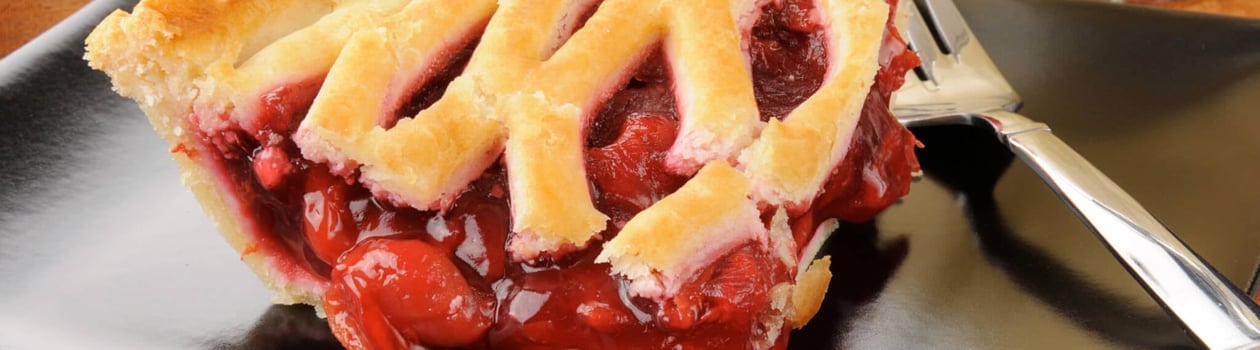
A lattice top on fruit pies, like cherry, is more than decoration. The open pattern allows moisture to evaporate during baking so the filling can concentrate and thicken, while the strips of dough still provide structure to support the softened fruit; professional baking texts note that tightly covered fruit pies are more likely to have soupy fillings and underbaked crusts.
Cherry Desserts Across Europe Took Different Forms
While Americans often think of cherries in the form of a double‑crust pie, European baking traditions developed other cherry‑based desserts.
In France, clafoutis bakes whole cherries in a simple batter closer to a custard than a pastry, while in Central Europe, sour cherries frequently appear in strudels and lattice‑topped tarts, showing how the same fruit inspired distinct regional styles long before cherry pie became an American classic.
How did cherry pie become associated with American patriotism?
The tale of young George Washington admitting to chopping down a cherry tree symbolizes honesty. This story linked cherries to Washington’s legacy, making cherry pie a patriotic symbol, especially around Presidents’ Day.
What is the historical significance of cherry pie in early American settlements?
Early American settlers brought pie-making traditions from Europe, adapting them to local ingredients like cherries. The abundance of wild cherries led to the creation of cherry pies, integrating the dessert into American culinary traditions.
How did cherry pie feature in the civil rights movement?
In February 1960, four Black college students, known as the Greensboro Four, sat at a segregated Woolworth’s lunch counter and ordered cherry pie. Their peaceful protest sparked a wider sit-in movement, marking a pivotal moment in civil rights history.
What are some unique cherry pie variations from around the world?
In Germany, “Donauwelle” is a marble cake with cherries and buttercream, resembling waves. In France, “Clafoutis” features cherries baked in a flan-like batter, showcasing diverse interpretations of cherry desserts.
How did cherry pie gain iconic status in pop culture?
The TV series “Twin Peaks” featured FBI Agent Dale Cooper’s love for cherry pie, elevating the dessert’s status and introducing it to a new generation of viewers.
Are there any unusual laws related to cherry pie in the United States?
Historically, some U.S. regions had quirky laws about cherry pie. For instance, Kansas once prohibited serving ice cream on cherry pie, showcasing the dessert’s unique place in local legislations.
How has cherry pie been represented in American music?
The 1990 song “Cherry Pie” by the band Warrant used the dessert as a metaphor, embedding cherry pie into American rock culture and showcasing its symbolic versatility.
What role do sour cherries play in traditional cherry pie recipes?
Traditional cherry pies often use sour cherries like Montmorency, as their tartness balances the sweetness of sugar, creating a complex flavor profile.
How did cherry pie become a popular dessert at American celebrations?
Cherry pie’s popularity at American celebrations stems from its seasonal availability during summer holidays like Independence Day, making it a festive and patriotic dessert choice.
What is the significance of the lattice crust in cherry pies?
The lattice crust not only adds visual appeal but also allows steam to escape during baking, preventing the filling from becoming too watery and ensuring a perfect pie consistency.