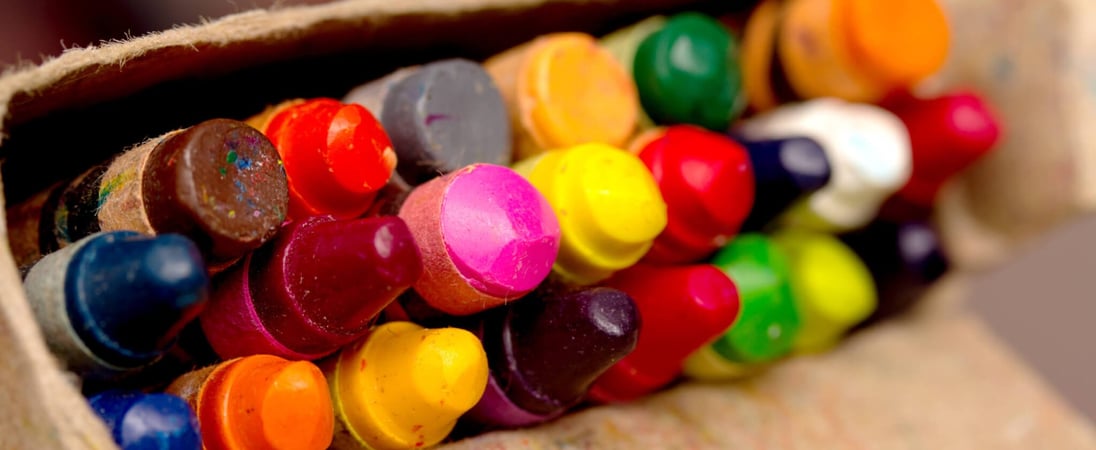
National Crayon Day
Brighten up your world with a rainbow of colors in a box! Create your own masterpiece and let your imagination run wild with these artistic tools.
Red, Orange, Yellow, Green, Blue, Indigo, Violet…no, this isn’t just a list of all of the colors of the rainbow, but rather just a few of the more than 400 different shades of crayon colors that Crayola has produced since its humble beginnings in Pennsylvania in 1903!
What a perfect opportunity to celebrate the bright and colorful addition these simple wax sticks have made to the world with National Crayon Day!
National Crayon Day Timeline
1795
Invention of Conté Crayons
French chemist Nicolas-Jacques Conté develops a new type of compressed crayon using graphite or pigments mixed with clay, influencing later crayon and pastel technology.
1864
First American Wax Crayon Patent
The American Crayon Company secures an early U.S. patent for a wax marking crayon, signaling the move from chalk- and charcoal-based sticks to wax-binder tools.
1885
Binney & Smith Enter the Pigment Business
Cousins Edwin Binney and C. Harold Smith take over a pigment and color company, laying the groundwork for their later development of affordable school crayons.
1903
Introduction of Crayola Wax Crayons
Binney & Smith launch the first Crayola wax crayons for children, offering eight non-toxic colors in a five-cent box and transforming classroom art supplies.
1962
“Flesh” Crayon Renamed “Peach”
Responding to civil rights–era concerns about representation, Crayola changes the color name “Flesh” to “Peach,” an early step toward more inclusive crayon palettes.
1972
Fluorescent Crayons Expand the Palette
Crayola introduces its first line of fluorescent crayons, bringing high-intensity, black-light–reactive colors into children’s art sets and specialty classrooms.
2020
“Colors of the World” Skin-Tone Set
Crayola releases a scientifically developed range of 24 skin-tone crayons designed to reflect global diversity and help children more accurately represent themselves and others.
How to Celebrate National Crayon Day
Celebrating this day can range from the simple to the extreme! Whether simply picking up a few colors to draw something on a blank sheet of paper, or inviting the rest of the world to celebrate, National Crayon Day can bring lots of joy to anyone involved.
Try these creative ideas or come up with different ones:
Color Some Pictures with Crayons
So, why not let your inner child out on National Crayon Day? Grab a coloring book and a box of Crayola crayons and let the creativity flow.
Coloring can be a therapeutic and enjoyable way to pass some time. In fact, adult coloring books have become all the rage, with all sorts of different outlined pages that offer designs ranging from mandalas and zen gardens to enchanted forests and ocean creatures.
Many people even find coloring to be a useful part of mindfulness and relaxation practices. For those who don’t have ready access to a coloring book, free coloring pages of various themes can be found online through the Crayola website.
Remember, a proud artist shouldn’t even hesitate to hang their finished pictures on the fridge. It’s a great way to display the importance of crayons and celebrate National Crayon Day!
Make Creative Art with Crayola Crayons
In addition to simply drawing and coloring, Crayola crayons also offer other options for types of art that can be created with them.
Because they are made of wax, crayons melt easily, and this factor can be incorporated into the artwork.
One fun project uses an art canvas. Start by drawing a picture of a person (or two people) holding an umbrella.
Line up crayons vertically, point facing down, along the top of the picture, and glue them with a hot glue gun. Hold the picture upright and use a hairdryer to make the crayons meltdown like rain.
Another colorful art project requires just some cardboard and a knife that can cut crayons. Create a giant initial decoration to hang on the wall by first drawing a letter onto the cardboard and cutting it out.
Then, using a hot glue gun, attach crayons onto the cardboard in a fun pattern of colors. Hang on the wall with a piece of colorful ribbon, burlap, or string.
Host a Coloring Contest
Whether working at school with kids or at an office filled with adults, a coloring contest is a super fun way to celebrate National Crayon Day!
Find some pictures from the Crayola website or, even better, have someone at work create one of their own that incorporates the school or company logo.
Hand the coloring sheets out to each person, or put the papers with some boxes of crayons in the breakroom or other easily accessible place.
Make sure everyone knows when the deadline is and then have a judge see who does the best job coloring! (Don’t forget to have small prizes for the winners.)
Make New Crayon Colors
Some people just won’t be satisfied with the basic things that are given to them. In that case, they should create something new!
Making new colors of Crayola crayons is fairly simple and fun. Kids and adults alike can enjoy new, swirled colors simply by melting existing crayons, mixing the colors together, and then pouring them into a new form (candy-making mold or mini cupcake molds work perfectly for this).
Not only is this a fun way to create new colors, but it is also a great way to repurpose broken crayons to make them perfectly useful again!
Dress Up Like a Crayola Crayon
Costumes can be fun at more times of the year than just Halloween! National Crayon Day is a great time to give a nod to these clever art sticks by creating an entire outfit around it.
It can be as simple as just dressing head to toe in a favorite Crayola Crayon color. Or, don a full costume complete with the Crayola logo and a pointy cap.
Visit a Crayola Experience Museum
Located in five different cities in the United States, Crayola Experiences offer attractions to visitors that feel something along the lines of an active art museum for families.
From activity studios to virtual design, from naming your own crayon to colorful activities especially for toddlers, these adventures provide loads of fun for everyone.
Make a trip to Eaton, PA; Chandler, AZ; Mall of America, MN; Orlando, FL; or Plano, TX to get up close and personal with everything Crayola has to offer.
History of National Crayon Day
Crayola began its life as a company in 1885 when cousins Edwin Binney and C. Harold Smith took over a pigment business that Edwin’s father had previously owned.
By 1903, the cousins had created a set of colorful drawing sticks for young artists by combining paraffin wax with non-toxic, kid-friendly pigments. While children had often used chalk or paints for drawing, those were both messy. Crayola came up with their brilliant solution–and it has lasted for more than a century!
The name Crayola seems to have come from a combination of two words created by the founder’s wife. It combined craie, which was French for “chalk” and oily, to create the company’s brand name.
The first set only contained 8 crayons, but now the boxes have gotten much larger with many more colors.
Since the beginning, the company has developed a core set of 120 crayon colors; but they have also come out with many unique sets. This includes metallic colored crayons, gem tones colors, and even scented ones.
One important development made by the company was a box of skin tones that make it possible to color pictures of humans of almost any cultural background.
Over time, the colors have changed, and the names have become more creative. Some of the most interesting Crayola crayon names include:
- Fuzzy Wuzzy Brown
- Robin’s Egg Blue
- Tropical Rain Forest (blue-green)
- Macaroni and Cheese (yellow-orange)
- Razzle Dazzle Rose
- Purple Mountains Majesty
- Granny Smith Apple (medium green)
In the more than 100 years since the company began making them, more than 50 colors have been retired.
Today, the company makes about 12 million crayons every single day. Obviously, children (and kids-at-heart) all over the world enjoy and appreciate the artistic ability that is afforded them by the use of Crayola crayons.
And that’s a great reason to celebrate National Crayon Day!
Facts About National Crayon Day
Crayons Grew Out of Industrial Marking Tools
Long before crayons became a children’s art staple, wax “crayons” were used in factories and workshops as durable marking tools on wood, metal, and stone.
In the 19th century, American companies like Franklin Mfg. Co. in Rochester, New York, and Charles A. Bowley in Massachusetts produced paraffin wax crayons for industrial and school use, gradually paving the way for safer, colored versions that could be marketed to children.
Why Crayons Smell Like Childhood
The instantly recognizable “crayon smell” comes largely from stearic acid, a fatty acid historically derived from beef tallow that helps harden and stabilize the wax.
A Yale University–linked survey on distinctive odors even ranked the smell of Crayola crayons as one of the most recognizable scents in the United States, showing how a simple manufacturing ingredient has become a powerful trigger for nostalgia and memory.
How Wax and Pigment Turn Into a Crayon
Modern crayons are typically made by melting paraffin wax, blending in finely ground pigments, and then injecting the mixture into molds where it cools and hardens in just a few minutes.
In high-volume factories, this process is highly automated: a single production line can mold, cool, label, and sort thousands of crayons per minute, helping major manufacturers produce millions of uniform, break‑resistant sticks every day.
Crayons and the Science of Color Education
Crayons helped bring formal color science into everyday classrooms. When Binney & Smith acquired the Munsell Color Company in 1926, elements of Albert H. Munsell’s systematic color notation influenced Crayola’s expanded palette, giving teachers a practical way to introduce ideas like hue, value, and chroma to children using simple wax sticks instead of laboratory tools.
Coloring as a Tool for Child Development
Psychologists and early‑childhood educators regard coloring with crayons as more than play: it builds fine motor skills, hand‑eye coordination, and early writing readiness.
Research summarized by the American Academy of Pediatrics notes that drawing and coloring activities also support language development and emotional expression, giving young children a low‑pressure way to communicate feelings they may not yet have words for.
Crayons in Art Therapy and Stress Relief
Art therapists frequently choose crayons for clients because they are familiar, inexpensive, and easy to control.
Studies on coloring, including work published in journals like Art Therapy, have found that structured coloring of patterned designs can reduce anxiety and improve mood in adults, suggesting that the repetitive motion and limited color choices of crayons can provide a calming, meditative experience.
Crayon Colors Reflect Shifting Social Values
The names and shades of crayon colors form a quiet record of changing social attitudes.
Crayola, for example, renamed its “Flesh” color to “Peach” in 1962 and later retitled “Indian Red” to “Chestnut” in 1999 after feedback that the old name could be misunderstood, and in 2020 the company launched its “Colors of the World” crayons using color science and skin tone research to create 24 inclusive hues meant to represent a broad spectrum of people.
National Crayon Day FAQs
How did Crayola come up with the name for their crayons?
The name “Crayola” is a combination of the French word craie (meaning “chalk”) and oleaginous (referring to an oily texture).
Alice Binney, co-founder Edwin Binney’s wife, came up with this name. The choice reflected the smooth, waxy texture of the crayons, which set them apart from earlier marking tools.
This simple yet creative naming process symbolized the innovative spirit of the company, which began with the goal of making art accessible to children.
What was the first Crayola crayon color ever produced?
The first Crayola crayons appeared in 1903 in an eight-color box. These included red, orange, yellow, green, blue, violet, brown, and black.
However, even earlier, Crayola’s predecessor product—the Staonal Marking Crayon—was produced in black for industrial use.
The affordable crayon box (costing just a nickel) revolutionized classroom art by offering reliable, vibrant colors that didn’t smudge as easily as chalk.
How many crayons does Crayola produce daily?
Crayola manufactures around 12 million crayons every day. That’s enough to circle the Earth almost five times annually if placed end-to-end!
Their primary factory in Easton, Pennsylvania, has a special “Crayola Experience” museum where visitors can see how crayons are made and even create custom colors.
This high production volume reflects the enduring global demand for these timeless art tools.
What is the most popular Crayola crayon color?
Blue consistently ranks as the most popular crayon color, according to surveys by Crayola. This may be due to blue’s association with calmness, trust, and creativity.
Crayola even offers over 20 different shades of blue, from “Periwinkle” to “Cerulean.”
Interestingly, “Cerulean” became famous after being referenced in the film The Devil Wears Prada, highlighting its cultural impact beyond art.
How has Crayola addressed inclusivity in their crayon colors?
Crayola has actively updated its color names and palette to reflect societal changes. For instance, in 1962, the company renamed the “Flesh” crayon to “Peach” to better represent diverse skin tones.
In 2020, Crayola launched the “Colors of the World” collection, featuring 24 shades designed to match a wide range of skin tones.
This innovation was supported by scientific expertise to ensure accuracy and inclusion, showcasing Crayola’s commitment to evolving with cultural awareness.
What is the largest crayon ever made?
The largest crayon ever created was made in 2003 to celebrate Crayola’s 100th anniversary.
It weighed 1,500 pounds, was 15 feet long, and was colored blue. Named “Big Blue,” this crayon contained paraffin wax recycled from over 120,000 used crayons donated by children.
It currently resides at the Crayola Experience in Easton, Pennsylvania, drawing thousands of visitors every year.
How did Crayola celebrate producing their 100 billionth crayon?
In 1996, Fred Rogers, host of Mister Rogers’ Neighborhood, molded the 100 billionth Crayola crayon.
The special crayon was colored “Blue Ribbon” and symbolized creativity and childhood education.
This event underscored Crayola’s impact on generations of children and its connection to educational and cultural milestones.
What gives Crayola crayons their distinctive smell?
Crayola crayons have a signature smell due to stearic acid, derived from beef tallow.
This ingredient helps give the crayons their smooth texture and prevents them from breaking easily.
According to research, the nostalgic smell is one of the most recognizable scents in the U.S., evoking memories of childhood for many adults.
The “new crayon smell” even ranks high in scent-based memory surveys.
What myths or misconceptions exist about Crayola crayons?
A common misconception is that crayons are toxic. In reality, Crayola crayons are certified non-toxic and safe for children. Another myth is that “white crayons” are useless, but artists use them to create textures or blend colors.
Lastly, some believe older crayons work better due to differences in wax composition, but this is unproven.
What was Crayola’s first specialty crayon?
Crayola introduced its first specialty crayons in 1972, called the “Fluorescent Crayons.”
These glow-in-the-dark crayons added excitement to art projects and appealed to kids’ love of novelty.
Over the years, Crayola has expanded its specialty line to include glitter, scented, and even color-changing crayons, keeping their products fresh and engaging.
Also on ...
View all holidays


International Transgender Day of Visibility
It's time to embrace and celebrate the full spectrum of human identity and expression. Let's spread love, acceptance, and understanding!

We think you may also like...
National Ballpoint Pen Day
Whether you’re writing a letter, jotting down a grocery list, or crafting a Shakespearian sonnet, make sure you use a ballpoint pen on National Ballpoint Pen Day.

National Notebook Day
Open up a notebook and get writing. Jot down your to-do list, journal your thoughts, make lists or even try some creative writing with good old pen and paper.
World Tessellation Day
Try creating your own tessellation using paper, pen, and scissors to help wrap your mind around these strange and fascinating math-based patterns.
National Rubber Eraser Day
Precision in errors, these small tools quietly correct, leaving traces of lessons learned in graphite whispers.