
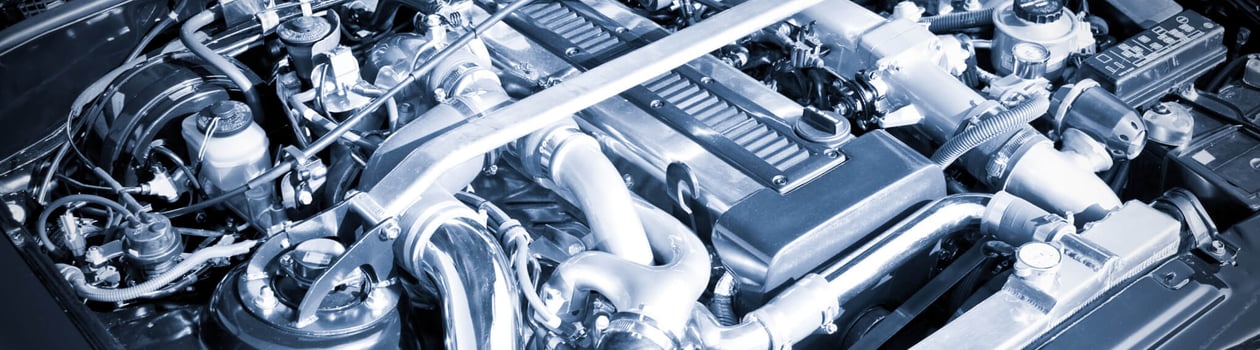
Diesel Engine Day celebrates Rudolf Diesel’s revolutionary invention of the diesel engine, a machine that helped reshape transportation, industry, and power generation. It is a chance to appreciate the stubbornly practical side of engineering: the kind that favors torque over flash, endurance over delicacy, and efficiency over drama.
Celebrating Diesel Engine Day invites curiosity about how compression ignition works, why diesel engines became the go-to option for heavy-duty jobs, and how modern designs keep evolving to balance power, reliability, and cleaner operation.
How to Celebrate Diesel Engine Day
Take a Tour
Stepping inside a diesel engine factory or rebuild shop turns a technical idea into something tangible: raw metal, precision tools, test benches, and people who listen to machines the way musicians listen to instruments.
A well-designed tour usually follows an engine’s full journey, from individual parts to final verification. Visitors might watch cylinder blocks being machined, crankshafts checked to exact tolerances, and fuel systems assembled in spaces that feel closer to laboratories than garages. Many facilities also showcase quality checks such as pressure tests, digital inspections, and dynamometer runs, where finished engines are pushed under controlled loads to confirm smooth operation and expected power output.
To make the experience richer, it helps to come prepared with a few questions:
- What makes diesel engine blocks and internals more “heavy-duty” than other engines?
- How is fuel injection set up and verified?
- Which failures are most common, and how are they designed out or prevented through maintenance?
- What newer technologies are improving efficiency and reducing emissions?
Even without technical expertise, a tour makes one thing clear: diesel engines are designed to work hard, often for decades, in demanding conditions.
Watch Documentaries
A documentary night focused on diesel engines can be far more engaging than expected, especially when the films highlight what diesel power enables: global freight movement, long-haul shipping, massive rail transport, and backup power systems that quietly wait for emergencies.
Good viewing choices often explore:
- The life and ideas of Rudolf Diesel and the early days of engine innovation
- The difference between compression ignition and spark ignition
- Diesel’s role in shipping, railways, and heavy industry
- The shift from early mechanical injection to modern high-pressure systems
- Environmental challenges and engineering responses, including cleaner fuels and exhaust treatment
To keep things interactive, pausing now and then to unpack terminology can help. Words like “turbocharger,” “intercooler,” “injector,” or “particulate filter” become far less intimidating when translated into simple ideas like more air, cooler air, precise fuel delivery, and cleaner exhaust.
Host a Themed Party
A diesel engine–themed gathering works best when it leans into playful workshop-style creativity without crossing into grime. Think “organized engineering space” rather than “oil-stained floor.”
Decor ideas might include:
- Cardboard pistons or turbochargers as table centerpieces
- Black, silver, and safety-yellow accents
- Name tags with roles like Engineer, Mechanic, Driver, Inspector, or Apprentice
Food and drinks can keep the theme lighthearted:
- Snacks in clean, food-safe containers styled like fuel cans
- Cupcakes topped with gear-shaped decorations
- A “torque board” offering spicy choices and mild ones, standing in for high-output and economy modes
Games can mix fun with learning:
- Matching diesel parts (injector, piston, crankshaft) to their functions
- “Name that sound,” using clips of engines idling or working under load
- Trivia about famous diesel-powered machines such as trains, ships, and heavy equipment
A themed party also creates space to acknowledge the real people behind the machines: technicians, mechanics, engineers, and operators who keep diesel systems running every day.
Visit Museums
Museums focused on transportation, industry, or technology often include diesel engines because they tell such a clear story about modern progress. Even when an engine sits quietly behind glass, it represents a major shift in how work and transport evolved.
Exhibits may feature:
- Early stationary engines used in factories
- Marine diesels that hint at the scale of global shipping
- Locomotive components tied to rail modernization
- Cutaway displays revealing cylinders, pistons, valves, and injection systems
To stay engaged, it helps to approach each engine like a puzzle. How large is it compared to a person? How many cylinders does it have? Does its design suggest steady power, heavy hauling, or emergency backup use?
Labels listing horsepower, displacement, or operating speed can deepen appreciation for diesel engines’ strength at low speeds rather than high revolutions.
Ride in Diesel-Powered Vehicles
Experiencing diesel power firsthand often makes its appeal immediately clear. The impression is usually less about rapid acceleration and more about steady, confident pulling force. Diesel engines are commonly tuned to deliver high torque at lower speeds, which suits heavy loads and long-distance travel.
Hands-on experiences might include:
- Riding a diesel-powered train or transit system
- Traveling on a boat powered by diesel engines
- Riding in a diesel truck, bus, or specialized work vehicle
Pay attention to how the vehicle behaves: how it pulls away, how it sounds under strain, and how smoothly it maintains momentum. Many people also notice differences in refueling habits and range, since diesel engines are often chosen for long operating hours and durability.
For a quieter experience, visiting a site with diesel generators can be just as revealing. These machines are designed to sit idle for long periods, then start instantly and carry critical loads, which demands meticulous maintenance and reliability.
Why Celebrate Diesel Engine Day?
Diesel engines often fade into the background because they quietly support daily life. Goods arrive, buses run, buildings rise, ships move cargo, and essential services stay powered when the grid fails. Diesel power is frequently the unseen force behind all of it.
Part of the appeal of Diesel Engine Day is that it honors a specific type of innovation: efficiency that scales. Rudolf Diesel’s key insight was that compressing air until it ignites fuel could create a highly efficient engine.
Without spark plugs, compression ignition shaped everything about diesel design, from stronger components to precise fuel delivery.
That principle explains why diesel engines are known for:
- Strong torque for heavy-duty work
- Efficient fuel use at steady loads
- Long service life due to robust construction
- Reliability in settings where downtime is costly
The day also highlights how widespread diesel use remains. Diesel engines power trucks, buses, ships, locomotives, farm machinery, and construction equipment, often operating far from easy service access.
They are also critical in emergency power generation, supporting hospitals, airports, data centers, and other facilities that cannot afford outages.
Modern diesel engineering is a story of constant refinement. Today’s engines use advanced fuel injection, turbocharging, and sophisticated exhaust treatment systems to improve performance while reducing emissions. The machines are more complex than early diesels, but also cleaner and quieter.
Alternative fuels add another dimension. Many diesel engines can run on biodiesel blends or renewable diesel fuels that fit into existing infrastructure. That flexibility echoes Diesel’s original experiments, which demonstrated engines running on plant-based oils.
Celebrating Diesel Engine Day is not about ignoring environmental challenges or claiming perfection. It is about recognizing a transformative technology, understanding how it works, appreciating the engineering behind it, and acknowledging how much of modern life still relies on durable, efficient diesel power.
Diesel Engine Day Timeline
Rudolf Diesel Files His First Engine Patent
German engineer Rudolf Diesel files German patent DRP 67207, outlining a new high‑efficiency compression‑ignition heat engine concept that will later bear his name.
Patent Granted for the Diesel Engine
Rudolf Diesel receives a key patent for his compression‑ignition internal combustion engine, establishing the legal and technical foundation for commercial diesel development.
First Successful Diesel Engine Test
Diesel’s Motor 250/400 engine is officially tested at Maschinenfabrik Augsburg, achieving record thermal efficiency and proving the practicality of the diesel concept.
First Diesel‑Powered Submarine Launched
The French submarine l’Aigrette entered service with a MAN‑licensed diesel engine and electric drive, pioneering diesel‑electric propulsion for underwater vessels.
First Large Ocean‑Going Diesel Ship
The Danish liner Selandia is launched as one of the first large seagoing ships powered entirely by diesel engines, transforming long‑distance marine transport.
First Direct‑Injection Diesel Truck Engine
MAN tests the first lorry equipped with a direct‑injected diesel engine, marking a major step toward high‑speed diesels for commercial road transport.
Bosch Introduces Inline Injection Pump
Robert Bosch GmbH brings out the first inline fuel injection pump specifically for vehicle diesel engines, enabling more reliable, efficient and powerful diesel road vehicles.
History of Diesel Engine Day
Diesel Engine Day honors Rudolf Diesel, the engineer credited with developing the diesel engine and securing a key patent for it. The date is tied to the patent granted on February 23, 1893, a milestone that helped formalize his approach to a new kind of internal combustion engine based on compression ignition.
Rudolf Diesel’s work unfolded during a period of intense industrial experimentation. Steam engines had powered factories and transport for decades, but they were bulky and comparatively inefficient.
Early internal combustion engines existed too, including designs that relied on spark ignition, but Diesel was pursuing a different target: higher efficiency and a design that could deliver strong, practical power.
The diesel engine concept depends on a simple but powerful physical reality: compressing air raises its temperature. In a diesel engine, air is compressed in the cylinder to a point where it becomes hot enough that, when fuel is injected, it ignites without a spark.
This approach requires high compression ratios and sturdy construction. It also sets the stage for efficient operation, because the engine can extract more useful work from the fuel.
Early development was not instant success. Diesel’s ideas had to survive the real world of materials, machining, and combustion quirks. Prototypes were built and refined during the 1890s, and the first truly successful engines arrived after years of iteration.
By the end of the decade, diesel engines had proven their value in stationary industrial roles, where steady power and fuel efficiency were prized.
From there, the diesel engine’s influence spread outward. Stationary engines powered factories and equipment. Marine engines offered endurance for long voyages. Locomotives adopted diesel power as technology matured, offering a practical alternative to steam.
Over time, diesel engines became closely associated with heavy-duty transportation and machinery, partly because their torque characteristics and durability fit the job.
Diesel Engine Day also reflects the broader human story behind engineering. The diesel engine did not become important solely because of one inventor’s idea, but because generations of engineers, machinists, operators, and technicians kept improving it.
Fuel delivery systems became more precise. Turbocharging and cooling methods advanced. Reliability and serviceability improved. Modern emissions-control technology transformed how exhaust is handled. Each step added complexity, but also expanded what diesel engines could do and where they could be used responsibly.
In that way, Diesel Engine Day is both a nod to Rudolf Diesel’s breakthrough and a celebration of the long, ongoing chain of practical innovation that followed.
Diesel Engine Day Facts
These facts highlight why the diesel engine has played such a lasting role in industry, transport, and energy use. From its early breakthroughs in efficiency to the way it burns fuel and the impacts that creates, each point sheds light on what makes diesel engines technically distinct and historically significant.
High Compression Ratios Are the Secret to Diesel Efficiency
Diesel engines achieve notably higher thermal efficiency than gasoline engines because they operate at much higher compression ratios, often between 14:1 and 25:1, compared with about 8:1 to 12:1 in typical spark‑ignition engines.
This greater compression raises the air temperature enough to ignite the fuel without a spark and allows more of the fuel’s chemical energy to be converted into useful work, which is why large diesel engines can reach thermal efficiencies above 40 percent, versus roughly 25 to 35 percent for gasoline engines.
The First Practical Diesel Engine Was Over Twice as Efficient as Steam
In 1897, Rudolf Diesel’s first successful test engine, a single‑cylinder, four‑stroke machine, recorded a brake thermal efficiency of about 26.2 percent, when contemporary steam engines were typically around 10 percent.
This dramatic jump in efficiency validated Diesel’s original goal of approaching the theoretical Carnot cycle and helped convince industrial backers that compression‑ignition could displace bulky, fuel‑hungry steam installations in factories and power plants.
Early Diesel Engines Ran on Vegetable Oil as Well as Petroleum Fuel
Although diesel fuel is now strongly associated with petroleum, early demonstrations of Diesel’s engine included the use of vegetable oils, such as peanut oil, to show that the design could operate on diverse fuels.
Historical accounts note that Diesel promoted the idea that farmers might grow their own fuel crops to power engines, an idea that foreshadowed today’s interest in biodiesel and other renewable diesel fuels derived from plant and waste oils.
Compression Ignition Creates Very Different Pollutants from Gasoline Engines
Because diesel engines burn a lean mixture with excess air and rely on high‑pressure fuel injection into very hot compressed air, their exhaust chemistry differs from that of gasoline engines.
Diesels tend to produce relatively low carbon monoxide and unburned hydrocarbons but higher levels of nitrogen oxides and fine particulate matter, tiny soot particles that can penetrate deep into the lungs, which is why modern regulations focus heavily on controlling NOx and particulate emissions from diesel exhaust.
Modern Diesels Depend on Common‑Rail Injection and Computer Control
Contemporary road and off‑road diesels bear little resemblance to the clattering mechanical engines of the early 20th century because most now use high‑pressure common‑rail fuel injection controlled by electronics.
Instead of each cylinder having its own mechanical injector pump, a shared “rail” holds fuel at pressures that can exceed 30,000 psi, and an engine control unit times multiple tiny injection events per stroke.
This precise metering improves efficiency, reduces noise, and is essential for meeting stringent emissions standards.
Diesel Engines Are the Backbone of Global Freight and Heavy Work
Across the world’s economies, diesel engines dominate applications where high torque and durability are critical, including heavy‑duty trucks, buses, locomotives, large ships, construction machinery, and agricultural tractors.
Studies of freight and equipment fleets show that diesel accounts for the vast majority of energy used in freight transport and off‑highway work, in part because compression‑ignition engines can operate reliably for tens of thousands of hours under high loads where gasoline engines would wear out far sooner.
Large Diesel Generators Quietly Support Critical Infrastructure
Beyond transportation, medium and large diesel engines play a crucial role as standby and prime‑mover generators for hospitals, data centers, water treatment plants, and airports.
Their ability to start quickly, accept heavy loads, and run on widely available liquid fuel makes them a preferred choice for backup power, and infrastructure guidelines in many countries explicitly recommend or assume diesel‑powered generator sets for meeting emergency power requirements.
Diesel Engine Day FAQs



You may also like

National Biodiesel Day
Fueling the future, this eco-friendly energy source gives cars a cleaner ride, making the planet and wallets smile.
- United States

National Public Defense Day
National Public Defense Day celebrates the vital role that public defenders play in our justice system. It highlights how these professionals ensure that people who cannot afford a lawyer still receive legal help. They work tirelessly to uphold fairness in courtrooms and bring balance to legal proceedings. The day encourages honoring...
- United States

National Yorkshire Pudding Day
Golden brown and crispy on the outside, soft and doughy on the inside — the perfect accompaniment to any roast dinner!
- Australia
- Canada
- United Kingdom
- and 1 more

National Dump the Pump Day
Celebrate National Dump the Pump Day by choosing public transportation or car-free travel to save money, cut fuel use, ease traffic, and reduce pollution.
- Canada
- United Kingdom
- United States
National days and holidays on February 23 2027

World Spay Day
World Spay Day highlights the crucial issue of pet overpopulation. This special day encourages pet owners to spay or neuter their animals, helping to reduce the number of homeless pets. By raising awareness and promoting these procedures, World Spay Day aims to create a world where fewer animals end up...
- Australia
- Canada
- United States

National Banana Bread Day
A delicious homemade treat that's perfect for breakfast or dessert, made with ripe fruit and warm spices. You won't want to share!
- Australia
- Canada
- United States

World Understanding and Peace Day
World Understanding and Peace Day is dedicated to a deceptively simple idea: peace is built by people who choose to understand one another. It spotlights the everyday skills that make harmony possible, such as listening well, treating neighbors with dignity, and working together on shared problems, even when opinions differ. Promoting...
- Australia
- Canada
- India
- and 3 more

Real Bread Week
Real bread is a joy to behold! Made with natural ingredients and baked to perfection, each bite is a heavenly experience.
- United Kingdom
Seize Every Day
Join free for personalised recommendations, email reminders and exclusive guides. Never miss a day.