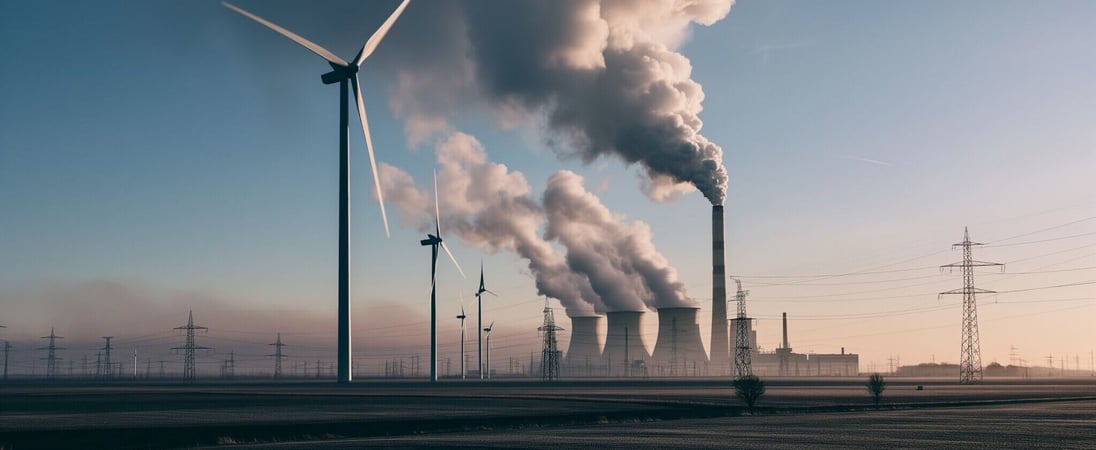
Fossil Fools Day
Fossil Fools Day is an annual event that calls attention to the environmental damage caused by our reliance on fossil fuels.
It’s a day full of creativity and activism, where people gather to highlight the impact of burning coal, oil, and gas.
These activities often use humor and imaginative protests to expose the “foolishness” of continuing to depend on dirty energy when renewable alternatives exist.
Fossil Fools Day Timeline
1712
Newcomen Atmospheric Engine Uses Coal at Scale
Thomas Newcomen’s steam engine begins pumping water from mines in England, becoming one of the first large-scale industrial uses of coal for mechanical power and deepening reliance on fossil fuels.
1859
First Commercial Oil Well Drilled in Pennsylvania
Edwin Drake successfully drills the first commercially viable oil well near Titusville, Pennsylvania, launching the modern petroleum industry and accelerating global dependence on oil.
1885
Karl Benz Patents Practical Gasoline Automobile
German engineer Karl Benz patents a gasoline-powered automobile with an internal combustion engine, helping cement petroleum as the dominant fuel for personal and commercial road transport.
1938
Callendar Links Rising CO₂ to Global Warming
British engineer Guy Callendar publishes a paper arguing that increasing atmospheric carbon dioxide from fossil fuel combustion is already warming Earth’s climate, renewing interest in greenhouse theory.
1963
First U.S. Clean Air Act Targets Air Pollution
The United States enacts the original Clean Air Act, the first federal law to fund research and support state programs to control air pollution from sources such as coal-fired power plants and motor vehicles.
How to Celebrate Fossil Fools Day
Here are some fun and impactful ways to celebrate Fossil Fools Day while making a difference for the planet. Let your creativity run wild and get others involved too!
Host a “Fossil-Free” Picnic
Invite friends and family to a park and hold a picnic with a twist: all food and activities should be eco-friendly!
Choose plant-based meals, bring reusable containers, and perhaps even power small gadgets with portable solar chargers.
It’s a simple way to spark conversations about sustainable choices while enjoying the outdoors.
Organize a Clean Energy Costume Parade
Get people together and organize a quirky parade where participants dress up as different forms of clean energy!
Wind turbines, solar panels, or even hybrid cars—there’s no limit to creativity. March through a local street to turn heads and spread the message about how fun and necessary renewable energy is for the future.
Screen an Environmental Film
Find a thought-provoking documentary about climate change or clean energy and host a viewing party.
Whether it’s in your living room or at a local community center, this is an engaging way to get people thinking about the planet’s future. Follow the film with a lively discussion about what everyone can do to reduce fossil fuel use.
Create a DIY Solar Gadget Workshop
Host a workshop where people can make simple solar-powered gadgets, like phone chargers or small fans. It’s a hands-on way to demonstrate the potential of renewable energy.
Plus, everyone gets to take home a new eco-friendly gadget as a reminder of how small changes can make a big difference.
Challenge a Local Business to Go Greener
Team up with others to approach a local business and ask them to make eco-friendly changes. This could mean switching to energy-efficient lighting, encouraging them to offer reusable bags, or even installing bike racks.
Small steps like these can inspire more sustainable practices with the people in your local community and also far beyond!
Why Celebrate Fossil Fools Day?
From mock sales for outdated coal plants to public displays urging cleaner energy, the day uses a playful approach to drive home a serious message about the need for sustainable change.
The significance of Fossil Fools Day extends beyond just awareness. It is a rallying cry for communities all over the world to use their voices and demand action when it comes to climate change.
This action should be coming in cooperation with governments, corporations, non-profit organizations and more.
The goal for this event is to push for policies that reduce carbon emissions and promote cleaner energy sources.
This event reminds us that our dependence on fossil fuels not only worsens global warming but also harms public health and ecosystems.
History of Fossil Fools Day
Fossil Fools Day began in 2004 as a creative way to highlight the dangers of relying on fossil fuels.
A group of environmental activists wanted to combine humor with serious issues, and they chose this day to protest against the harmful effects of coal, oil, and gas.
The date aligns with April Fools’ Day to show how foolish it is to continue depending on dirty energy sources. Various groups, including Rising Tide North America, played a key role in starting this movement. They organized protests, stunts, and educational events to spread awareness about climate change.
These activists believed that dramatic action was needed to wake people up to the realities of global warming.
From the beginning, Fossil Fools Day has grown into a global event, with actions taking place in cities across the world.
In its early years, protests targeted companies heavily invested in fossil fuels. Activists often staged symbolic events, such as fake sales of coal plants or humorous demonstrations, to draw attention to the environmental harm these industries caused.
These public acts combined education with performance to raise awareness.
Each year, Fossil Fools Day continues to inspire creative actions. It empowers ordinary people to stand up against fossil fuel dependence.
Whether through rallies, parades, or online campaigns, this day reminds us that change is possible and clean energy can be our future.
Facts About Fossil Fools Day
Ancient Origins of Fossil Fuels
Most coal, oil, and natural gas used today formed between about 252 and 66 million years ago, when lush prehistoric forests and marine life were buried and subjected to heat and pressure over millions of years.
Coal is mainly fossilized terrestrial plant matter, while most oil and gas originated from tiny marine organisms like plankton that settled on ancient seabeds.
Fossil Fuels Still Dominate the Global Energy Mix
Despite decades of growth in renewables, fossil fuels still supply roughly 80 percent of the world’s total energy consumption, a share that has changed only slowly since the 1970s.
Coal, oil, and gas together remain the backbone of electricity generation, transport, and industrial heat, which makes shifting away from them a major technical and political challenge.
Fossil Fuel Combustion Is the Largest Source of CO₂ Emissions
Burning fossil fuels for energy and transport accounts for about three‑quarters of global greenhouse gas emissions and nearly 90 percent of carbon dioxide emissions from human activities.
Power plants, vehicles, industry, and buildings that rely on coal, oil, and gas are the primary drivers of the long‑term rise in atmospheric CO₂ that is warming the planet.
Hidden Trillions in Fossil Fuel Subsidies
When both direct government payments and the failure to price pollution and climate damage are counted, global fossil fuel subsidies reached about $7 trillion in 2022, or 7.1 percent of world GDP.
The International Monetary Fund estimates that simply charging fuels their full societal costs could cut worldwide CO₂ emissions by 43 percent by 2030.
Air Pollution From Fossil Fuels Is a Major Health Killer
Fine particulate pollution from burning fossil fuels contributes to millions of premature deaths each year through heart disease, stroke, lung cancer, and respiratory infections.
The World Health Organization estimates that outdoor air pollution, largely driven by fossil fuel combustion in power generation, industry, and transport, causes around 4.2 million premature deaths annually.
Climate Impacts Disproportionately Hit Vulnerable Communities
Communities that have contributed least to historical fossil fuel emissions, particularly in low‑income countries and in marginalized neighborhoods within wealthy nations, often face the greatest risks from climate impacts like heat waves, flooding, and crop failures.
The IPCC notes that these groups also tend to have the least resources to adapt, which raises difficult questions of climate justice and responsibility.
Renewables Have Become the Cheapest New Power in Much of the World
The cost of utility‑scale solar photovoltaics has fallen by more than 80 percent since 2010, and onshore wind by about 60 percent, making them the cheapest sources of new electricity generation in many regions.
The International Renewable Energy Agency reports that in 2022, around 86 percent of newly added renewable capacity had lower costs than the cheapest new fossil fuel‑fired option.
Fossil Fools Day FAQs
How do fossil fuels affect human health beyond climate change?
Burning coal, oil, and gas produces fine particulate matter (PM2.5), nitrogen oxides, sulfur dioxide, and other pollutants that damage lungs and blood vessels.
The World Health Organization links air pollution largely from fossil fuels to millions of premature deaths each year from stroke, heart disease, lung cancer, and respiratory illnesses such as asthma and chronic obstructive pulmonary disease.
Indoor air pollution from kerosene and coal used for cooking and heating also harms health, especially for women and children in low income settings.
Are renewables like wind and solar really more climate friendly over their full life cycle?
Life cycle assessments that include manufacturing, transport, installation, operation, and decommissioning consistently find that solar, wind, and other modern renewables emit far less greenhouse gas per unit of electricity than coal, oil, or gas.
The Intergovernmental Panel on Climate Change reports that wind and solar typically produce a small fraction of the emissions of fossil fuel plants, even after accounting for materials and construction, and their footprints can shrink further as power grids and industrial supply chains decarbonize.
Is it true that societies must choose between economic growth and reducing fossil fuel use?
Major economic institutions such as the International Energy Agency and the World Bank note that economies can grow while cutting fossil fuel use when policy, investment, and innovation align.
Shifting to efficient buildings, clean power, and low carbon transport can reduce energy bills, create new jobs, and improve public health.
The IEA has shown that some advanced economies have already seen economic growth while their energy related CO₂ emissions have flattened or declined, indicating that growth and emissions can be “decoupled” under the right conditions.
Why is phasing out coal often treated differently from oil and gas in climate planning?
Coal is typically the most carbon intensive fossil fuel and is also a major source of local air pollutants such as particulate matter and sulfur dioxide.
Because coal fired power plants are easier to substitute with renewables and efficiency measures than some uses of oil and gas, many countries and international initiatives target coal first as a “low hanging fruit” in emissions reduction.
The UN and the IEA emphasize that rapid coal phase down, especially in the power sector, is one of the fastest ways to cut emissions while improving air quality.
Do fossil fuels affect all communities equally around the world?
Impacts are uneven. Communities living near coal mines, oil and gas fields, refineries, and power plants often experience higher exposure to air and water pollution and associated health risks.
The UN and many public health bodies highlight that low income communities, Indigenous peoples, and people of color are more likely to live near these facilities and have fewer resources to adapt or relocate.
At the same time, many low income countries that contributed least to climate change are among the most vulnerable to its impacts, raising questions of equity in global energy decisions.
Can existing electricity grids handle a large share of variable renewables like wind and solar?
Grid operators in many regions already manage high shares of wind and solar by using better forecasting, flexible power plants, energy storage, demand response, and stronger transmission networks.
The International Renewable Energy Agency notes that integrating 30 to 50 percent or more variable renewables is technically feasible with current technologies and market designs, and some countries and regions have already operated safely for periods with much higher shares.
Upgrading grids and planning ahead are key to maintaining reliability as renewables expand.
What role do individual choices play compared with government and corporate action on fossil fuels?
Individual actions such as using less energy, choosing efficient appliances, and shifting to public or active transport can cut personal emissions and signal demand for cleaner options.
However, large scale reductions in fossil fuel use depend heavily on policy, infrastructure, and investment decisions made by governments and companies.
Scientific assessments from bodies like the IPCC emphasize that systemic changes in energy production, transport systems, buildings, and industry are essential, with individual choices working best when those systems make low carbon options accessible and affordable.
Also on ...
View all holidays
Reading Is Funny Day
By reading books of riddles, jokes, and comedy, help kids see how reading can be just as fun and funny (if not moreso) as video games, tv, or the internet.

Fun Day
Carve out some time for yourself to laugh, play, and unwind from the high-speed stress of everyday life by doing something that brings you joy and happiness.