
There are a lot of things in life that we take for granted, like the shoes we wear.
You might not think it, but there are a lot of things you should think about when it comes to wearing shoes and making the most of them. National Go Barefoot Day is here to help!
National Go Barefoot Day is an annual celebration taking place every summer, in which people are encouraged to kick off their footwear, let their feet breathe, and take the time to walk or run in bare feet as much as possible.
National Go Barefoot Day Timeline
Earliest Known Footwear Appears
Archaeological and anatomical evidence from ancient skeletons in Eurasia suggests that humans began using simple protective footwear at least 40,000 years ago, as toe bones show reduced robustness consistent with shoe use instead of habitual barefoot walking.
Barefoot Purity in Ancient Egypt
In ancient Egypt, going barefoot or wearing simple sandals was common, and priests in particular performed many temple rituals barefoot as a sign of ritual purity and direct contact with the sacred ground of the gods.
Shoes and Social Class in Classical Greece
Classical Greek writers described footwear as a marker of status, with wealthier citizens wearing crafted sandals or boots while many poorer people remained barefoot, illustrating how bare feet became linked socially with poverty and low rank.
Sacred Spaces and Removing Shoes in Japan
By the Kamakura period in Japan, the custom of removing footwear before entering homes and sacred spaces such as Shinto shrines and Buddhist temples was well established, reflecting ideas of cleanliness and spiritual respect that endure in Japanese culture.
Abebe Bikila Wins Olympic Marathon Barefoot
Ethiopian runner Abebe Bikila won the Rome Olympic marathon barefoot after finding provided shoes uncomfortable, setting a world record and drawing global attention to the performance potential of unshod running.
Shoes as Public Health: The “Shoes That Grow” Concept
Public health and humanitarian campaigns increasingly highlighted that hundreds of millions of children lacked adequate shoes; in this context, innovators such as The Shoe That Grows (concept mid‑2000s, formal launch later) promoted adjustable footwear to protect barefoot children from soil‑transmitted diseases and injury.
Modern Barefoot Running Movement Gains Momentum
Publication of Christopher McDougall’s book “Born to Run” popularized the idea that humans evolved to run barefoot or in minimal shoes, helping spark a global barefoot and minimalist running movement that questioned heavily cushioned footwear and inspired new biomechanical research.
How to Celebrate National Go Barefoot Day
If you are serious about having the opportunity to celebrate National Go Barefoot Day then you should be thinking about what you can do in order to get the best out of this!
Go Barefoot
Consider the different ways of being able to celebrate this awesome day, and help make a difference to the world.
Of course, the actual act of going barefoot itself is a great place to start, and, as we covered above, there are plenty of excellent health benefits that make this a great idea for you to start doing right now.
Help Others
In addition to actually taking part in the barefoot process of the day, you can get involved in a more philanthropic way.
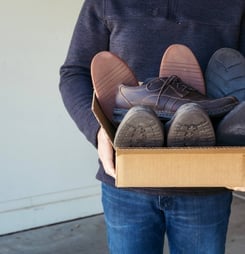
Go through your closets and clean them out; set aside any shoes you never use or don’t want anymore, and use them to donate to this great cause. But, you can get even more involved if this is something that is close to your heart or that you feel strongly about.
For instance, in a lot of cases, you can organise a shoe drive in the local community, where you and friends can drive to people’s homes and collect the shoes they are looking to donate, before dropping them off with the charity.
This way you can indulge in some good deeds, and afterward you could organize a barefoot walk on the beach or in the park to help you make the most of this experience and celebrate being barefoot.
Show support to the charity Soles4Souls, a global charity trying to put shoes on the feet of 300 million underprivileged children!
Reject Those Shoes
Whether you’re at work or not, find a way to rebel against shoes, be it running barefoot through the grass and pampering your feet, or kicking off your shoes under your desk at work when your boss isn’t looking.
This is something that can help you in day to day life, as well as coming with health and comfort benefits as well. Footwear is an integral part of our daily life, so much so that we take it for granted a lot of the time.
But, people across the world do not always have the luxury of wearing or owning shoes of their own, and many have to walk every day in bare feet.
Of course, commuting to work or driving the car will require the use of footwear, but if you are in the garden, at the park, or on the beach it would be ideal to go barefoot.
Learn About Barefoot Benefits
There are actually quite a few excellent health benefits to doing this, so it is something we would recommend to everyone to try.
Here are some of the core benefits involved in going barefoot:
- Better foot positioning
- Improved balance and body awareness
- More comfortable and can help ease pain relief
- Better foot mechanics, which in turn improves things like knees, hips, and the rest of the body
- Stronger leg muscles and lower back support
- Improved posture
- Relief from footwear restrictions
- Enhanced dexterity of the lower extremities
- Growing strength and stability of muscles and joints
Another of the reasons why National Go Barefoot Day matters so much is because the idea is to raise awareness of those in the world who don’t have access to adequate footwear. Working in conjunction with the charity Soles4Souls, the idea is to work toward getting shoes for underprivileged kids globally.
Summer is the perfect time to get your shoes off and enjoy some barefoot therapy for a while. The weather is going to be good, and this means you have much more choice of when and where to take your shoes off and enjoy some shoe-free action.
Take the time right now to get involved with National Go Barefoot Day this year, and try to make a big difference in the world as a result!
History of National Go Barefoot Day
National Go Barefoot Day was a celebration created and pioneered by Soles4Souls. The idea was concocted in the wake of the tsunami disaster that occurred some 15+ years ago, and decimated many areas of the world.
This was a disaster that led to a lot of people being adversely affected and plunged into poverty. This is a day that was created to draw attention to this, and to help these people as much as possible.
The principal aim of this day is to get people to donate footwear, both used and new, that can be distributed to underprivileged people in need of shoes.
Since this day was created, there have been around 19 million pairs of shoes donated globally, and providing this level of unprecedented support makes such a big difference to those around the world. This is a global celebration, and you will have the opportunity to take part on a yearly basis.
It’s a great way of being able to give back and do some good for those in society who need your help.
Improper footwear is something that can cause a lot of issues, especially in underdeveloped countries. However, at the same time, there is something appealing about donning bare feet now and again, and this is something that is important to get right as much as possible.
This is one of the reasons that has led to the launch and development of National Go Barefoot Day. This is an annual event that encourages everyone, children and adults, to shed their shoes and socks and go barefoot as much as possible, wherever possible.
National Go Barefoot Day is still observed in many countries around the world these days, and it is important for you to look at ways you can get involved.
This is one of the best things that you can do to play a part in the process, and it is something you need to keep in mind. Make sure you focus on what it takes to make the most of this, and you.
Facts About Go Barefoot Day
Grounding the Barefoot “Earthing” Trend in Physiology
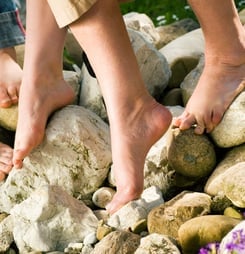
Research on “earthing,” or walking barefoot on natural ground, suggests it may influence the body’s inflammatory and stress responses by allowing direct skin contact with the earth’s surface electrons.
Small clinical studies have linked grounded barefoot contact with changes in blood viscosity, reduced delayed-onset muscle soreness, and altered cortisol rhythms, although scientists note that larger, better-controlled trials are needed to confirm these effects.
How Modern Cushioned Shoes Changed Human Foot Strikes
Studies comparing habitually barefoot people to those who grow up wearing cushioned running shoes show that footwear changes how the foot meets the ground.
Barefoot runners more often land on the midfoot or forefoot, which reduces impact loading rates, while shod runners tend to land on the heel.
This shift in mechanics has led some biomechanists to argue that modern shoes may contribute to certain overuse injuries, although the overall injury picture remains complex.
Going Barefoot and Soil-Transmitted Parasites
In many low-income settings, routinely going barefoot is not a choice but a necessity and it carries real health risks.
Soil-transmitted helminths such as hookworm infect humans when larvae in contaminated soil penetrate bare skin, typically the feet, contributing to anemia, impaired growth, and reduced school performance in children.
The World Health Organization estimates that more than a billion people require preventive treatment for these parasitic infections each year, and wearing shoes is a key protective measure.
Podoconiosis: A Foot Disease Preventable With Simple Footwear
Podoconiosis is a noninfectious type of elephantiasis that develops after years of barefoot exposure to certain volcanic soils, leading to painful swelling and disability in the lower legs.
Concentrated in highland regions of countries such as Ethiopia, Cameroon, and Rwanda, it affects an estimated 4 million people worldwide.
Public health programs show that basic closed footwear and regular foot hygiene can largely prevent the disease, making shoes a surprisingly powerful medical intervention.
Bare Feet in Sacred Spaces Across Religions
Removing shoes as a sign of humility and respect appears independently in several major faiths.
In Hindu and Buddhist temples, visitors leave footwear outside to maintain ritual purity; in mosques, Muslims pray barefoot or in socks on clean prayer carpets; and some Eastern Christian traditions preserve the custom of clergy serving at the altar without shoes.
Historians trace these practices to ancient ideas about holy ground being too pure for everyday dirt and dust brought in on sandals or boots.
The Japanese Custom of Going Shoeless Indoors
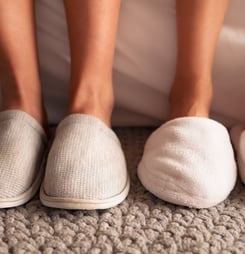
In Japan, it is standard to remove outdoor shoes at the entrance of homes, many schools, some restaurants, and traditional inns, then switch to indoor slippers or go barefoot or in socks.
Anthropologists link this to historical preferences for clean tatami flooring, the humid climate that makes outdoor dirt especially unpleasant indoors, and a cultural emphasis on separating “inside” from “outside.”
Similar no-shoe customs appear elsewhere in East Asia, but Japan’s built environment and etiquette have made it particularly formalized.
Barefoot Sports: From Martial Arts to Modern Minimalism
Several disciplines use bare feet not as a novelty but as standard equipment.
Traditional martial arts like karate, taekwondo, and judo emphasize barefoot practice to improve stability, tactile feedback, and respect for the training floor, while yoga and Pilates rely on bare feet for grip and alignment.
Inspired in part by these practices and by research on foot mechanics, some contemporary athletes have adopted minimalist or barefoot-style training to strengthen intrinsic foot muscles and enhance proprioception.