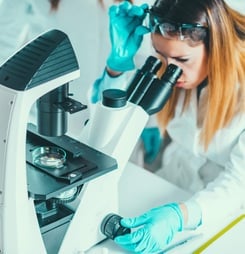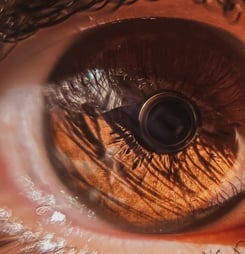

From medical imaging and microscopes to television displays and fiber optic internet, technologies based on light have transformed how people learn, heal, communicate, and create.
International Day of Light highlights this impact—not only in the simple sense of switching lights on and off, but in the deeper ways light runs through modern life: the signals that transmit data through cables, the sensors tracking crops and oceans, the tools that allow doctors to look inside the body, and the lighting decisions that influence art, architecture, and everyday mood.
Light also exists at the intersection of many fields. It can be measured, bent, filtered, amplified, and precisely controlled. It behaves in surprisingly complex ways, acting like a wave in some cases and like particles in others.
Because of this, discussions about light can easily move from simple classroom experiments to advanced engineering, and from pure science to real-world concerns about safety, access to technology, and responsible use.
International Day of Light Timeline
Alhazen’s Book of Optics Lays Foundations for Modern Optics
Ibn al‑Haytham (Alhazen) completed his seven‑volume “Book of Optics,” explaining vision by light entering the eye and pioneering experimental methods that transform the study of light and optics.
Newton Demonstrates the Spectrum of White Light
Isaac Newton presented experiments to the Royal Society showing that white light is composed of distinct colors that can be separated and recombined with prisms, reshaping the understanding of color and refraction.
Einstein Introduces the Photon Concept
Albert Einstein published his paper on the photoelectric effect, proposing that light is made of discrete quanta (later called photons), a key step in the development of quantum theory and modern photonics.
Maser Concept Paves the Way for the Laser
Charles Townes and colleagues built the first maser (microwave amplification by stimulated emission of radiation), proving stimulated emission can amplify radiation and setting the theoretical and technical groundwork for lasers.
First Working Laser Is Demonstrated
Theodore H. Maiman operated the first ruby laser at Hughes Research Laboratories in California, producing coherent red light and launching the era of practical laser technology.
Charles K. Kao published work identifying material purity as the key to reducing loss in glass fibers and predicted that ultra‑clear fibers could carry light signals over long distances, founding modern fiber‑optic communications.
Blue LEDs Unlock Efficient White Solid‑State Lighting
Isamu Akasaki, Hiroshi Amano, and Shuji Nakamura developed efficient gallium nitride–based blue light‑emitting diodes, enabling bright white LED lamps that dramatically improve energy‑efficient lighting worldwide.
How to Celebrate International Day of Light
A meaningful celebration can combine curiosity with practicality. International Day of Light is ideal for individuals, classrooms, libraries, community groups, and workplaces because it can be scaled easily.
A quick prism demonstration can exist alongside a full program on photonics, medical imaging, or sustainable lighting. The core idea remains the same: light is important, and understanding it helps people see the world more clearly.
Get Informed About International Day of Light
International Day of Light encourages learning and public engagement with light science and its applications. A simple way to take part is to explore the key themes it promotes: how light supports technology, how it contributes to education and scientific progress, and how it shapes culture and creativity.
To make the topic easier to connect with, it helps to ask a few guiding questions:
- Where does light appear in daily life beyond basic vision? Phone cameras, barcode scanners, vehicle safety systems, remote controls, and automatic brightness sensors all depend on light.
- Which professions rely on light? Beyond astronomers and photographers, this includes medical specialists using imaging tools, engineers developing efficient lighting systems, technicians working with fiber optics, and researchers creating laser technologies.
- What are the safety essentials? Learning about light also involves understanding risks. Lasers are powerful because they are focused and intense, which is why proper handling is essential. The same applies to ultraviolet exposure, welding arcs, and strong stage lighting.
Teachers and facilitators can use the day to promote “light literacy,” which involves understanding brightness and glare, recognizing how lighting affects sleep and mood, and making informed choices about eye safety and screen use. This kind of practical knowledge naturally connects with the broader scientific story.
Another simple perspective is to think of light as information. A camera does more than capture an image—it converts light into data. A signal in a fiber optic cable is not just brightness—it carries a message. Seeing light this way helps connect everyday experiences to larger systems like medical imaging, satellites, and internet networks.
Attend International Day of Light Events
International Day of Light is often marked by public events such as talks, demonstrations, workshops, and exhibitions. These programs typically combine big ideas with hands-on learning.
A speaker might explain how fiber optics transmits data through light pulses, while a workshop demonstrates the concept using simple materials. A lab tour may focus on lasers and detectors, while an art-based event explores how lighting changes texture and color.
For those planning or attending events, several formats stand out:
- Public science talks that link light to real-world uses such as medical diagnostics, environmental tracking, manufacturing, or communication systems.
- Hands-on activities where participants create a basic spectroscope, experiment with polarization, or explore reflection and refraction using water and mirrors.
- Interdisciplinary events bring together artists, designers, engineers, and scientists to show how light connects different fields.
- Student presentations that focus on explaining ideas in simple language make learning more engaging and accessible.
Organizations can also create meaningful events without large budgets. A guided “light walk” focused on reflections, shadows, glare, and visibility can lead to discussions about design, safety, and energy use. Schools, libraries, or workplaces can set up small exhibits featuring light-based tools such as magnifying glasses, diffraction gratings, simple camera obscuras, and comparisons of household light sources.
To keep activities inclusive, experiences can be adapted for different senses. Participants can explore how sunlight warms surfaces, how textures change under different lighting, or how sound can represent light levels. The goal is not mastering formulas, but building curiosity about how light interacts with the world and how it can be used responsibly.
Learn Fun Facts About Light Based Technology
A great way to get connected to the International Day of Light might be to do a bit of studying and research on the topic. Teachers and parents can connect with their kids through science lessons and activities that are based around the topic of light. Individuals can learn different facts and share them with coworkers, friends or on social media to get more people involved with the day.
Check out some of these interesting facts about light technology to get started:
The light that can be seen on the planet Earth is a form of energy that comes directly from the sun, taking just eight minutes to travel through space.
Although the light that can be seen is called “white light”, it really is made up of a number of different colors.
Refracted light is what makes lenses such as glasses, telescopes and binoculars work as it bends the light to create focus.
History of International Day of Light
International Day of Light is a global observance created to highlight the importance of light and light-based technologies in science, culture, education, and sustainable development. It is closely connected to the work of UNESCO and the broader effort to maintain public interest in optics and photonics—fields that shape everything from research to everyday tools.
The observance builds on the success of the International Year of Light and Light-based Technologies, which brought global attention to the role of light in innovation and culture. Instead of limiting that focus to a single year, an annual observance provides a regular opportunity for schools, research institutions, museums, industries, and communities to share knowledge and engage new audiences.
International Day of Light is also linked to the anniversary of the first successful laser, demonstrated by Theodore Maiman in 1960. This milestone shows how quickly scientific discoveries can move from laboratories into everyday use.
In a short time, lasers became essential in communication, measurement, manufacturing, entertainment, and medicine. This reflects the day’s broader message: understanding light is not just theoretical—it has real-world impact.
The laser is a fitting symbol because it demonstrates how precisely light can be controlled. It is not just a dramatic beam seen in science fiction. Lasers can be finely focused, adjusted to different wavelengths, and used in pulses or continuous streams.
In everyday life, they are found in barcode scanners, printers, alignment tools, and medical treatments. In industry, they cut, weld, and measure with high precision. In research, they support experiments and enable extremely accurate measurements.
At the same time, the day extends far beyond a single invention. Light serves as a common link across physics, chemistry, biology, engineering, and design. It supports practical needs like safer lighting and efficient energy use, while also inspiring curiosity through tools that reveal distant galaxies, map the Earth, and explore living cells. This blend of usefulness and wonder makes the subject accessible to everyone.
International Day of Light also encourages reflection on how light-based technologies benefit society and how they should be used responsibly:
- Health and medicine: Light-based imaging and treatments help doctors diagnose conditions earlier and treat them more accurately, often reducing the need for invasive procedures.
- Communication: Fiber optic systems transmit large amounts of data as light pulses, forming the backbone of modern digital communication. Similar principles appear in everyday devices like remote controls and sensors.
- Energy and sustainability: Efficient lighting reduces energy consumption, while solar technologies convert sunlight into usable power. Understanding light improves both areas.
- Safety and standards: Proper use of light includes designing for visibility, comfort, and safety, while also considering issues like glare, overexposure, and light pollution.
- Culture and creativity: Film, theater, photography, museums, and digital media rely on light to create atmosphere and meaning, supported by an understanding of color and perception.
By linking a key moment in laser history with a wider mission of education and engagement, International Day of Light encourages people to see light not just as a background element, but as something with depth—a scientific concept, a technological tool, a creative medium, and an essential part of everyday life.