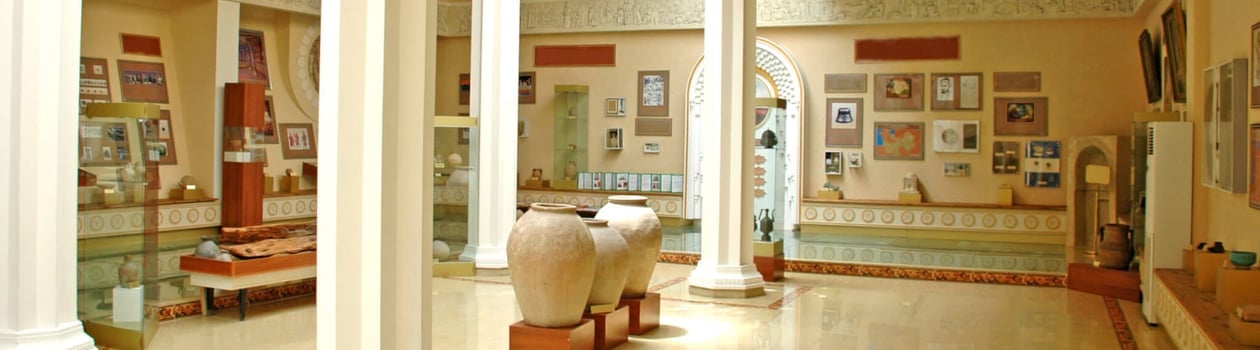
Few places in our world are more educational than museums. After all, where else could we hope to see so many pieces of actual history that tell so many stories about our ancestors?
Education is important, so days like International Museum Day should be something to get yourself and your young ones excited for.
After all, while there will be children filling their heads with nonsense, you can fill your children with knowledge and goodness!
International Museum Day Timeline
Ennigaldi‑Nanna’s Museum in Mesopotamia
Princess Ennigaldi establishes a curated collection of artifacts at Ur, widely regarded as the earliest known museum in history, with labeled objects from even older civilizations.
Capitoline collections in Rome
Pope Sixtus IV donates ancient bronze sculptures to the people of Rome, creating the core of what becomes the Capitoline Museums and helping shape the idea of a civic art collection.
Ashmolean Museum opens to the public
The Ashmolean Museum in Oxford opens its doors, often cited as the first purpose‑built public museum in Europe and a model for later university and research museums.
British Museum is founded and opened
Parliament establishes the British Museum in 1753 and opens it to the public in 1759, pioneering a national institution dedicated to universal knowledge and free public access.
Louvre becomes a public museum
Following the French Revolution, the former royal palace of the Louvre opens as the Musée Central des Arts, symbolizing the transfer of art from royal collections to the citizenry.
International Council of Museums (ICOM) is created
Museums and professionals from around the world establish ICOM to set ethical standards, promote collaboration, and support museums as institutions serving society and its development.
Rise of “new museology” and community museums
Scholars and practitioners advance “new museology,” emphasizing community participation, social justice, and living heritage, which reshapes museums from collection‑focused to visitor‑ and community‑centered institutions.
How to Celebrate International Museum Day
Visit a Local Museum
There is no better way to celebrate International Museum Day than to take a trip down to a nearby museum, either alone, with friends, or even your children if you feel they are old enough to appreciate the place.
Depending on where you live, the closest museums could be connected with anything from farming to fashion, astronomy to archaeology, or art to natural history.
Road Trip to a Museum
If it turns out that the museums in your immediate area are not ones that would interest you, maybe you could consider a day trip to a nearby city to visit a museum that is better suited to your interests?
Carpooling with a friend or two will make the trip cheaper and very possibly more engaging.
Another thing to think about is how well you tolerate crowds. International Museum Day is an increasingly popular worldwide event, so many of the larger and better-known museums will be crowded on this day, especially since many museums do not charge an entrance fee then.
Make Plans in Advance
If you do not feel like standing in long lines to see every single thing or having to maneuver your way through crowds of people, paying more attention to not stepping on anyone’s shoes than the objects on exhibition, you may want to visit the museum of your choice a few days before or after International Museum Day.
On weekdays, museums are often quiet places where one can come to study our ancestors’ lifestyles and contemplate what motivated them to behave and develop as they did.
However you decide to celebrate Museum day, don’t let this opportunity to find out about the history of the human race go to waste!
Why Celebrate International Museum Day?
From prehistoric spears to Egyptian mummies, from ancient Greek sculptures to medieval armor, and from the first radio to the first planes used in war during WWI, museums have it all.
Unfortunately, there are millions of people with direct access to museums that have never even visited one.
There are many possible reasons for this—perhaps they think just looking at old things would be boring, or perhaps they are unaware just how different the world was in the past and see no reason to take an interest.
Whatever the reason for not taking advantage of the incredible amount of tangible knowledge museums offer, and regardless of age, International Museum Day is the time to invest in education in its most fascinating form!
History of International Museum Day
The International Council of Museums (ICOM) created International Museum Day in 1977. The organization chooses a different theme for the day and coordinates every year. Some of the themes include globalization, indigenous peoples, bridging cultural gaps, and caring for the environment.
Every year since 1977, all of the museums in the world are invited to participate in this day to promote the role of museums around the world by organizing enjoyable and free activities around the year’s theme.
International Museum Day has become steadily more popular since its creation, with International Museum Day 2009 being participated in by 20,000 museums in over 90 countries. In 2012, the number of participating museums had jumped to 30,000 in 129 countries.
As the years have gone by, we have been blessed to live in a society where while technology seems to want to take over, there have been certain things that are now considered cool that were once reserved for a very target demographic.
While the numbers of participants were slowly climbing almost a decade ago, over the last five years, the numbers are climbing at an even more rapid rate. When we look at history, we may ask ourselves why, and the truth is simple: history is now something that is classed as cool.
Yes, we may live in a technology-driven society, but it seems that the more technology has reigned over the world, people have started to gravitate towards the things that connect them to a world they are scared of losing.
Today, there are more visitors to museums all over the world than ever before, and in addition, more people are now studying history at the degree level than at any other time in history.
Now, it may be possible that this is just a point where geek chic is in, and students want to seem more cultural and in touch with the world, but if we stop for a brief moment, could it not be possible that International Museum Day has played a small role in helping entire new generations fall in love with history once again?
The truth may, in fact, be both, but one thing we must remember is that While it may not be as popular as some days, International Museum Day is something that should be held in high importance.
The further we move forward, the more we leave behind, and with all of the things that are now long behind us, we need something to help us remember where we have been; that way, we can take the journey ahead of us with more confidence.
Facts About International Museum Day
Cabinet of Curiosities: The Forerunner of the Modern Museum
Before public museums existed, European nobles and scholars kept “cabinets of curiosities” packed with shells, fossils, scientific instruments, and exotic artifacts, arranged less by scientific order than by the owner’s taste.
These private collections, which flourished from the 16th to 18th centuries, were gradually opened to scholars and then to the general public, providing the basic model for many of today’s encyclopedic museums.
Museums Display Only a Tiny Fraction of What They Own
Most museums show only a small percentage of their collections at any given time, often less than 10 percent.
The British Museum, for instance, holds around 8 million objects but displays only about 80,000 on-site, with the rest stored in study rooms and off-site facilities for research, conservation, and future rotations.
An Early Museum Came with Its Own “Object Labels” in Ancient Mesopotamia
One of the earliest known museums, created by Princess Ennigaldi in the 6th century BCE in what is now Iraq, contained artifacts from even older civilizations, each accompanied by a clay cylinder explaining what the item was.
Archaeologists have described these cylinders as some of the earliest “museum labels,” showing that the idea of interpreting objects for visitors is thousands of years old.
International Law Treats Museums as Guardians in Wartime
After the widespread looting and destruction of cultural sites during World War II, the 1954 Hague Convention established international rules to protect cultural property in armed conflict, including museum collections.
States that sign the convention commit to safeguarding museum holdings in peacetime and to avoiding their targeting or misuse in war, recognizing them as part of humanity’s shared heritage rather than just national property.
Digital Collections Have Turned Museums into Global Classrooms
Online catalogs and digitization projects now let people explore collections without traveling, changing how museums share knowledge.
For example, the Smithsonian Institution has released millions of images and 3D models into an open-access platform, allowing students, researchers, and artists worldwide to download, reuse, and even 3D-print objects from its collections at no cost.
Conservation Labs Use Science to Keep History Intact
Behind the scenes, many museums operate high-tech conservation laboratories where chemists, physicists, and conservators analyze objects at the microscopic level to slow deterioration.
Techniques such as X-ray fluorescence, infrared imaging, and controlled microclimates are used on works like Leonardo da Vinci’s “The Last Supper” or fragile mummies to understand their materials and stabilize them without altering their historical integrity.
Community-Based Museums Help Repair Cultural Loss
Some museums operate in close partnership with local and Indigenous communities, who use them to reclaim and reinterpret their own heritage.
The U’mista Cultural Centre in British Columbia, for example, was founded to bring home ceremonial regalia that had been confiscated by the Canadian government, and it now combines exhibitions with language revitalization, oral history, and cultural education programs for community members.