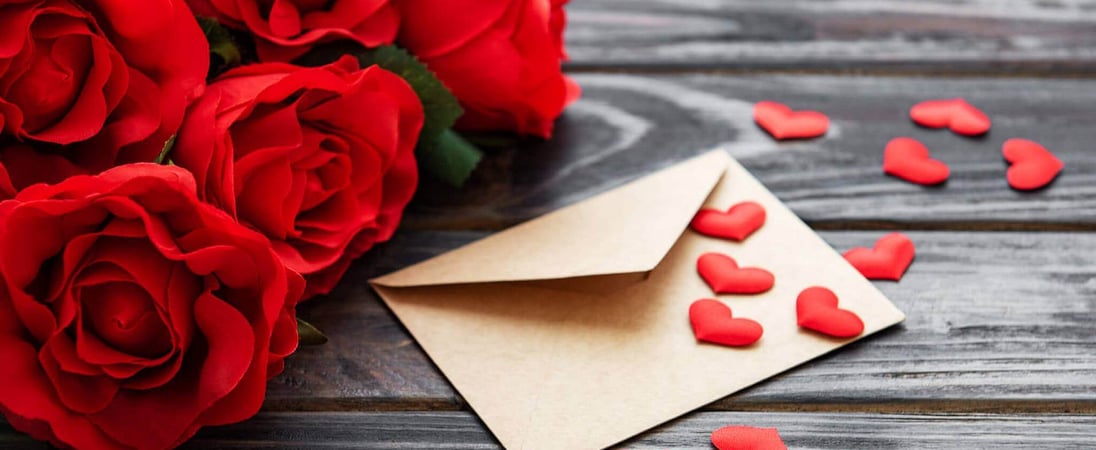
Valentine’s Day
A day filled with love, romance and sweet gestures — the perfect opportunity to show affection towards those special people in your life.
Love and romance. Candy and flowers. Cards and gifts. Dinner and dancing.
Valentine’s Day comes along with a whole host of plans and accoutrements that are meant to all boil down to one thing: Love. And it all comes in the name of one man, St. Valentine, who was an interesting (and perhaps slightly misunderstood) character in history.
It’s time to learn about and celebrate Valentine’s Day!
How to Celebrate Valentine’s Day
Celebrating Valentine’s Day comes with all sorts of inherited romantic traditions which can certainly be fun and bring lots of joy! But this is also a great way to get creative with showing people how much they are loved–even if it isn’t a romantic relationship.
Try out some of these ideas for celebrating Valentine’s Day:
Make a Card or Gift for Someone
Whether it’s a romantic partner or just a friend, Valentine’s Day is a great day to say “I Love You”. Hand made cards and gifts are especially welcome when it comes to showing someone how much they are cared for. January is a dark and quiet month anyway, so there’s plenty of time to prepare homemade gifts from a hobby like knitting a scarf, braiding a friendship bracelet, embroidering a towel, painting a picture or simply making a card.
Send Roses for Valentine’s Day
With delivery services abounding in almost every town, getting flowers delivered has never been easier! Choose to send red roses that stand for passion; yellow for friendship; pink for sweetness; peach for sincerity or gratefulness; white for purity or loyalty; ivory for perfection; and lavender for a crush (or love at first sight!).
Make Dinner Reservations
It’s likely that a last minute idea for going out to dinner will result in ordering takeout to eat at home, because restaurants are basically always full on Valentine’s Day. But, think ahead (sometimes months ahead, depending on the popularity of the restaurant) and make a reservation for two at a romantic place.
Enjoy a Story About Love
Head over to a local bookstore or library and browse the selection of novels or biographies that might feature stories about love. Or, it might even be interesting to read a biography about the guys named Valentine!
Those who don’t have as much time to read could put on their favorite drama or rom-com movie and see what hijinx the main characters get into. Try out some of these films about love to get started:
- Valentine’s Day (2010). Okay, maybe this one is obvious. And perhaps it’s not even a great film, but it would be remiss to leave out this one with an all-star cast including Julia Roberts, Bradley Cooper, Jennifer Garner and Ashton Kutcher.
- The Notebook (2004). This quintessential romance by Nicholas Sparks can be read as a novel or watched in the film starring Ryan Gosling and Rachel McAdams.
- Pride and Prejudice (2005). This delightful take on the Jane Austen’s novel of the same name stars Keira Knightly, Rosamund Pike and Matthew Macfayden.
- Think Like a Man (2012). Based on Steve Harvey’s book Act Like a Lady, Think Like a Man, this rom-com features Michael Ealy, Regina Hall, Kevin Hart and Meagan Good.
Get Creative for Valentine’s Day
This day doesn’t have to be the same as it’s always been. In fact, it’s a great day to try something new. Go on a mountain hike, visit a museum together, go whitewater rafting or learn how to play chess. Whatever would be fun and can be done in the spirit of love is the perfect activity for this day!
Valentine’s Day FAQs
When is Valentine’s Day?
Valentine’s Day takes place every year on February 14. It started on this day in AD 496 when the pope established the holiday in Rome in honor of the martyred Saint Valentine, who was killed on February 14.[1]
What to do on Valentine’s Day?
This day can be filled with opportunities to show people how much they are loved. Exchange cards, send someone flowers, make breakfast for family members or write a poem.[2]
When was the first Valentine’s Day?
Valentine’s Day is not actually a modern holiday, but has been celebrated in the middle of the month of February for more than 1500 years. The first Valentine’s Day was established by Pope Gelasius.[3]
Is Valentine’s Day a global holiday?
Yes! Valentine’s Day is celebrated in various capacities in countries all over the world. From sharing a bottle of wine to giving gifts, from school children in America exchanging Valentines cards to people in Wales exchanging carved wooden spoons, this day is one that shows how people simply love the idea of love.[4]
Who was Saint Valentine?
There is a bit of overlap in the stories as it seems there were at least three martyred saints with the name Valentine. However, the one most notably celebrated was a priest in Rome who defied the emperor’s anti-love commands and married young couples anyway.[5]
History of Valentine’s Day
While some people believe that the history of this day is pretty clear, the reality is that the story behind St. Valentine’s Day is covered in a great deal of mystery. Tradition hails February 14 (and perhaps even the whole month of February!) as a time for love and romance, with both ancient Roman and Christian backgrounds.
But when the life of St. Valentine, the patron saint of this day, is considered, that’s when things tend to get a bit more murky. Some people don’t realize that the Catholic church actually has record of three of its own saints who went by the name of Valentine (or Valentinus) and all three died as martyrs.
Valentine’s Day Timeline
270 AD
St. Valentine is martyred
Defying anti-marriage instructions given by Emperor Claudius II in order to build up the army, Valentine secretly supports and marries young couples which eventually leads to him being put to death. His death is said to have taken place on February 14.[1]
496 AD
First Valentine’s Day is recognized
Pope Gelasius decides to get rid of the Feast of Lupercalia, a pagan festival of love, and chooses to replace it with a celebration in honor of St. Valentine, who was martyred a couple hundred years prior.[2]
1382
Chaucer’s Poem, Parlement of Foules, is written
This poem contains the first known literature reference connecting romantic love with Valentine’s Day. In the text of the poem, Chaucer writes of birds who would pair off with a mate, but some people refute the idea that it is connected to Valentine’s Day because February is too early and cold for birds to be mating.[3]
1700
Americans begin exchanging Valentines
During this century, the inspiration for romance and love on Valentine’s Day turns into the specific gesture of exchanging notes, poems and love letters which may have been delivered by hand or by the US Postal Service.[4]
2010
Valentine’s Day is released in theaters
This romantic comedy has a star-studded cast with big names like Julia Roberts, Bradley Cooper and even Kathy Bates, and tells the story of several different romances between couples that happen all in one day. However, at the box office, the film doesn’t really get the greatest reviews from critics.[5]
Valentine Promotes Marriage
Perhaps the most commonly held tradition around St. Valentine is related to the year 270 AD when Claudius II was the emperor of Rome. Known as “Claudius the Cruel”, the emperor who wanted to build a strong army but was having trouble because of the attachment the men had to their wives and families. His solution? Just ban engagement and marriage, of course!
The story goes that Valentine, a priest in Rome, disagreed with the decree from Claudius and decided to go ahead and perform marriages anyway, allowing young lovers to marry each other in secret. When discovered, Claudius ordered the public beating and beheading of Valentine, which took place on February 14. The church later honored him by naming him as a saint.
This same Valentine is rumored to have become friends with the daughter of his jailer. He is said to have left her a note signed, “From Your Valentine”. This may explain the idea of asking someone “Will You Be My Valentine?”.
Less common are the other two saints also called Valentine, one who was a bishop in what is now Terni, Italy, and another who was martyred in a Roman province of Africa.
Feast of Lupercalia
It’s possible that even before Valentine, the priest, was martyred on February 14, the Feast of Lupercalia, a pagan feast of love, was celebrated around the same time. One tradition that went along with this festival is that the names of women were put into a box and drawn out by the men that they would be matched up with, letting chance (or fate!) take the lead.
By 496 AD, Pope Gelasius was tired of such pagan celebrations, so he declared that the Feast of Lupercalia would be canceled and, instead, St. Valentine’s Day would be celebrated on February 14. As time passed, this day became one where lovers would exchange poems, cards, notes and flowers, singing songs and performing other romantic gestures.
Facts About Valentine’s Day
Valentine’s Day did not begin as a holiday of chocolates, cards, and roses. Its story is layered, shaped by ancient rituals, medieval poetry, evolving ideas of romance, and changing social customs.
These facts explore how traditions connected to love, pairing, and affection developed over time—and how a mid-February date gradually became associated with romance, personal expression, and symbolic gestures of care.
-
Birds, Courtly Love, and the First “Valentines”
The connection between mid-February and romance in Europe grew out of medieval ideas about nature rather than martyr legends: English and French writers believed birds began choosing mates around February 14, and Geoffrey Chaucer’s late‑14th‑century poem “Parliament of Foules” depicts birds assembling on “seynt Valentynes day” to pair off.
This poetic association helped shift the date from a purely religious martyr’s feast into a focal point for courtly love, inspiring nobles to exchange romantic verses and eventually personal “valentines.”
-
From Handwritten Love Notes to Mass-Produced Cards
Exchanging affection through written “valentines” began among European elites: in 1415, Charles, Duke of Orléans, famously wrote a love poem to his wife from the Tower of London, one of the oldest surviving valentines.
By the 18th century, handwritten notes and poems were common in England, and advances in printing, cheap paper, and postal services in the 19th century turned these intimate messages into mass‑produced greeting cards, laying the groundwork for today’s romance card industry.
-
How a Roman Festival of Fertility Shaped Ideas of Pairing
Ancient Rome’s mid‑February festival of Lupercalia mixed purification rites with fertility symbolism: priests sacrificed goats and a dog, then ran through the city lightly striking bystanders with thongs cut from the hides, which some women welcomed as a charm for fertility.
Although modern historians debate how directly Lupercalia fed into later romantic customs, the festival shows that public rituals of pairing, fertility, and chance matches around this time of year long predated any Christian stories of Valentine.
-
The Medieval Martyr Who Became a Patron of Love
Early Christian records list several martyrs named Valentine, but none were originally described as matchmakers.
A third-century bishop, Valentine of Terni, was said in later hagiographies to perform healings and defend the Christian faith before being beheaded along the Via Flaminia.
Only centuries later did writers start blending such martyr stories with romantic themes, showing how a figure venerated for courage and charity was gradually reimagined as a heavenly patron of lovers.
-
Roses as Symbols of Passion from Aphrodite to the Victorians
The red rose’s association with passionate love long predates modern romance culture: in Greek myth, Aphrodite’s blood or tears were said to have turned white roses red, linking the flower to desire and sacrifice, while Romans crowned newlyweds with roses and scattered petals on beds.
In the 19th century, the Victorian “language of flowers,” popularized by manuals such as Charlotte de Latour’s “Langage des fleurs,” codified the red rose as meaning “I love you,” cementing its place as the default botanical symbol of romantic love.
-
The Brain’s Chemistry of Falling and Staying in Love
Neuroscience research shows that romantic love is driven less by the heart than by the brain’s reward and bonding systems.
When someone feels a strong attraction, the nucleus accumbens releases dopamine, creating feelings of pleasure and motivation, while longer‑term attachment relies heavily on oxytocin, a hormone that strengthens pair bonds—mechanisms studied in animals like prairie voles and thought to operate similarly in humans, helping explain why some romantic bonds can last for decades.
-
A Global Patchwork of Love Traditions
Ideas about romantic love are expressed through very different customs around the world.
In Japan and South Korea, women traditionally give chocolates to men on February 14, with men returning gifts on “White Day” a month later; in South Korea, singles even mark “Black Day” on April 14 by eating jajangmyeon noodles together.
In Catalonia, Spain, couples often celebrate love on April 23, Sant Jordi, by exchanging roses and books—showing how cultures adapt the theme of romantic affection to local histories and values.
Also on ...
View all holidays
National Organ Donor Day
The selfless act of giving the gift of life can bring hope and healing to those in need. It's a remarkable legacy that transcends time and spreads compassion.


National Cream-Filled Chocolates Day
Indulge in the luxurious taste of smooth and rich chocolate with a delightful surprise waiting for you inside every bite.
We think you may also like...

International Kissing Day
Whether it’s a peck on the cheek for a good friend or a big, romantic smooch for your significant other, shower your loved ones in kisses on Kissing Day.

Husband Appreciation Day
Married couples know it’s all too easy to take your partner for granted, so take some extra time on Husband Appreciation Day to show some affection to your husband.