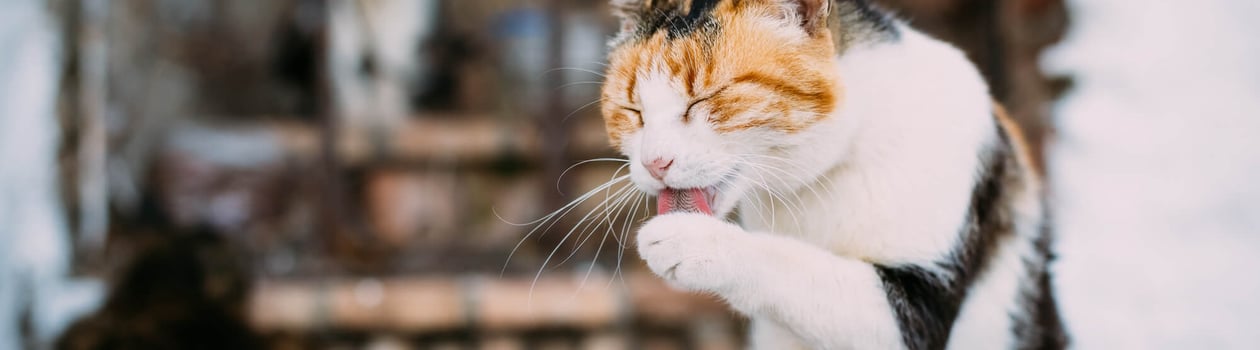
Imagine a world where all of those favorite furry companions had thumbs on their paws. Opposable ones. Thumbs that allow them to open their own tins of food, easily steal possessions belonging to their humans and generally make them more trouble than they already are. What kind of world would that be?
What If Cats and Dogs Had Opposable Thumbs Day aims to give pause to every pet owner and pet lover, to think about how different everyone’s lives would be if Mittens or Fido joined the ranks of the – supposedly superior – species that have opposable thumbs.
National If Pets Had Thumbs Day goes beyond just a whimsical thought. It sparks our imagination and highlights our deep connection with our pets. It’s about pondering the ‘what ifs’ and enjoying a moment of humor and warmth with our beloved animal friends.
So, every March 3rd, let’s cherish our pets’ simplicity and the uncomplicated happiness they offer, all while having a bit of fun picturing them with thumbs and all the antics they could get into.
What If Cats and Dogs Had Opposable Thumbs Day Timeline
Dexterous Thumbs Emerge in Early Hominins
Fossil and biomechanical studies suggest that hominins living around 2 million years ago developed highly dexterous, human‑like opposable thumbs that allowed precise grips and advanced tool use.
Neanderthals and Modern Humans Refine the Grip
Analysis of fossil hands shows Neanderthals and later Homo sapiens possessed robust, powerfully muscled thumbs that supported both forceful and precise grasping, expanding what hominins could do with tools.
Cats Begin Living Alongside Early Farmers
In the Fertile Crescent, wildcats start frequenting human grain stores to hunt rodents, marking the beginning of cat domestication and a new partnership where nimble paws and human hands share control of food.
Dogs Are Buried as Companions
Archaeological sites show dogs buried alongside humans about 12,000 years ago, indicating a transition from purely working animals to close companions integrated into human households and daily life.
Cats Become Household Animals in Ancient Egypt
Art and inscriptions from ancient Egypt depict cats in domestic settings and as sacred animals, reflecting their accepted role inside homes where human hands prepared food that feline paws could not open alone.
Modern Kitty Litter Helps Bring Cats Indoors
The invention and marketing of clay‑based kitty litter in 1947 made indoor cat keeping practical and odor controlled, accelerating the shift toward cats as full family members sharing human living space.
Study Highlights Human Hand’s Unique Power and Precision
A biomechanics paper on human hand evolution emphasizes the unusually large, mobile, fully opposable thumb that enables both powerful strikes and fine manipulation, underlining why human hands differ so sharply from paws.
How to Celebrate What If Cats and Dogs Had Opposable Thumbs Day
Whatever happens on What If Cats and Dogs Had Opposable Thumbs Day, make sure to make it a day to appreciate those furry friends, no matter what their paws are like.
Consider some of these ideas for celebrating this day:
Watch Some Fun Shows About Pets
The idea of giving pets opposable thumbs is one step toward anthropomorphism – which is the act of giving human characteristics to non-humans.
And while there probably aren’t too many movies or shows that have given pets opposable thumbs, there are certainly many folks who have imagined what it would be like if pets could do things humans do, like talk.
In celebration of What If Cats and Dogs Had Opposable Thumbs Day, check out some entertaining movies to help get in the spirit of things, getting started with some of these:
- The Cat in the Hat (2003). This film adaptation of the beloved book by Dr. Seuss stars Mike Meyers and Dakota Fanning, telling a story of hijinx created by a cat (in a hat, of course) who comes for a visit on a rainy day.
- Bolt (2008). Miley Cyrus and John Travolta lead the voiceover cast of this animated film that tells the story of a famous dog who believes he has real powers.
- Air Bud (1997). A circus dog escapes from a cruel owner and becomes the newest player of the basketball team – but surely playing basketball would be much easier for a dog who had thumbs!
- Puss In Boots (2011). This Italian cat character out of the Shrek movies makes his own film with the help of voices like Antonio Banderas, Salma Hayek and Zach Galifianakis.
Dress Up Those Pets
While it doesn’t seem reasonable to put gloves on a pet’s paws to give them thumbs, in celebration of What If Cats and Dogs Had Opposable Thumbs Day, why not dress up those pets in silly costumes, just for fun?
Perhaps put a tutu on a small pup to make it seem like she is a ballerina. Or dress up a cat in a pirate suit with a peg-leg.
Hats and wigs for pets are another fun way to make them look a little bit more like humans. So head over to that local pet store or shop online for a huge range of costumes for dogs and cats that will have the humans in their lives rolling on the floor with laughter!
Use Your Imagination
Today, in celebration of What If Cats and Dogs Had Opposable Thumbs Day, it’s time to appreciate the skills that each individual pet has – and maybe also the skills that they don’t have!
If a cat had opposable thumbs, would they use them to accomplish dexterous tasks? Would they build fires? Would they start cooking their own food? Would they start using the things that they’d collected around the house to make complex traps to catch mice and rats?
Or would they just keep doing much of the same as they do now – sleeping, occasionally making a mess and expecting to be fed on demand whenever they want?
If a pet dog had opposable thumbs, would they abuse their can opener privileges by eating all of their food in one sitting? Or would they keep up the guise of man’s best friend by helping out around the house, doing the dishes and sometimes vacuuming the floors?
Paws and Reflect
For those who like to dive deep into thought, spend some time pondering the what-ifs. Pen a story or a day-in-the-life journal entry from your pet’s perspective, detailing their adventures with thumbs.
The possibilities are limitless, whether it’s opening cans of food, swinging from the curtains, or painting a masterpiece. This exercise isn’t just fun; it’s a heartwarming way to connect with your pet’s world.
ifs’ and enjoying a moment of humor and warmth with our beloved animal friends.
So, every March 3rd, let’s cherish our pets’ simplicity and the uncomplicated happiness they offer, all while having a bit of fun picturing them with thumbs and all the antics they could get into.
History of What If Cats and Dogs Had Opposable Thumbs Day
This wacky and weird observance day was the brainchild of Ruth and Tom Roy, who are known for creating some fairly off-the-wall holidays – almost a hundred of them! Of course, this concern about pets having thumbs is one of the key questions of life, so it makes sense that a day should be dedicated to it.
Tom, in fact, was inspired by his 45 years of pet ownership and the special interactions between people and pets, aiming to celebrate life’s many quirky moments. This day is part of Roy’s effort to encourage people to use their imagination and appreciate life’s joyful, silly aspects.
Many people think that what makes humans so special is that we have opposable thumbs. In fact, without them, we wouldn’t be able to do half the things that we do every day without even thinking about it – open things, turn handles, hold bits and bobs.
Having thumbs is perhaps one of the key factors that separates us from the others in the animal kingdom, since they can’t really get a grip to the same level that humans can.
Tom Roy says that he came up with the idea for What if Cats and Dogs Had Opposable Thumbs Day after having had cats and dogs in the house for 45 years.
One day, Mr. Roy realized that the main dependency pets have on humans is simply for food. So, he thought, how would things turn out if they didn’t need humans to turn that can opener or open that bag of kibble?
Facts About What If Cats and Dogs Had Opposable Thumbs Day
Thumbs Helped Shape the Human Brain
Anthropologists studying fossil hands have found that hominins living about 2 million years ago already had thumbs capable of strong opposition similar to modern humans.
This increased thumb dexterity is thought to have encouraged more frequent tool use and meat consumption, which in turn supported the evolution of larger, more complex brains in the human lineage.
Dogs’ and Cats’ Paws Are Built for Different Jobs
Veterinary researchers note that dog paws tend to be more oval or rectangular with thicker, tougher pads that act like shock absorbers for running and endurance work, while cats have smaller, rounder, softer paws that help them climb and stalk quietly.
These differences in shape and texture reflect each species’ evolutionary niche, from cursorial running in dogs to stealthy ambush hunting in cats.
Some Animals Already Have Their Own “Thumbs”
Opposable or semi-opposable digits are not unique to humans and apes. Giant pandas use a modified wrist bone as a “false thumb” to grasp bamboo, koalas have two opposable thumbs on each hand and an opposable toe for gripping branches, and opossums have an opposable big toe on their hind feet.
In each case, the extra gripping digit evolved to solve very specific problems such as climbing or manipulating food.
Polydactyl Cats Can Get Surprisingly Handy
Some polydactyl cats are born with extra toes that can sit in a more thumb-like position on the paw. Although not truly opposable in the human sense, these extra digits can improve grip on toys or surfaces and sometimes let the cat perform slightly more complex actions, like hooking door handles or more easily batting objects.
Pet Owners Regularly “Humanize” Their Animals
A 2023 study of more than 1,500 owners found that people commonly attribute humanlike mental and social abilities to their cats and dogs, a tendency known as anthropomorphism.
Dog owners did this more than cat owners, likely because dogs’ social behavior more closely mirrors human interaction patterns such as eye contact, following gestures, and seeking shared activities.
Anthropomorphizing Pets Can Help and Harm Their Welfare
Research in animal welfare psychology shows that seeing pets as little people can increase empathy and concern for their well-being, but it can also lead to serious misinterpretations of behavior.
Owners who assume a dog is being “spiteful” or “guilty,” for example, may punish fear- or anxiety-based actions instead of addressing underlying stress, potentially worsening the animal’s mental and physical health.
Tool Use in Animals Does Not Require Thumbs
Comparative cognition studies have documented tool use in many species that lack opposable thumbs, such as dolphins using marine sponges to protect their snouts, elephants manipulating branches to swat flies, and some mammals and birds using sticks or stones to access food.
These findings show that cognitive problem solving and environmental challenges, rather than just hand structure, play a central role in whether an animal develops tool-using behaviors.