
Have you ever wondered about those five little numbers at the end of an address? This date marks ZIP Code Day, celebrating those digits that do more than meet the eye.
It highlights how ZIP codes help mail and packages travel efficiently nationwide. It’s a tribute to the system that keeps our letters, bills, and online shopping finds on the right path to our doorsteps.
How to Celebrate ZIP Code Day
Celebrating ZIP Code Day can be a blast with these fun and quirky suggestions:
Cake with Codes
Whip up a delicious cake and get creative by icing your ZIP code right on top. It’s a tasty way to pay homage to your local area. Gather friends and family to share in this sweet tribute.
Community Events
Why not go big and organize a community event? Imagine a block party or a parade where each street or area showcases its unique ZIP code. You could even add workshops or bake-offs to the mix. It’s a fantastic way to bring people together and celebrate the diversity within your ZIP code.
Learn and Share
Dive into the history of ZIP codes and share intriguing facts with others. Did you know that before ZIP codes, postal zones were used worldwide, including in the US?
The ZIP system went national on July 1, 1963, thanks to efforts like the Mr. Zip campaign. Sharing these tidbits can spark interesting conversations.
Social Media Shoutouts
Take to social media and give a shoutout to your ZIP code. Encourage friends to share theirs, too. It’s a simple yet effective way to recognize ZIP codes’ role in our daily lives and see the variety within your network.
Party with a Postal Twist
Consider throwing a ZIP Code party. Decorate with themes related to mail and postage, and maybe even include cookies or cupcakes decorated with various ZIP codes. It’s a playful nod to something that impacts our lives more than we often realize.
Each of these ideas offers a fun and engaging way to celebrate ZIP Code Day, highlighting the importance and impact of these five simple digits in organizing and connecting our communities.
ZIP Code Day
A Numerical Map That Helped Automate the Mail
The five digits in a U.S. ZIP code were engineered as a hierarchy for machines as much as for people: the first digit marks one of ten broad regions, the first three digits together identify a sectional center facility that processes mail for a wider area, and the last two digits pinpoint local post offices or delivery zones.
This east‑to‑west numbering scheme, introduced in 1963, was designed to work hand in hand with new mechanical and automated sorting systems so that mail could move through far fewer manual sorting steps.
ZIP Codes Are Not True Neighborhood Boundaries
Although people often treat ZIP codes as neighborhoods, the U.S. Postal Service created them for routing efficiency rather than for mapping communities, which means a single ZIP code can cross city, county, or even state lines, and some cover only PO boxes or large institutions.
Because of this, the Census Bureau had to create its own “ZIP Code Tabulation Areas” (ZCTAs) that approximate, but do not exactly match, postal ZIP code service areas so that population and housing data could be reported at something close to a ZIP‑code level.
ZIP+4 Was Built to Narrow Delivery Down to a Handful of Addresses
In 1983, USPS added the four‑digit ZIP+4 extension to the basic five‑digit ZIP code to let automated equipment sort mail to much smaller delivery segments, such as one side of a street, a cluster of apartments, or a single large building.
Industry and postal documentation note that a typical ZIP+4 code often corresponds to roughly 10 to 20 addresses, which can qualify bulk mailers for postage discounts while cutting down misdelivery and manual handling.
An 11‑Digit Code Can Identify a Single Mailbox
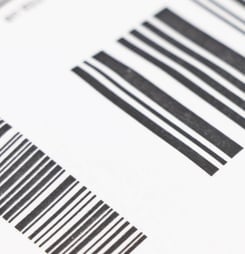
Behind the scenes, many mail pieces in the United States are tagged not just with a 5‑digit ZIP and 4‑digit add‑on, but with an 11‑digit “delivery point code” that usually incorporates the last two digits of a house number or PO Box number.
Combined into a barcode, this 11‑digit sequence lets sorting machines distinguish individual delivery points within the same building or block, giving each deliverable address a unique numeric identifier for high‑speed automation.
ZIP Codes Quietly Power Demographic and Market Analysis
Because so many records in business and government systems include a mailing address, ZIP codes have become one of the most common units for studying who lives where and how they live, even though they were never designed as statistical areas.
The Census Bureau publishes demographic profiles for ZCTAs that researchers and marketers link to customer files, voter rolls, or utility records, allowing them to analyze income, race, age, and purchasing behavior at a small‑area scale that is easy to use but often masks big differences within a single code.
Public Health Maps Disease and Inequality by ZIP Code
Health departments across the United States frequently publish maps of cancer incidence, opioid overdoses, COVID‑19 cases, and other conditions by ZIP code because that is how clinical and billing records tend to store addresses.
Epidemiologists have shown, however, that ZIP‑level statistics can be misleading, since the boundaries follow postal routes instead of social or environmental patterns, and they recommend using census tracts or smaller units when possible to get a clearer picture of local health disparities.
ZIP Codes Help Reveal the Legacy of Redlining and Environmental Injustice
Researchers studying the long‑term effects of discriminatory housing policies often overlay historical redlining maps with modern ZIP‑ or ZCTA‑level data on pollution, heat exposure, and disease to show that areas once graded as “hazardous” still face higher environmental and health risks today.
Environmental justice screening tools and policy reports commonly present these patterns by ZIP code, making it easier for communities and decision‑makers to see how past disinvestment aligns with current asthma rates, air quality problems, or lack of green space.
Significance of ZIP Code Day
ZIP Code Day highlights the importance of these numerical codes in more than just mail delivery. They play a vital role in various aspects of our lives, from deciding where businesses set up shop to how emergency services are dispatched.
On this day, people are encouraged to take a moment to appreciate the organization and efficiency brought to our daily routines by ZIP codes. This system ensures that every piece of mail gets to its intended destination, making our lives a bit easier.
The celebration isn’t just about recognizing how ZIP codes smooth mail delivery. It’s also about acknowledging their impact on community planning, business operations, and even personal decisions about where to live.
As we mark ZIP Code Day each year, we celebrate the invisible threads that connect us all, ensuring that no matter where you are, your mail finds you and, by extension, keeps us all a bit more connected.
ZIP Code Day Timeline
City Postal Zones Introduced in Major U.S. Cities
The Post Office Department begins using 1- and 2-digit postal zone numbers in large cities, a wartime measure to speed sorting that lays groundwork for a later national code system.
Mechanization and Planning for a National Coding System
Rising mail volumes and new mechanical sorting equipment lead postal officials to plan a more systematic, nationwide numeric code that can be read and routed by machines instead of manual clerks.
Nationwide Launch of the Five‑Digit ZIP Code
The U.S. Post Office Department introduces the Zone Improvement Plan (ZIP) Code across the country, assigning every post office a five‑digit number to streamline routing and support automation.
“Mr. ZIP” Campaign Educates Americans
A cartoon mail carrier named Mr. ZIP appears on posters, films, and stamp margins in a massive public‑education drive urging people to add ZIP Codes to their addresses so the new system can work.
ZIP Code Use Becomes Effectively Mandatory for Bulk Mail
Postal regulations tighten so that businesses and high‑volume mailers must include ZIP Codes on many types of mail, locking the new numeric system into everyday commercial practice.
ZIP+4 Extends Codes for Finer Sorting
The Postal Service rolls out ZIP+4, adding four extra digits to the basic code so letters and parcels can be directed to specific blocks, high‑rise floors, or large‑volume mail recipients.
Official Histories Trace ZIP Codes’ Wider Social Impact
On the system’s 50th anniversary, USPS, the Postal Museum, and the USPS Inspector General highlight how ZIP Codes evolved from a mail tool into a key locator for business, demographics, and public policy.
History of ZIP Code Day
The history of ZIP Code Day celebrates an essential part of our postal system, tracing back to the early 1960s when the ZIP (Zone Improvement Plan) code system was introduced in the United States.
This innovation was aimed at speeding up mail delivery by streamlining the sorting process. ZIP codes consist of five digits that identify the specific geographic region for mail delivery, facilitating quicker and more efficient sorting and routing of mail.
Over time, ZIP codes have grown to serve functions beyond mail delivery, such as collecting geographic data, internet routing, and even influencing pop culture, notably through the famous 90210 Beverly Hills ZIP code.
Initially, the Postal Service embarked on a public relations campaign featuring a character named Mr. Zip to encourage Americans to adopt the new system. This campaign included distributing over 72 million postcards to inform people of their new ZIP codes.
The introduction of ZIP codes represented a significant shift in mail delivery, improving speed and efficiency. This system has also evolved to include ZIP+4, introduced in the 1980s, which offers even more precise mail sorting by adding four additional digits to the standard five-digit codes.
The creation of ZIP Code Day itself is not as well-documented as the ZIP code system. However, the day has been embraced as a time to acknowledge the importance and impact of ZIP codes on everyday life.
Beyond their practical application in mail delivery, ZIP codes have facilitated community identity, supported various industries like insurance and real estate, and even added about $10 billion annually to the economy.
The celebration of ZIP Code Day each year reminds us of these contributions and the ongoing relevance of ZIP codes in connecting and organizing our communities.